Farm bill rejected in partisan split over food stamp cost-sharing
Chairman says Senate panel will ‘probably vote on this again’ after August recess
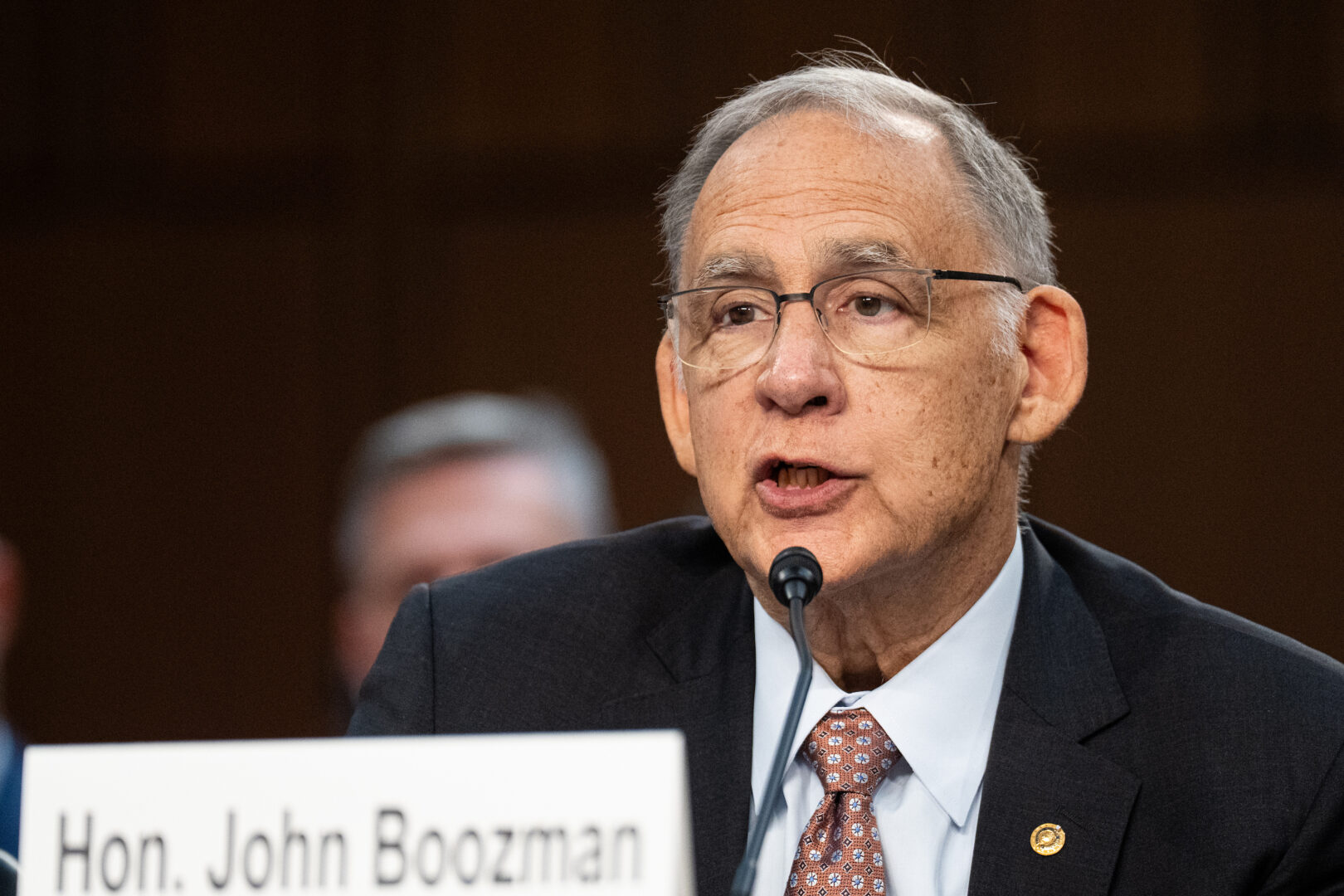
The Senate Agriculture Committee rejected a five-year farm bill Thursday at a contentious markup plagued by Republican absences and a Democratic rebellion over plans for imposing food stamp costs on state governments.
The 10-11 vote defeating the 983-page bill marked a rare break from the bipartisan support that typically accompanies a farm bill, a sprawling package reauthorizing agricultural safety net and food assistance programs.
While the Republican-controlled committee could normally approve the bill along party lines, GOP Sens. Mitch McConnell of Kentucky and Tommy Tuberville of Alabama were absent, leaving their party short of a majority.
“I’m deeply disappointed by this outcome,” Agriculture Chairman John Boozman, R-Ark., said in a statement following the markup. “We have a responsibility to stand with America’s farmers, ranchers and rural communities. Everyone recognizes the serious challenges they continue to face, and blocking the farm bill only adds to the uncertainty and hardship.”
Boozman recessed, instead of adjourning, the committee after the vote and said the panel would return after the August recess and “probably vote on this again.”
Democrats said they supported much of the bill, which included many of their initiatives, but insisted they would not vote for it unless a one-year delay in a state cost-sharing requirement in the Supplemental Nutrition Assistance Program was doubled to two years.
Minnesota Sen. Amy Klobuchar, ranking Democrat on the panel, argued that a provision in the 2025 reconciliation law that penalizes states with high error rates in distributing food stamp benefits is unfair because it lets states with the highest error rates off the hook.
Cost impact uneven
The reconciliation law requires states with error rates above 6 percent to pay part of the cost of food stamp benefits beginning in fiscal 2028, but gives states with the highest error rates, including Alaska, an additional year before the cost-sharing requirement kicks in.
Klobuchar said Republicans inserted that carve-out in a “last-minute legislative manipulation” to win the vote of Sen. Lisa Murkowski, R-Alaska. No Democrats voted for the reconciliation package.
In an effort to satisfy Democrats, Boozman added a provision to the farm bill ahead of the markup that would delay cost-sharing until fiscal 2029 for most states, and until fiscal 2030 for states with the highest error rates.
Klobuchar said that move would continue the unfair treatment from the reconciliation law.
“Alaska, with an error rate twice that of Minnesota, would get off scot-free for two years while Minnesota, a mid-error state, including Arkansas, Kansas and Michigan, would have to find tens or hundreds of millions of dollars in their state budget” to pay the state cost share, she said. “All we are asking for here is equal footing.”
Boozman said SNAP pays out more than $8 billion a month in benefits and 10 percent of that is in error, most of it in overpayments. “There’s no excuse for that,” he said.
He said a one-year delay is the best he could offer. “We visited with the White House. We got the best deal we could get, and I believe working together we can get these error rates down,” he said.
The imposition of a cost-sharing requirement “was a cudgel to make the states quit this terrible, by any standard, error rate, and it’s just not defensible,” Boozman said.
Senate Majority Leader John Thune, R-S.D., added that a one-year delay would give states time to lower their error rates and save money, and without it, “there’s some states that are going to be on the hook for a pretty big payment.”
Sen. Charles E. Grassley, R-Iowa, said this was the seventh farm bill he has been involved with since 1992 and “the first one that I can recall that we are not doing on a bipartisan basis.”
Ethanol setback
Another key provision in the bill that will now have to wait would have amended the Clean Air Act to allow the year-round sale of gasoline containing a higher percentage of ethanol, a blend known as E15. Currently, the EPA can grant a waiver for E15 in the summer, when it is typically prohibited due to concerns over pollution.
Klobuchar suggested the Senate could hold a stand-alone vote on the E15 provision. The House did that with its version of year-round E15 legislation after members representing districts with small refineries threatened to vote against the House version of the farm bill if it included such language.
And on Wednesday, Sen. Cynthia Lummis, R-Wyo., who is not on the panel, said she believed there was still a compromise small refiners and supporters of E15 could reach, but that she opposed the language in the farm bill and would offer an amendment to remove the E15 provision if the farm bill went to the floor as is.
The committee did not consider an amendment filed by Sen. John Fetterman, D-Pa., that would strip E15 language from the bill.
Despite the divide over SNAP, the committee approved a package of amendments to the bill — 16 from Republicans and 18 from Democrats — by voice vote. The panel rejected a dozen or so Democratic amendments.
David Jordan contributed to this report.