Employee question could stall Senate college sports bill at midfield in House
Trump shouted out Cruz in Texas, but didn’t mention ‘Protect College Sports Act’
A key player in crafting and pushing bipartisan legislation aimed at building guardrails around college sports through the Senate said last week outreach to House members had begun. But it is unclear whether President Donald Trump will help reconcile differences as he focuses on the midterms and other priorities.
The Senate on Sept. 28 passed the measure 77-22, running up the score with a bipartisan final tally for the “Protect College Sports Act.” The legislation would establish the nation’s first federal regulatory structure for college athletics, creating national rules governing name, image and likeness (NIL) deal-making and compensation. Among its major provisions, the bill proposes nationwide standards for NIL agreements, establishes guidelines for schools making direct payments to athletes and grants targeted antitrust protections to certain college sports-governing organizations.
A product of the Senate Commerce Committee, the sweeping measure will be waiting on House lawmakers when they return to the Capitol following a lengthy midterm election cycle recess. Washington Sen. Maria Cantwell, the panel’s top Democrat, said last week that the “Protect” bill’s advocates had begun an effort to explain the legislation to members of the other chamber.
“What needs to happen now is to see what their interests are. … How is it that we show that the Senate’s outcome was bipartisan in a major way, and what are the issues they want addressed. We pretty much had conversations, obviously, with the White House sports council representing. So it was kind of a three-corner negotiation instead of a five-corner negotiation,” Cantwell said in a brief interview, referring to that Trump-picked group, as well as Senate Republicans and Democrats.
“But now it’s time to have those two corners added in,” she said, referring to House Republicans and Democrats. “We have to hear what they have to say.”
Commerce Chairman Ted Cruz, R-Texas, co-authored the bill with Cantwell, panel member Eric Schmitt, R-Mo., and Sen. Chris Coons, D-Del. He has called for the House to take up and pass what the Senate approved soon after the chamber returns in November, in time for Trump to possibly sign it into law on an episode of ESPN’s “College GameDay” pregame show before the football season ends in January.
But Cantwell seemed open to the House — if GOP leaders even take up the measure — making changes and sending it back to the Senate. “We have to see what they have on their minds,” she said last week.
House Republican leadership in May tried to advance their own college sports bill, known on the Hill as the “SCORE Act,” but had to yank it abruptly from a planned Rules Committee debate after a collective blitz by the Congressional Black Caucus’ nearly 60 House members announced they opposed that bill. The CBC also opposes the Senate measure. So, too, does House Majority Leader Steve Scalise, R-La. — at least in its current form.
Like other House conservatives, Scalise has criticized the bipartisan bill for excluding language prohibiting student-athletes from being classified as employees of the colleges and universities for which they play. Scalise and some other Republicans worry the lack of employee language could lead to players forming unions, complicating matters for schools and conferences.
Cruz has acknowledged he dropped his demand for an employee prohibition because it was a non-starter for Cantwell and other Senate Democrats.
Scalise last week reportedly said, if the House takes up the “Protect” bill, House lawmakers’ concerns would have to be “addressed in some amendments that will keep the focus of the bill on letting the schools govern themselves.”
Among the changes House conservatives would push for would be “strong antitrust protections for schools to be able to govern themselves, so that courts don’t overrule the decisions made by the schools, and you have people playing in their fifth and sixth and seventh year at their fourth school,” Scalise told The Washington Sun. “And they’re not getting an education because they’re not even getting transferable credits. I mean, nobody wants that. We can fix it, and we’re going to.”
‘Interesting things’
Several sources reached late last week questioned whether the chamber would even take up the Senate bill.
One K Street lobbyist, granted anonymity to be candid, said Friday that the midterm election’s outcome could decide the fate of the Senate bill, noting that “interesting things are known to happen” during lame-duck sessions.
“Given the uncertainty with the outcome of the election, I think it’s premature to handicap what might occur. The cleanest and easiest path would be to just take up the Senate bill via suspension and hope you have two-thirds,” the lobbyist said in an email, predicting the House would surely make some potentially big changes.
“Once we go down that road, getting a final bill before the clock strikes midnight on December 31st becomes a lot harder,” the lobbyist added, referring to the final days of the 119th Congress, which will expire just before midday on Jan. 3.
With few planned in-session weeks left, both chambers would be challenged to potentially ping-pong amended “Protect” bills back and forth in time to pass a final version before existing legislation expires with this Congress.
Still, Scalise said he believes “there’s a path to get a final bill to the president’s desk, which is what we ultimately want.” But conservatives’ push to add an employment ban could clash with the White House, as Trump has talked about a need to protect student-athletes.
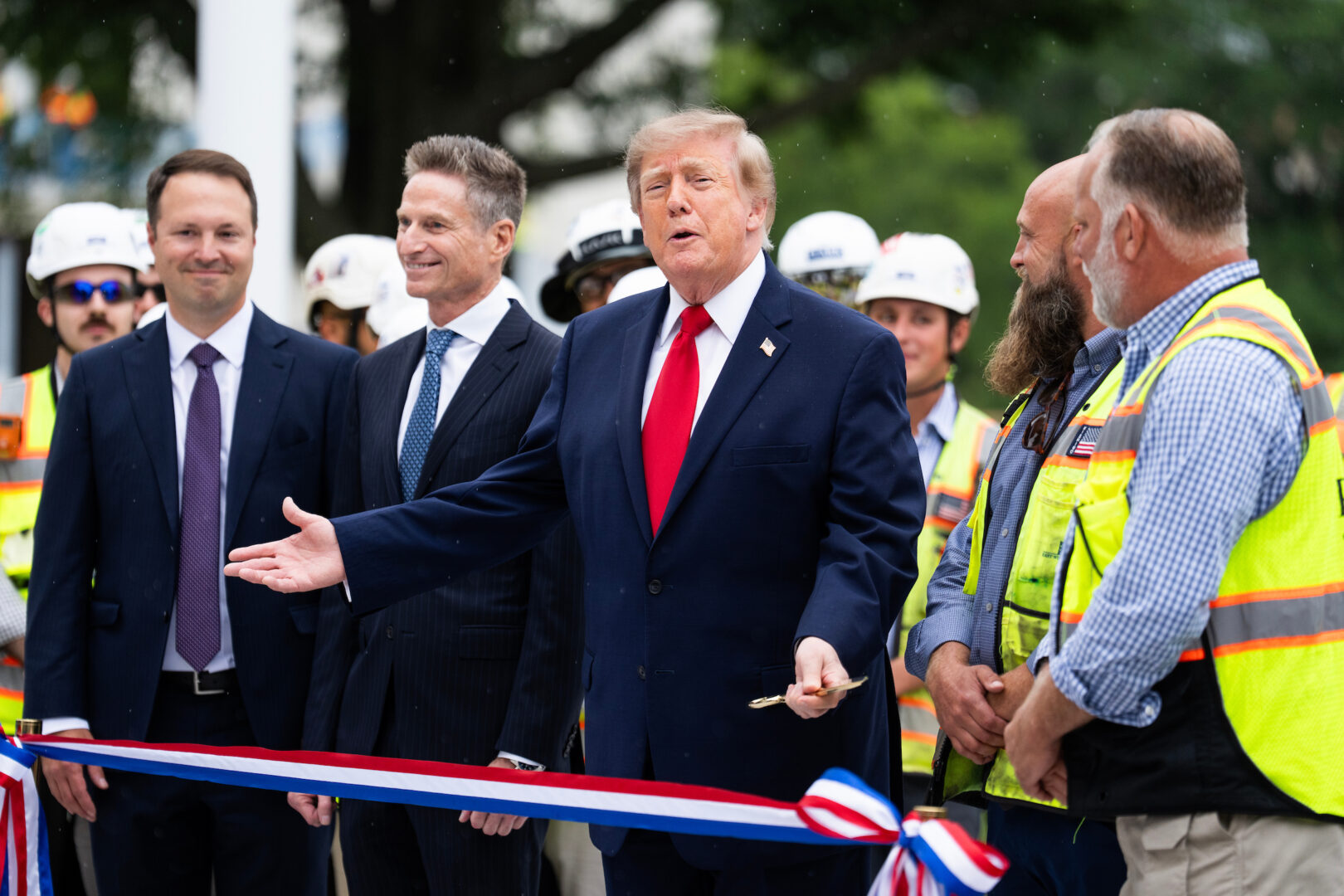
Speaking of Trump, who has endorsed the “Protect” measure, he hosted Cruz and other Texas lawmakers on board Air Force One Thursday for a trip to a Peterbilt heavy truck plant in Denton, Texas, to talk up the economy and stump for state Attorney General Ken Paxton, the GOP nominee for departing Sen. John Cornyn’s seat. Cruz got a presidential shoutout during Trump’s remarks, which also included him taking a few swipes at the scandal-prone Paxton.
“Ted Cruz has been my friend for a long time. We fought rather violently. Remember? Where’s Ted? There he is. We fought, but Ted Cruz has done a great job,” Trump said in Denton, to laughter from the Lone Star State crowd referring to the 2016 GOP presidential primary. “Nobody works harder than Ted. And we love him, really.”
Trump then talked about that primary battle, but he did not mention the Commerce chairman’s work on the college sports bill. Trump did not get directly involved in drumming up support for it while the Senate was on the “Protect” legislation for nearly two weeks last month. He did applaud the Senate approving it shortly after the final vote last week in a social media post, but he did not weigh in on how the House should proceed.
The president last week pivoted to his promised “barnstorming” tour on behalf of some GOP candidates, focusing on what he believes are his second administration’s major accomplishments. So far, however, the “Protect” bill has not been a part of his pitch.
“Everyone thinks that the prices are high because of me, but they’re not. We’re the ones bringing down the prices,” he said in Texas, despite the Bureau of Labor Statistics’ August Consumer Price Index showing the cost of goods up across the board.
That kind of rhetoric is why Cantwell said the college sports bill’s best chance is for House members to “digest” the bill and then “get out of the election cycle because nobody’s thinking clearly around here right now.”