Senate laterals college sports bill to House, but forward progress uncertain
Last-minute addition of amendment votes brought to close long debate
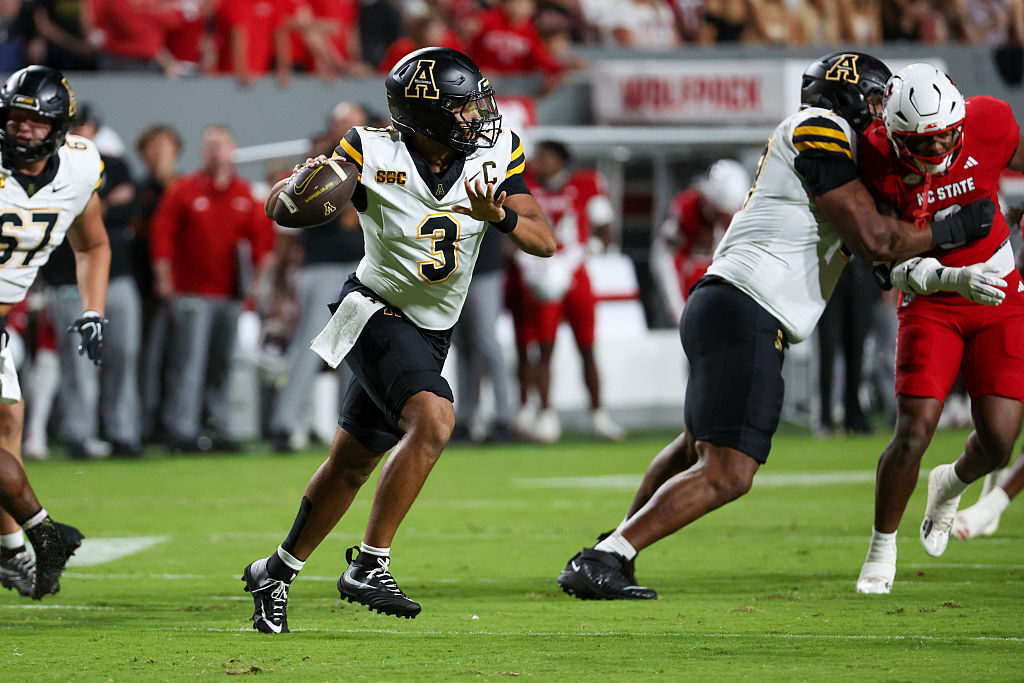
The Senate on Monday approved sweeping bipartisan legislation to create the first federal framework governing college athletics amid an era of transfer chaos, skyrocketing costs and the growth of name, image and likeness.
The final tally was 77-22, a rare bipartisan outcome on a major piece of legislation during a time of political division after the chamber took a series of procedural votes in recent days, as well as on an unexpected slate of amendments on Monday evening before passage. The measure’s fate in the House, however, remains unclear.
Sponsored by Commerce Chairman Ted Cruz, R-Texas, with key cosponsors including ranking member Maria Cantwell, D-Wash., and committee members Eric Schmitt, R-Mo., and Chris Coons, D-Del., the bill’s passage comes after months of negotiations that stretched beyond the committee room and into high-stakes talks with the leaders of the Southeastern and Big Ten conferences, as well as other influential college sports stakeholders.
“It doesn’t take a diehard sports fan to see that college sports is currently broken,” Coons said in a floor speech last Wednesday. “This year, 70 of the schools in the Power Four conferences will together generate over $7 billion in revenue from ads, from merchandise, from supporters — but they are all running at a deficit.”
“To find the money to chase athletes, coaches and facilities, universities have begun cutting sports, and they’ve begun with women’s sports and Olympic sports,” Coons said.
“This bill will bring stability to a collapsing college sports system,” he added. “No more conference chaos. No more coaches transferring mid-season, and it will make for stronger teams where athletes know each other, and the coaches and the fans know who they’re coaching and who they’re cheering for.”
Schmitt acknowledged several times in recent weeks the measure is a bipartisan compromise, and “not a perfect bill.”
But he and the other authors have urged their Senate and House colleagues to send it to President Donald Trump’s desk because it could be Congress’ last, best chance to address issues in the near term.
Opposition
For some, those fixes are not enough.
Before Monday’s final vote, Sen. John Kennedy said on the floor that he wanted to offer an amendment to end a trend of rising ticket costs for college sporting events. He criticized Senate leaders for blocking any amendments on the floor.
“Let’s do something for the fans,” the Louisiana Republican said. “I’m not happy about it.”
A short time later, however, Cruz announced on the floor that the chamber would take up a slate of amendments. Kennedy’s amendment was defeated. (It was the only one subject to a 60-vote threshold and was rejected 42-54.) These were adopted:
- One from Sen. Tammy Baldwin, D-Wis., that specified the bill would not preempt state laws related to certain injuries, including injuries resulting from deficient safety measures.
- A proposal from South Carolina GOP Sen. Tim Scott that would require colleges and conferences to disclose to the relevant intercollegiate athletic association all amounts over $600 received from a foreign adversary, state-owned enterprise or sovereign wealth fund.
- A joint offering by Florida GOP Sen. Ashley Moody and Connecticut Democratic Sen. Richard Blumenthal that would raise the bill’s cap on conference size from 19 to 20 institutions.
Blumenthal last week said he had voted against procedural motions because “I feel it’s defective in a number of areas.”
“It fails to provide for adequate enforcement. [It] imposes the duty of enforcement on the athletes themselves, so they have to go out and hire lawyers,” the Connecticut Democrat and former state attorney general said.
New Jersey Democratic Sen. Cory Booker, a former Stanford University football player and also a Judiciary Committee member, said during a floor speech last week that passing the bill would be “a shame.”
“We’re rushing to move on to it right now,” Booker said, at times raising his voice. “It’s not about the safety, it’s not about the well-being, it’s not about the education of college athletes.
“This is a money play, plain and simple.” Two of his amendments were rejected Monday.
During a Sept. 14 rally in favor of the measure outside the Capitol, Cantwell said the bill was necessary because some institutions cannot “make ends meet” thanks to the rising costs of the NIL era.
“This is about reining in the bad practices that are happening in college sports today,” she said. “The runaway costs that are sending people to the state legislature asking for bailouts from taxpayers to pay for sports, asking people to take endowment funds that really should go to things like wheat research or AI, and instead have to be spent because of the runaway arms race in sports spending.”
House prospects
The bill now moves to the House, where its path remains uncertain.
The Congressional Black Caucus opposed a much different House version, citing silence from major athletic conferences and institutions on Black voting rights and political power. The CBC also opposes the Senate version, arguing it does not do enough to protect Black athletes.
House Majority Leader Steve Scalise, R-La., earlier this month was still pushing for his chamber’s version, however, and arguing that the Senate will need to agree to changes. Like other House Republicans, he has been adamant about keeping a version of his bill’s prohibition on granting employee status to college athletes, for instance.
Trump said in late summer he wanted both chambers to approve it and send it to his desk. White House aides have said for months that Trump, who last year created a White House college sports task force, would like to sign the bipartisan measure before the end of this calendar year.
Advocates for legislative fixes to college athletics have argued for years that Congress needed to establish a national standard as schools, athletes and conferences grappled with a patchwork of state laws, costly NIL deals and growing uncertainty over the future of many collegiate sports.
The bipartisan legislation would establish the nation’s first federal regulatory structure for college athletics, creating national rules governing NIL deal-making and compensation.
Among its major provisions, the bill proposes nationwide standards for NIL agreements, establishes guidelines for schools making direct payments to athletes and grants targeted antitrust protections to certain college sports-governing organizations.
Supporters said the measure is intended to replace the growing patchwork of state NIL laws that conferences and universities have argued creates competitive imbalances and legal uncertainty.
The Commerce Committee advanced an earlier version of the legislation on June 18, but the proposal immediately encountered resistance from leaders of the SEC and Big Ten conferences, whose member institutions account for much of the revenue generated in major college athletics. Members of the so-called “Big Two” leagues had been hesitant to share revenue with conferences that rake in less each year.
Rather than move ahead without those conferences, the bill’s authors reopened negotiations following the June markup, making a series of revisions designed to address the conferences’ concerns.
The breakthrough came late on July 31 after lawmakers agreed to several revisions that ultimately persuaded the SEC and Big Ten leaders to endorse the legislation, removing what proponents had described as perhaps the biggest obstacles to Senate passage. During the markup, some Commerce members from states with Big Ten institutions had voted against advancing the bill to the floor.
Among the changes, lawmakers strengthened transparency requirements by requiring athletes to report NIL agreements both to their schools and to a national intercollegiate athletic association, responding to major conference concerns that schools could continue using outside collectives to circumvent spending limits.
The revised bill also requires companies that already maintain apparel and shoe contracts with schools to certify separate — and allowed — NIL agreements with athletes, a provision supporters said preserves legitimate grassroots marketing while increasing oversight.
Lawmakers also tightened language prohibiting NIL payments from being used to recruit prospective high school athletes before enrollment at an institution of higher learning. And Commerce leaders revised the revenue-sharing structure to create a retention pool exception allowing schools to exceed spending caps by up to $20 million.
The compromise also permits an additional $5 million for women’s NIL opportunities, with the provision expiring after nine years to align with the existing college sports antitrust settlement.
But Sen. Rand Paul, R-Ky., argued during a Wednesday floor speech that it would give Congress too large a role in governing college sports, something he said most lawmakers were not qualified to do.
Still, Cruz said he wants Trump to sign the legislation during an appearance on ESPN’s popular “College GameDay” Saturday morning pregame show, which runs through the college football season. A White House official said there is no appearance on the show currently on Trump’s schedule.
Jackie Wang and Savannah Behrmann contributed to this report.