Deadly liver disease, rooted out elsewhere, retains grip on US
Pledge to end disease lacks national testing, treatment plan
It was hailed as a “triumph of 21st century medicine” — a daily pill that cures a life-threatening liver disease in a matter of weeks with minimal side effects and a success rate of more than 95 percent.
But more than a decade after direct-acting antivirals to cure hepatitis C hit the market, potentially hundreds of thousands of Americans are still untreated and the U.S. is lagging behind other developed nations in eliminating the virus as a public health threat. The result is that hepatitis C, the most common blood-borne illness in the U.S., contributes to needless illness and thousands of deaths every year.
While countries like England and Australia are on track to meet the World Health Organization’s goal of eliminating hepatitis C as a public health threat by 2030 — and Egypt has already done so — progress in the U.S. has been hamstrung by a fragmented health system and a lack of funding.
“It’s a heartbreaking indictment of the way our system lets some people fall through the cracks,” said Francis Collins, former director of the National Institutes of Health, who in 2023 developed a national plan to eliminate hepatitis C as President Joe Biden’s science adviser.
“The U.S. may end up being last” to eliminate the disease, said Collins, whose brother-in-law, Rick Boterf, died of hepatitis C a year before the new drugs came out. “The development of a cure is one of the most amazing achievements of medical research, and somehow it’s not being provided to those who need it.”
In the United States, an estimated 2.2 million to 4 million adults — about 1 percent to 2 percent of the adult population — have hepatitis C, a virus that affects the liver. If left untreated, it can cause severe liver damage, cancer and death.
Because it is most commonly spread by sharing infected needles when injecting drugs, cases increased between 2010 and 2021 during the height of the opioid epidemic. As overdose deaths have dropped, however, hepatitis C cases have stayed persistently high. Collins said 40 people per day on average die from the disease.
“That number should be zero,” he said. “And yet, we are still seeing this incredible and unconscionable loss of life because we haven’t been able to get something in place to help people affected by this virus.”
High costs
In 2016, shortly after hepatitis C cures became available, public health officials saw an opportunity to eliminate hepatitis as a public health threat by 2030. The U.S. endorsed that goal, but it didn’t put significant funding toward the commitment.
Meanwhile, England, Australia, Egypt and many others established national programs made viable in part by securing steep discounts from drug companies for the treatments.
“We have a plan for elimination, but there’s no money supporting it,” said Maria A. Corcorran, an assistant professor in the division of allergy and infectious diseases at the University of Washington School of Medicine. “[In] the countries where we’ve seen a lot of success like Egypt, Republic of Georgia, Rwanda, there’s been some kind of financial commitment from the government. And I think that we have not had a true financial commitment to do this.”
Part of the issue has been the high cost of the drugs. Several countries and two U.S. states have adopted “subscription” style models that allow them to access unlimited treatments at a lower price point than paying for each patient individually. That was a turning point.
When the new hepatitis C drugs first came to market in England, the country faced two challenges: The disease was largely driven by injection drug use, and the high cost of treatment strained the health system’s ability to provide broad access.
“At the time, the NHS viewed it as the biggest single threat to our budget,” said Graham Foster, the former national clinical lead for hepatitis C at National Health Service England.
Initially, England rolled out the drugs gradually, prioritizing the sickest patients first and people most at risk, including people who have had the virus for a long time.
That’s how Lanouer Haboubi got treatment. The 54-year-old had hepatitis C for decades but avoided the older standard treatment of interferon — a once-weekly injection taken for up to a year, often causing serious side effects and curing only about 40 percent to 50 percent of patients with the most common strain of the virus. “I did not bother doing anything about [hepatitis C], because there was no physical symptoms, plus, the treatment is horrible,” said Haboubi, who acquired the disease through drug injection.
He was approached as part of the NHS’s roll out of Harvoni, developed by Gilead Sciences Inc., a breakthrough drug that could treat hepatitis C in eight to 12 weeks with few side effects and cure rates approaching 95 percent to 99 percent.
The treatment “is like a walk in the park,” said Haboubi, who now helps the National Health Service connect others to hepatitis C testing and treatment.
It was the beginning of England’s shift in how it treated this disease.
Striking deals
In 2019, NHS England announced a $1.3 billion deal with Gilead Sciences, Merck & Co. and AbbVie to treat everyone with hepatitis C at a discounted price while funding “case-finding” efforts to identify patients at risk.
That meant drug companies helped pay for outreach, including peer workers — people with lived experience of hepatitis C or drug use — to help connect patients to testing and care. The structure created a financial incentive for the drug companies to identify and treat more people.
“What it meant was the only way that they could increase their income was by increasing the number of patients treated,” Foster said.
The issue then became how to get treatment to a much larger group of people.
While England has a single-payer health care system in which services are publicly funded and generally provided at no direct cost to patients, access to hepatitis C treatment once depended on where someone lived — a problem the English call the “postcode lottery.”
To address that, the country used regional NHS delivery networks made up of hospitals, drug treatment programs, primary care providers and others in the community that would engage with people with hepatitis C. Each network had a hepatitis C leader and goals for how many people to diagnose and treat, and hospitals were financially rewarded or penalized based on whether they met those goals.
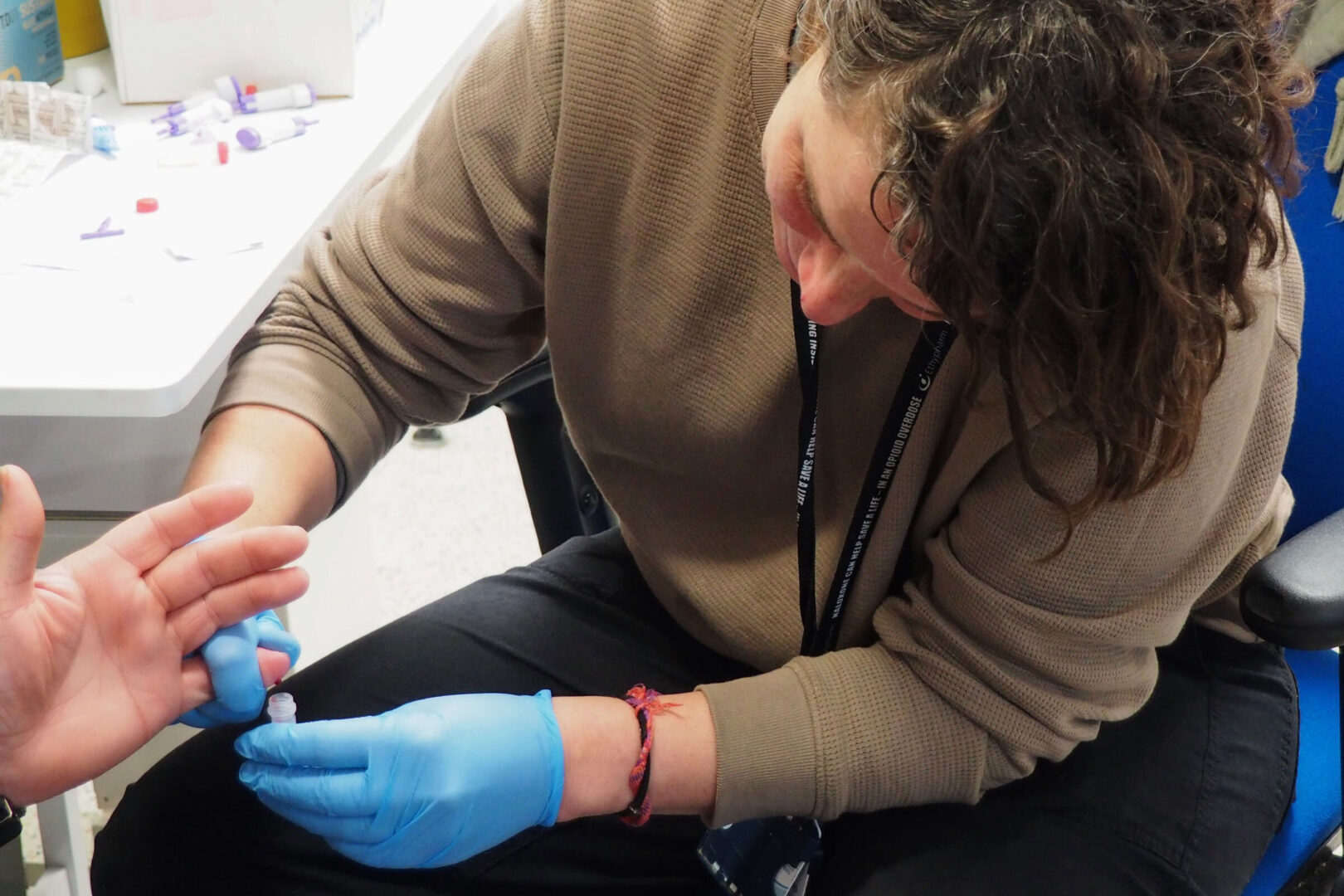
That approach expanded testing into the community — drug treatment centers, emergency departments, prisons, homeless shelters and street outreach to reach people who are homeless, with the goal of establishing treatment as soon as possible, in many cases the same or next day.
Previously, hepatitis C treatment was largely delivered by hospital specialists, and patients could wait months before starting therapy.
“It’s about throwing away the old system and saying, ‘If you’ve got the virus, we’ll give you the treatment,’” said Ashley Brown, a hepatologist and current clinical lead for the NHS England hepatitis C elimination program.
The strategy also addressed one of the virus’s biggest challenges: hepatitis C can remain asymptomatic for years. By the time some people experience symptoms, they could already have severe liver damage or cancer. By expanding testing into community settings, the program identified people who might otherwise have gone undiagnosed until serious liver damage had already occurred.
Peer workers became central to the effort, helping patients navigate the system, attend appointments and address barriers like homelessness or food insecurity. “We’ll come out to you. We’ll go to people’s houses. We’ll treat them on the street,” Brown said.
The results were transformative: over a 10-year period, the number of people living with chronic hepatitis C cases declined by 61 percent, according to estimates from the U.K. Health Security Agency. An estimated 85 percent of people with hepatitis C have been diagnosed, according to the agency’s modeling, and about 81 percent of those diagnosed have gone on to start treatment.
NHS England officials expect that the United Kingdom will declare elimination of hepatitis C in the next year or two.
A fragmented US system
In the U.S., up to half of Americans with hepatitis C do not know they have it. Of those who do, only one-third access timely treatment.
While the Centers for Disease Control and Prevention recommends everyone get tested at least once per lifetime, that usually doesn’t happen. More than 11,000 people died of hepatitis C-related deaths in the U.S. in 2023, according to the CDC, the most recent year of available data. There were an estimated 69,000 new hepatitis C infections that year.
The U.S.’s fragmented health care system means whether someone can access treatment depends on what state they live in, what kind of insurance they have, whether they are incarcerated, or have social factors that impact health, like drug use or homelessness. And a course of treatment can cost tens of thousands of dollars, leading Medicaid, other insurers, or institutions like prisons to restrict access to care.
The problem has been well known for several years. In 2017 the National Academies of Sciences, Engineering, and Medicine wrote in a report that meeting 2030 elimination goals would “require a significant departure from the status quo” and called for a “coordinated federal effort.”
“The United States should not come late or halfheartedly to the global elimination effort,” the report said.
Nearly 10 years later, some states, health care providers and advocates are working separately to eliminate hepatitis C in their jurisdictions. Two U.S. states — Washington and Louisiana — have adopted “subscription” style models that allow them to access unlimited treatments at a lower price point than paying for each patient individually. But a national program is needed to achieve elimination, advocates say.
Federal legislation sponsored by Sen. Bill Cassidy, R-La., proposes the U.S. enact measures similar to England’s. It would create a national elimination program and direct the federal government to negotiate a five-year agreement with drug manufacturers to purchase unlimited hepatitis C treatments at a fixed price for Medicaid programs, correctional facilities and the Indian Health Service. Their patients, as well as people who don’t have insurance, would get free treatment under the program.
But the bill has not advanced since being introduced last year.
“It’s a public health challenge, but also a political challenge,” said Daniel Raymond, director of policy for the National Viral Hepatitis Roundtable in the U.S. “Building the consensus and getting buy-in to get everyone moving in the same direction — that requires leadership and somebody saying that this needs to be a priority.”
It isn’t unheard of for a federal program to address a specific disease. The Ryan White HIV/AIDS program was created in 1990 to expand access to care for people with HIV. It now provides care and support services to about half a million people with HIV/AIDS across the United States.
It has helped drive down HIV cases by expanding access to rapid testing and preventive medicine, including for people without insurance.
But there is no similar program for hepatitis C.
“There’s been nowhere near the resources that have been provided to hepatitis C that there has for HIV,” said Heather Lusk, co-director of Hep Free Hawaii, a stakeholder organization working to eliminate hepatitis in the state. “This is a winnable battle. This is the only virus they’ve ever cured and yet the access to that cure continues to be a challenge.”
This report is the first of a recurring series examining why hepatitis C treatments remain elusive in United States compared with England, examining barriers like cost, insurance and unequal access. It was supported by a reporting fellowship from the Association of Health Care Journalists and The Commonwealth Fund.