Hostilities with Iran ‘terminated,’ Trump says in War Powers letter
Trump tells lawmakers he does not need to disengage troops from the conflict
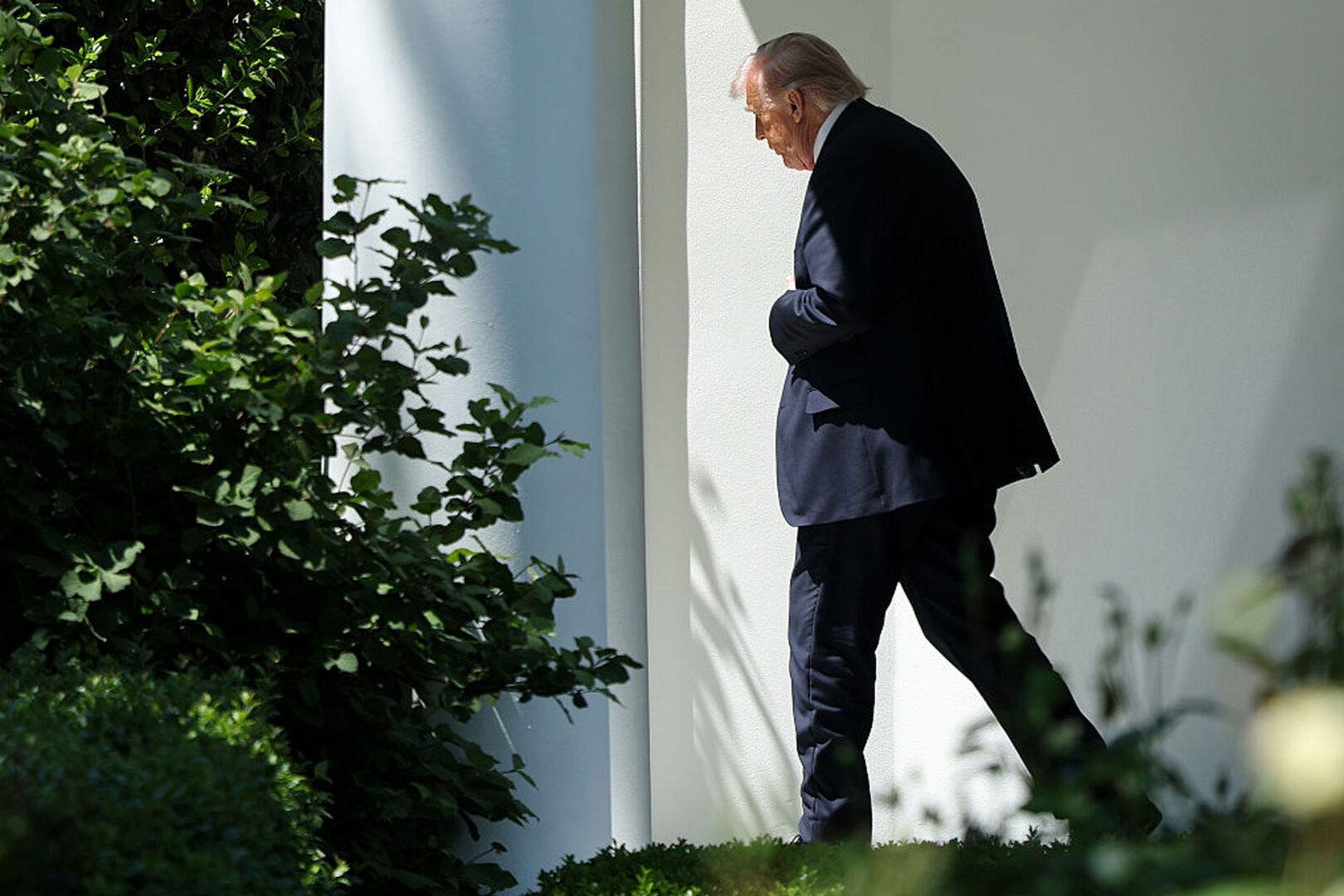
The White House is arguing to lawmakers that President Donald Trump does not need to disengage troops from the conflict with Iran in order to comply with the War Powers Act because an extended ceasefire has effectively ended military hostilities.
The Trump administration faced a Friday deadline under the 1973 law that is designed to end military operations after 60 days unless Congress has formally blessed the mission.
The White House essentially states that the 60-day clock no longer applies, in letters sent Friday to Speaker Mike Johnson and Senate President Pro Tempore Charles E. Grassley and obtained by CQ Roll Call.
“On April 7, 2026, I ordered a 2-week ceasefire. The ceasefire has since been extended. There has been no exchange of fire between United States Forces and Iran since April 7, 2026. The hostilities that began on February 28, 2026, have terminated,” states the letter, which was signed by Trump.
“Despite the success of United States operations against the Iranian regime and continued efforts to secure a lasting peace, the threat posed by Iran to the United States and our Armed Forces remains significant,” the commander in chief wrote. “Accordingly, the Department of War continues to update its force posture in the [area of responsibility] in select countries, as necessary and appropriate, to address Iranian and Iranian proxy forces’ threats and to protect the United States and its allies and partners.”
Trump noted those force adjustments would be spelled out for the lawmakers in a classified attachment that was not included in the obtained copy.
Congressional Democrats have slammed Trump for not seeking lawmakers’ approval of his Iran conflict. They have forced six floor votes on joint resolutions aimed at limiting how powers to conduct the war, but Republicans have knocked those down each time.
The White House has argued that the president and his team have been transparent with Congress about the operation, which began on Feb. 28. The 60-day clock started several days later, on March 2, when the White House submitted to Congress a report required by the War Powers Act that set forth the Trump’s reasons for joining with Israel in a war on the Islamic Republic government.
Despite Democrats’ frustrations and criticisms, Trump wrote in the Friday letter that “as the situation evolves, I will continue to update the Congress on noteworthy changes in the United States Armed Forces presence, consistent with the War Powers Resolution.
“I appreciate the support of the Congress in these actions,” the letter, which is labeled as unclassified, states. “I have and will continue to direct United States Armed Forces consistent with my responsibilities and pursuant to my constitutional authority to conduct United States foreign relations and as Commander in Chief and Chief Executive.”
Democrats have argued that Trump and his team have yet to spell out a clear rationale for the conflict, which has spiked oil and related prices ahead of November’s midterm elections.
As he departed the White House on Friday for a weekend of events in Florida, a reporter asked Trump about the 60-day deadline and whether he would seek congressional approval for the conflict.
“Well, no other country has ever done it. … Most people consider it totally unconstitutional,” Trump replied. “Also, we had a ceasefire, so that gives you additional time. But no other country’s done it. We’re in the midst of a big victory. This is a victory that we haven’t had since Venezuela.”
In Friday’s letter, the president wrote that he “ordered that operation consistent with my responsibility to protect Americans and United States interests at home and abroad, and in furtherance of United States national security and foreign policy interests.”
Defense Secretary Pete Hegseth said during testimony Thursday before the Senate Armed Services Committee that his understanding is that, because a ceasefire is in place, the 60-day clock “pauses or stops.”
Virginia Democrat Tim Kaine, a leading proponent of the war powers resolutions, disagreed with that position.
Also on Thursday, Alaska Republican Sen. Lisa Murkowski said that while she did not support war powers resolutions that would force withdrawal in the middle of hostilities with Iran, she plans to introduce an authorization for use of military force, or AUMF, that would place strict limitations on the war’s scope while allowing it to continue.