The voters’ voice: Gerrymandering and the state of democracy
Recent efforts have been a blessing for partisans but a curse for voters
“As a mapmaker, I can have more of an impact on an election than a campaign, than a candidate. When I, as a mapmaker, have more of an impact on an election than the voters, the system is out of whack.”
I said that in a 2005 book interview dealing with redistricting reform after many years gathering data and helping draw lines for GOP redistricting efforts across the country.
I haven’t changed my mind. The most challenging dynamic of redistricting remains the same: to ensure the central role of voters in the democratic process by producing maps that honestly reflect the public will of the electorate.
To a degree, modern redistricting has become the very antithesis of that, thanks to former Rep. Phil Burton, whose redrawing of California’s congressional district lines in 1981 became the model of what partisan gerrymandering could achieve for hundreds of redistricting plans created since.
In the 1980 election, California Democrats won 22 House seats; 21 for Republicans. After the Burton plan went into effect in 1982, the Democratic margin jumped from one to 11 seats, 28-17. How good was Burton’s map?
Over the next three elections (1984, 1986, 1988), only one House seat changed parties out of 135 races, or 0.7 percent. In 1990, three seats changed parties, two going Republican and one going Democratic, meaning that during the course of the four elections after the plan guaranteed Democratic Party dominance, only four races out of 180 resulted in a party change.
In contrast, the three gubernatorial races (1982, 1986, 1990) were all won by Republicans, with margins ranging from 1 percent to 23 percent.
At the presidential level, Republicans won California twice: Ronald Reagan by 16 percent and George H.W. Bush by 4 percent. In 1984, Republicans actually won the congressional level vote in California. But the gerrymandered Burton plan delivered 27 seats for the Democrats while keeping Republicans at 18.
The point of the Burton plan was to lock in a favorable political outcome for Democratic House candidates that would be protected no matter the political environment. It succeeded wildly. While the majority of California voters supported Republicans at the gubernatorial and presidential level, that preference was not reflected in the makeup of the congressional delegation because of gerrymandering.
Over the past year, both parties have taken Burton’s original gerrymandering model to a new level with the help of technology and the courts. California and Virginia took action to dramatically change their congressional maps to favor Democrats, in response to Texas changing its districts to favor Republicans.
Florida has now also changed its congressional district map to favor Republicans. Overall, it’s estimated that 14 to 18 seats could switch parties in these four states combined. Had these states not redrawn their districts, the results would have likely been similar to recent congressional elections. But the lines have changed — and with that turn of events, the potential outcome this fall.
This gets us back to the fundamental problem with redistricting — that mapmakers have the most say. When congressional lines are drawn to lock in the political status quo, like California in the ’80s, or create a new and significantly different status quo as we see in Virginia this year, that limits the voice of voters and doesn’t produce objective or effective representation.
What’s different from Burton’s era is the availability of new technologies and election and demographic data that give map drawers capabilities to create more precise redistricting options, a blessing for partisans but a curse for voters.
California, Florida, Texas, Virginia and other states prove that given the opportunity and the ability to draw the map the way your party wants, you can generate a desired outcome, leaving voters out of the process.
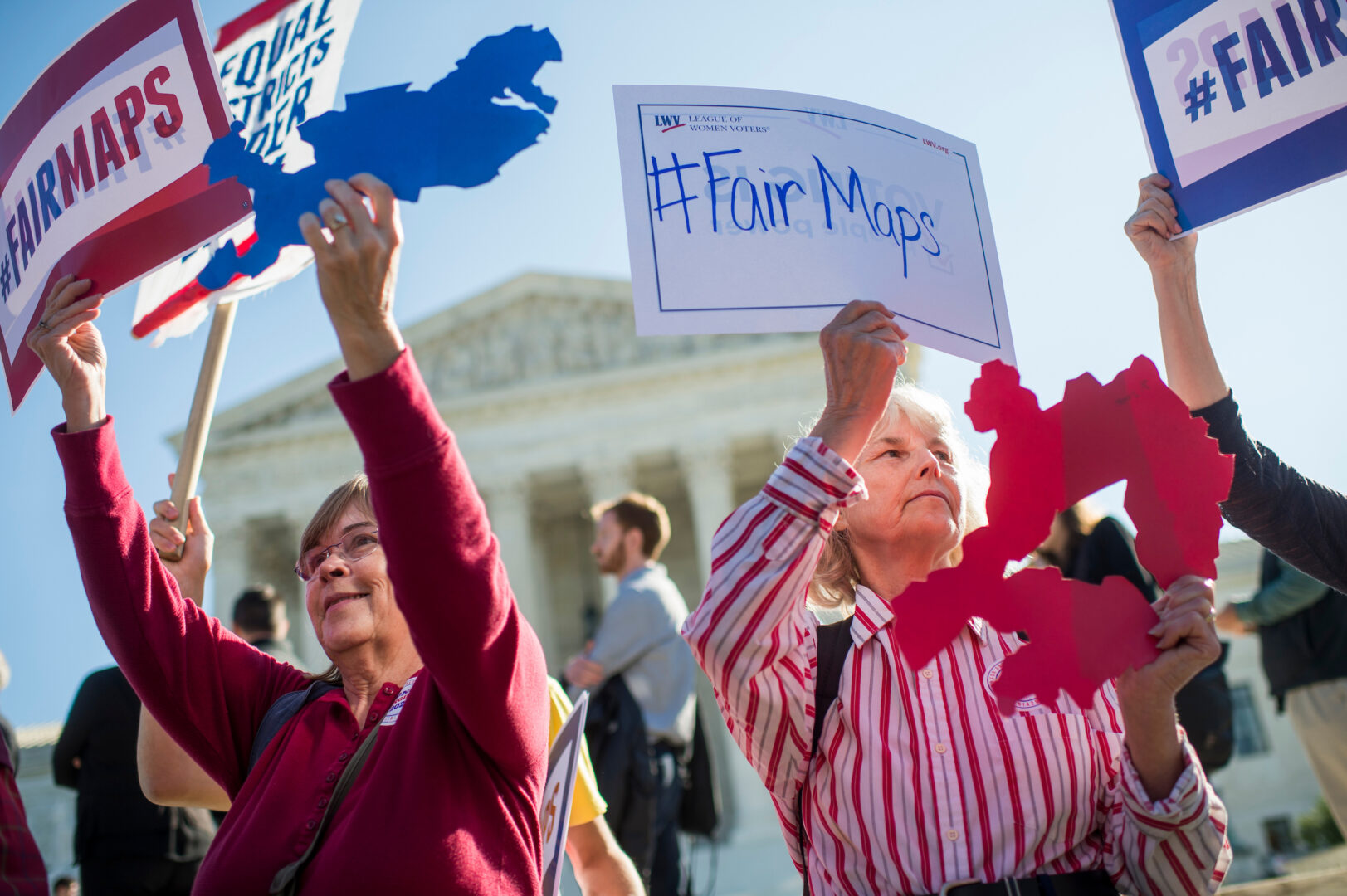
The solution is to take the “pen” out of map drawers’ hands. Some states have created “independent” commissions that take the power away from partisan state legislatures. But most commission members will have biases (intentional or unintentional), and so will whoever appoints them. Some states have set criteria as well; but as we just saw in Virginia, redistricting commissions and neutral criteria can go by the board with a shift in power.
The real answer is to develop neutral criteria, agreed to by both parties or defined by the Supreme Court, that mapmakers must use in the drawing of congressional lines, and by extension, even state legislative lines. The criteria must be objective, data-based, that reflect communities of interest and protect the voice of individual voters.
Some examples are limits on how and how many times counties can be split within a state to maximize the creation of communities of interest. A plan that divides counties the least would be the preferred plan.
Another approach could require that census tracks can be split only once and should be kept to a minimum. There are also a variety of methods to create districts that are geographically compact and would end the kind of convoluted districts we’ve seen proposed recently. There are others — and I’m not endorsing one set of criteria over another. I’m simply saying standards are needed to ensure maximum voter voice.
Over the past decades, gerrymandering by both parties has made the majority of seats in the House safe seats. Most members don’t worry about reelection. They only worry about primary challenges, usually from the more extreme elements of their parties.
That dynamic has forced Republicans and Democrats into their respective ideological corners, dividing the country and leaving independent voters out in the cold with no voice or choice. It has led to government by shutdowns and legislation by reconciliation.
Compromise or cooperation with the other side may earn a member a tough primary challenge. For others, it has meant simply walking away from the fight.
The Supreme Court and political leadership need to recognize that gerrymandering has reduced the voice of voters and become a significant problem for our democratic process.
(This is the first of two columns on redistricting, this one looking at the implications of the actions states have taken in redrawing congressional districts. Next week’s column will focus on the Supreme Court’s decision on Section 2 of the Voting Rights Act.)
David Winston is the president of The Winston Group and a longtime adviser to congressional Republicans. He previously served as the director of planning for Speaker Newt Gingrich. He advises Fortune 100 companies, foundations and nonprofit organizations on strategic planning and public policy issues, as well as serving as an election analyst for CBS News.