Here’s how to be smart about Chinese EV imports
Chinese EV makers should be invited to build vehicles in the United States, if they agree to conditions
House Democrats have sent a letter to President Donald Trump urging him to block Chinese automakers from the U.S. car market.
“Any effort to lower barriers for Chinese automobiles,” they wrote, “would pose a direct threat to American manufacturing, workers, and national security.”
They request that “this must remain a firm and non-negotiable priority” in the president’s discussions with Chinese President Xi Jinping during his planned mid-May trip to China.
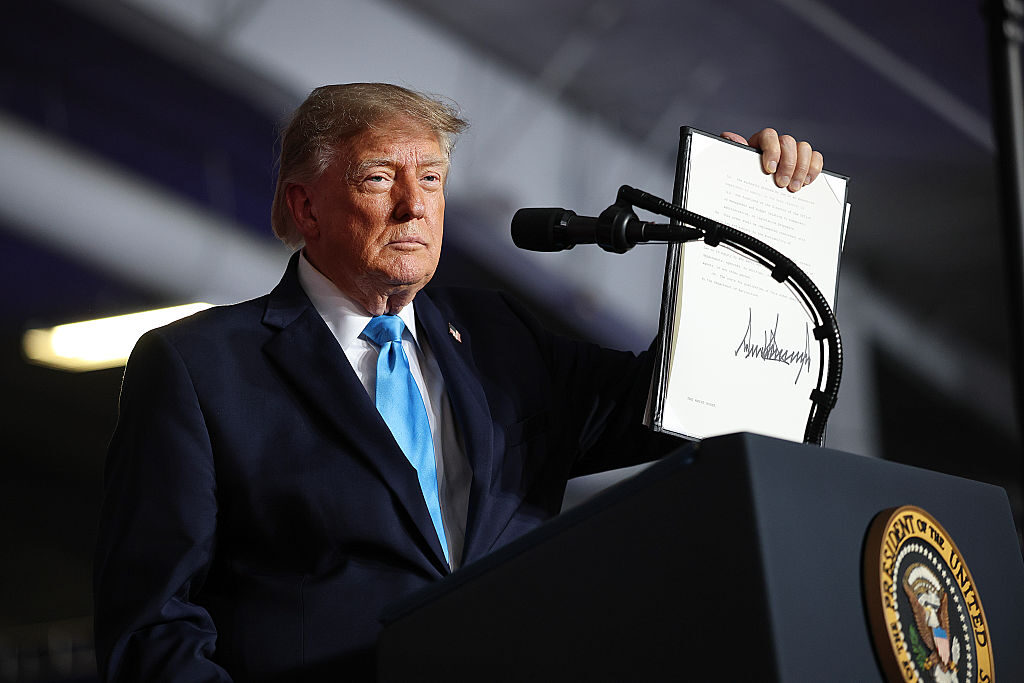
But Trump has voiced a different view.
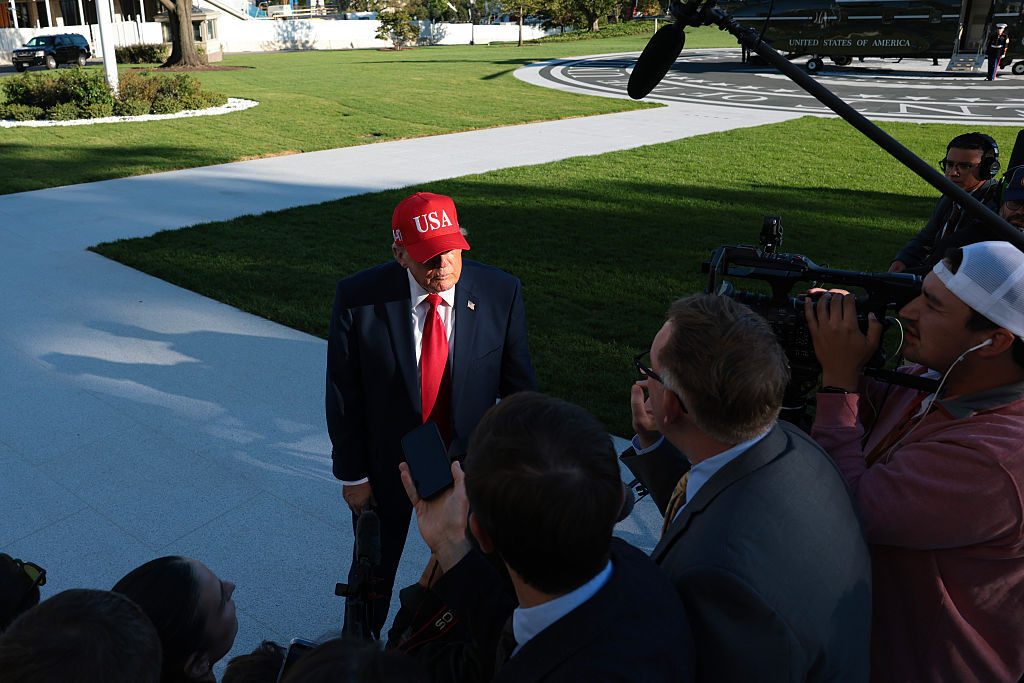
“If they want to come in and build a plant … that’s great, I love that,” he said during Jan. 13 remarks at the Detroit Economic Club.
Given Chinese EV-makers’ technological and price advantage over their American counterparts, the Democrats’ letter is reminiscent of King Canute’s apocryphal vain effort to hold back the tide.
But it also reflects a dark suspicion that Trump will trade Chinese EV access to the U.S. market for a successful China summit.
However apt those concerns, there is an EV deal to be made that is in America’s self-interest.
Chinese EV makers should be invited to build vehicles in the United States if they agree to four conditions: hire American union labor, buy American-made parts, share technology and localize data.
The congressional letter reflects a growing concern about Canada’s decision to let more Chinese EVs into the country. At the same time, Mexico imported nearly 100,000 such vehicles in 2025, while Chinese automakers are actively pursuing building plants south of the border.
In 2025, Canada was the largest market for U.S. car exports and Mexico was the third largest. U.S. exports to those nations are relatively small compared with domestic sales, but that volume is only likely to shrink further in the face of growing Chinese competition.
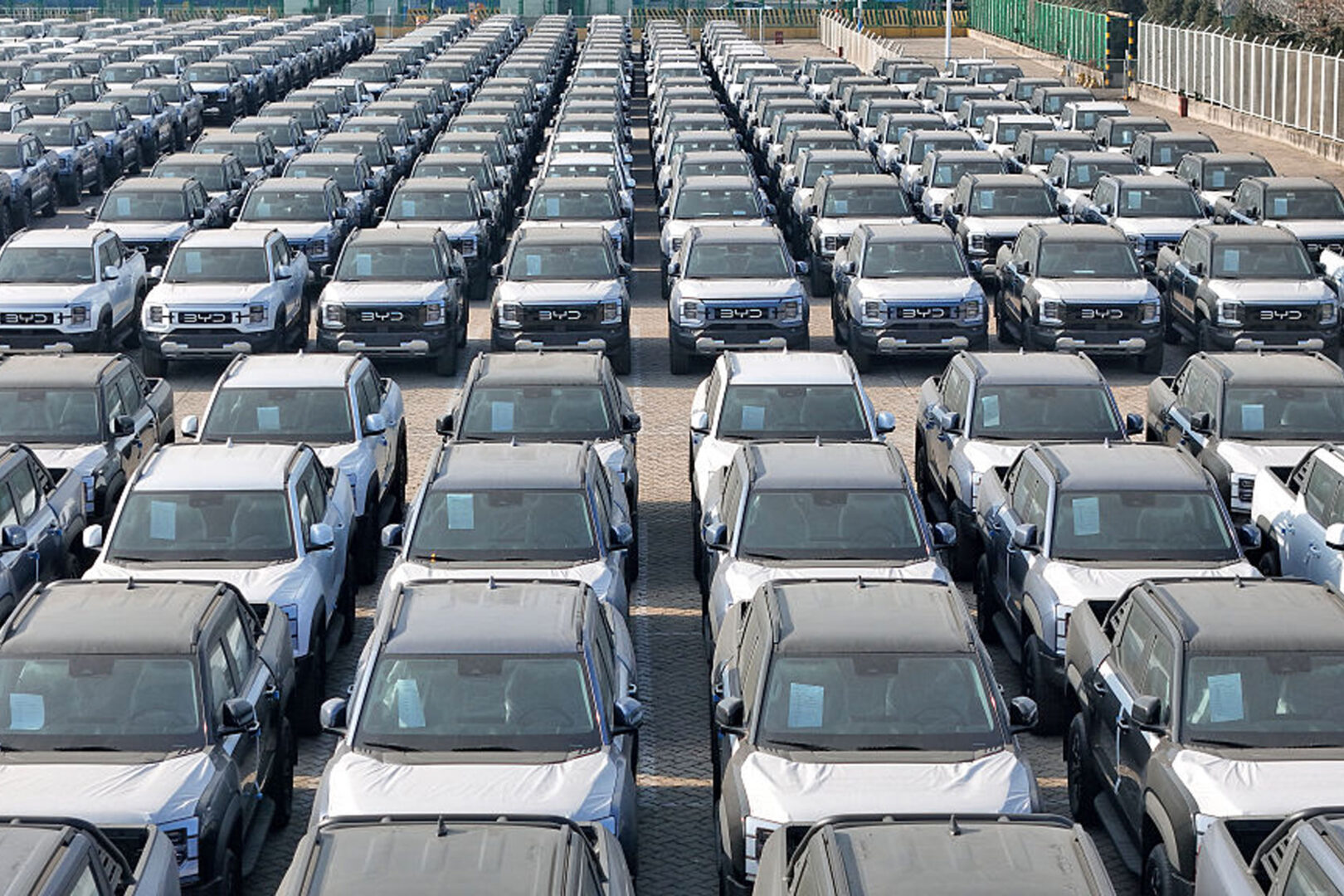
Chinese EV companies have been the beneficiaries of huge government subsidies. In 2025, for example, BYD, China’s dominant EV maker, received subsidy income accounting for 35 percent of the firm’s net income.
Such support has afforded Chinese EV makers deep structural advantages: vertical integration, greater scale, lower overhead costs and significantly cheaper research and development. Key components, such as batteries, software and power electronics, have been developed in-house.
The payoff has been cost-competitive vehicles. Entry-level Chinese EV models for the Canadian market are expected to run between $22,000 and $29,000 (U.S. dollars), despite a 6.1 percent tariff.
Consumers want cutting-edge, moderately priced cars. In the 2010s, China exported about 1 million cars a year. By 2025 exports mushroomed to 7.1 million. And Chinese automakers hope to ship 10 million in 2026.
The U.S. auto market can become an island in a Chinese sea or find a way to remain competitive.
Chinese carmakers already have a foothold in the U.S. market. Geely owns Volvo, with whom it jointly owns Polestar. Both build models in Ridgeville, S.C. They’re already here.
In the face of such creeping Chinese penetration and the demonstrated technological and price advantage of Chinese EVs, it is in Americans’ self-interest to phase Chinese automakers into building more in the United States, much as the Japanese were phased in more than a generation ago.
Consumers would benefit, and competition would force U.S. automakers to up their game.
But this requires a smart deal, with four pre-requisites:
- Chinese transplant EV workers should have the opportunity to vote on union representation. If they turn down a union, as they have in some Japanese transplants, so be it. But this is essential domestic politics, especially for Democrats.
- Chinese EV makers should be required to source parts in the U.S. The EU has proposed that to qualify for public procurement and other financial incentives, five EV battery components and 70 percent of non-battery components should eventually be sourced locally. No Chinese company currently can meet such standards, forcing them to invest in the EU, while buying time for European carmakers to catch up.
- For years China conditioned the right to invest in its market on foreign companies transferring their technology, laying the foundation of China’s auto industry. Chinese EV investment in the United States should be conditioned on joint ventures that involve transfer of the most advanced Chinese battery and other technologies.
- EVs are computers on wheels that generate vast amounts of data. Chinese EV makers should be required to store that data in U.S.-based servers to ensure that it is not used to spy on Americans. And the software in these EVs should be replaced with American software so that it harbors no hidden kill switches or other security threats.
If the U.S. does not strike such an agreement, it risks falling further behind Chinese automakers technologically and being hopelessly shut out of the world market.
It is a deal that President Trump — the self-proclaimed ultimate dealmaker — can and should make.
Bruce Stokes is a visiting senior fellow at the German Marshall Fund.