‘Anti-weaponization fund’ mobilizes resistance among Democrats
Newly announced fund draws scrutiny among both parties
Democrats are mounting a multi-pronged resistance against the Justice Department’s new $1.8 billion “anti-weaponization fund,” saying the money amounts to a slush fund aimed at funneling taxpayer dollars to President Donald Trump’s supporters.
The fund, which was part of a settlement in the unprecedented $10 billion lawsuit that Trump brought against the IRS earlier this year, was also met with questions and criticism from some congressional Republicans.
Though some Republicans were sharply critical of the fund, Republican leadership did not roll out any coordinated push to sink it. Still, the fallout from the announcement continued to ricochet around Capitol Hill, with some conservatives expressing serious concern and at least one GOP lawmaker raising possible legislative action to undo the fund or block it.
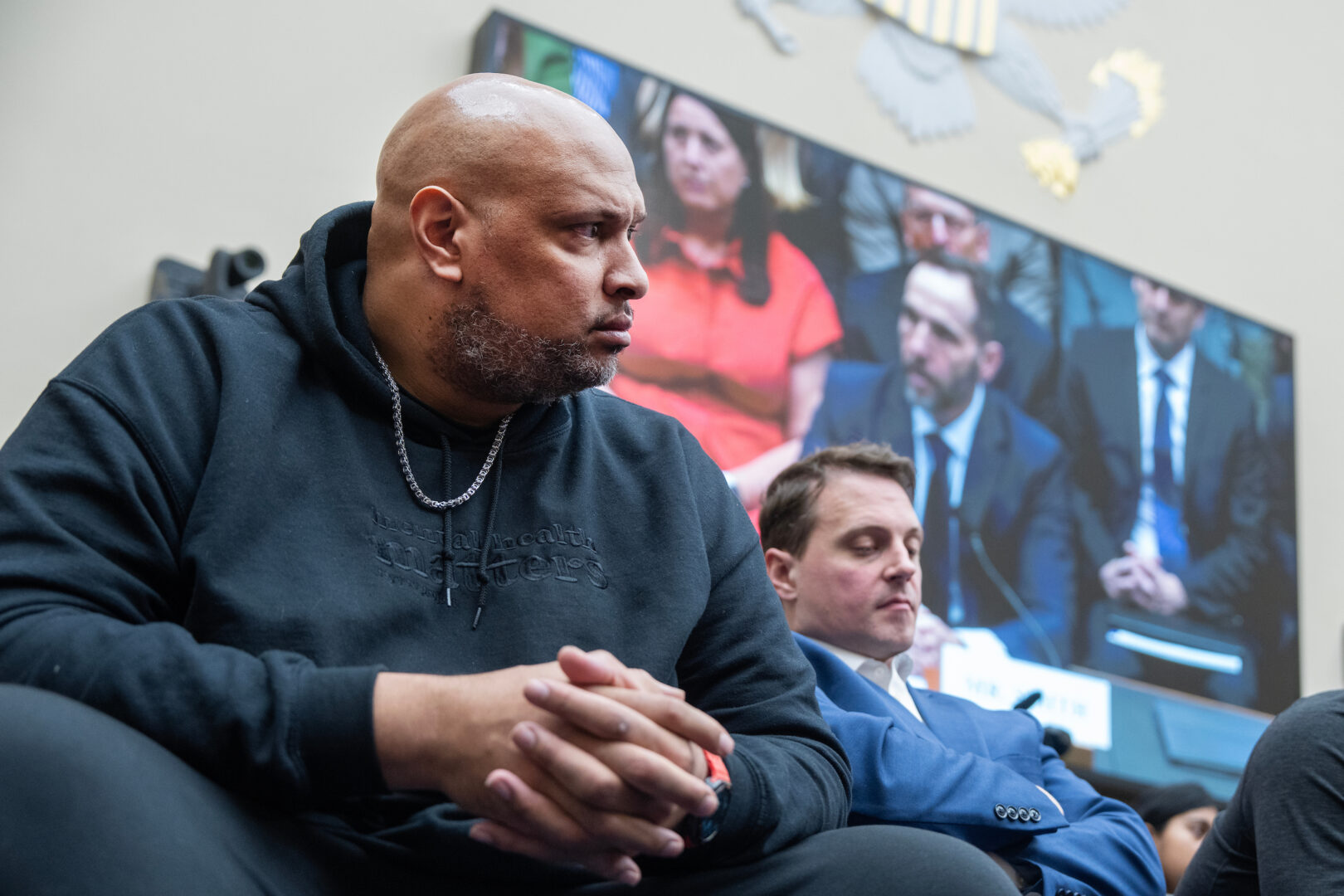
Off Capitol Hill, two police officers who defended the U.S. Capitol during the Jan. 6, 2021, attack filed a lawsuit Wednesday challenging the creation of the fund, teeing up a court battle that could open an avenue for judicial intervention.
Meanwhile, Democrats previewed their own efforts to push back against the Trump administration move.
On the Senate floor, Minority Leader Charles E. Schumer, D-N.Y., said on Wednesday that Democrats were going to force Republicans to vote on the fund through the process associated with the latest GOP budget reconciliation bill.
“Republicans will not be able to duck or to hide,” Schumer said. “Republicans, are you for the slush fund? This evil, corrupt slush fund? Or are you against it?” Schumer said.
Sen. Chris Van Hollen of Maryland, the top Democrat on the Senate Appropriations subcommittee that oversees the Justice Department budget, announced Wednesday he would introduce a fund-related amendment to the GOP reconciliation bill. His office, in a press release, said the amendment would be aimed at preventing violent criminals and child molesters from receiving payouts from the fund.
The amendment announcement comes a day after acting Attorney General Todd Blanche refused to rule out money going to people who have assaulted police officers or committed a violent crime.
Instead, Blanche, appearing before Van Hollen and other lawmakers during a budget hearing, said he expects that the commissioners who control the fund will set up rules over eligibility and establish procedures for applying for compensation.
The fund will consist of a five-member commission appointed by the attorney general, the Justice Department said in an announcement. The president can remove any member, the department said.
Target for Democratic appropriators
Sen. Patty Murray of Washington, the top Democrat on the Senate Appropriations Committee, said in a statement Tuesday she would try to block the fund through the bipartisan appropriations process.
“I’ll be pushing to get this done as the Senate drafts funding bills this summer,” Murray said in a statement, adding that the corruption is “staggering.”
Van Hollen said the new fund could complicate the effort of his Appropriations subcommittee to produce a bipartisan Commerce-Justice-Science spending bill.
“I think we need to make sure that no monies are going to pay out to people convicted of violent offenses, including people who beat up and assaulted Capitol police officers,” he said Wednesday. “I think we should attack it from every angle because it’s an obscene use of taxpayer funds.”
GOP Sen. Jerry Moran of Kansas, the subcommittee chairman, said he thinks it “remains to be seen” how the recent fund factors into appropriations talks.
“It will need some attention to keep us on track,” he said.
In the House, meanwhile, Rep. Jamie Raskin of Maryland, the top Democrat on the Judiciary Committee, moved Wednesday to subpoena Blanche, Treasury Secretary Scott Bessent and other officials to testify at a hearing on the fund.
But Republicans on the committee voted to table the move. Rep. Kevin Kiley, a California independent and former Republican, sided with Democrats on the vote.
Republican questions
Rep. Brian Fitzpatrick was among several Republican lawmakers who expressed concern about the fund. The Pennsylvania Republican in an interview Wednesday said he’s against it.
“We have such a gap right now in trust with the public and the institutions,” he said. “We try to restore that through things like banning stock trading for members of Congress. This goes in the opposite direction.”
Fitzpatrick said he’s trying to better understand the fund so that lawmakers can take legislative action to undo it or block it altogether, if the fund is what it appears to be, he said.
Kiley, who caucuses with Republicans, also criticized the fund.
“It’s very strange, very unprecedented. It’s very concerning,” Kiley said. “I don’t know why anyone is receiving money from this fund.”
Kiley added he thinks there should be congressional oversight into how the fund came to be, and the criteria for any distributions.
That concern came a day after Senate Majority Leader John Thune, R-S.D., did not endorse the fund when asked about it and a sweeping settlement pledge in which the IRS is “forever barred” from “examinations” against Trump or “related or affiliated individuals.”
“I think that there are — and will be, continue to be — a lot of questions around that that the administration is going to have to answer,” Thune said.
Lawsuit
The Trump administration also faces a challenge in court.
The federal lawsuit, brought Wednesday by former Capitol Police officer Harry Dunn and Metropolitan Police Department officer Daniel Hodges in the U.S. District Court for the District of Columbia, asks the court to block administration officials from making claim payments out of the fund and alleges the fund was created to “finance the insurrectionists and paramilitary groups.”
The fund would only heighten the danger that Dunn and Hodges already face via death threats and violence, the lawsuit argues.
“The Fund will directly finance the violent operations of rioters, paramilitaries, and their supporters who threatened Plaintiffs’ lives that day, and continue to do so,” the lawsuit states.