Trump’s influence on GOP primaries spurs ‘pretty sour’ feelings
Republicans primaried by Trump could make legislating even harder
The relationship between some Republicans and President Donald Trump could be taking a “pretty sour” turn as some GOP lawmakers primaried out of their congressional seats by White House-backed candidates explore a newfound freedom to vote their minds.
That bodes poorly for Republicans’ efforts to unify and maintain their thin majority in Congress in the months to come, let alone pass the party’s key legislative priorities.
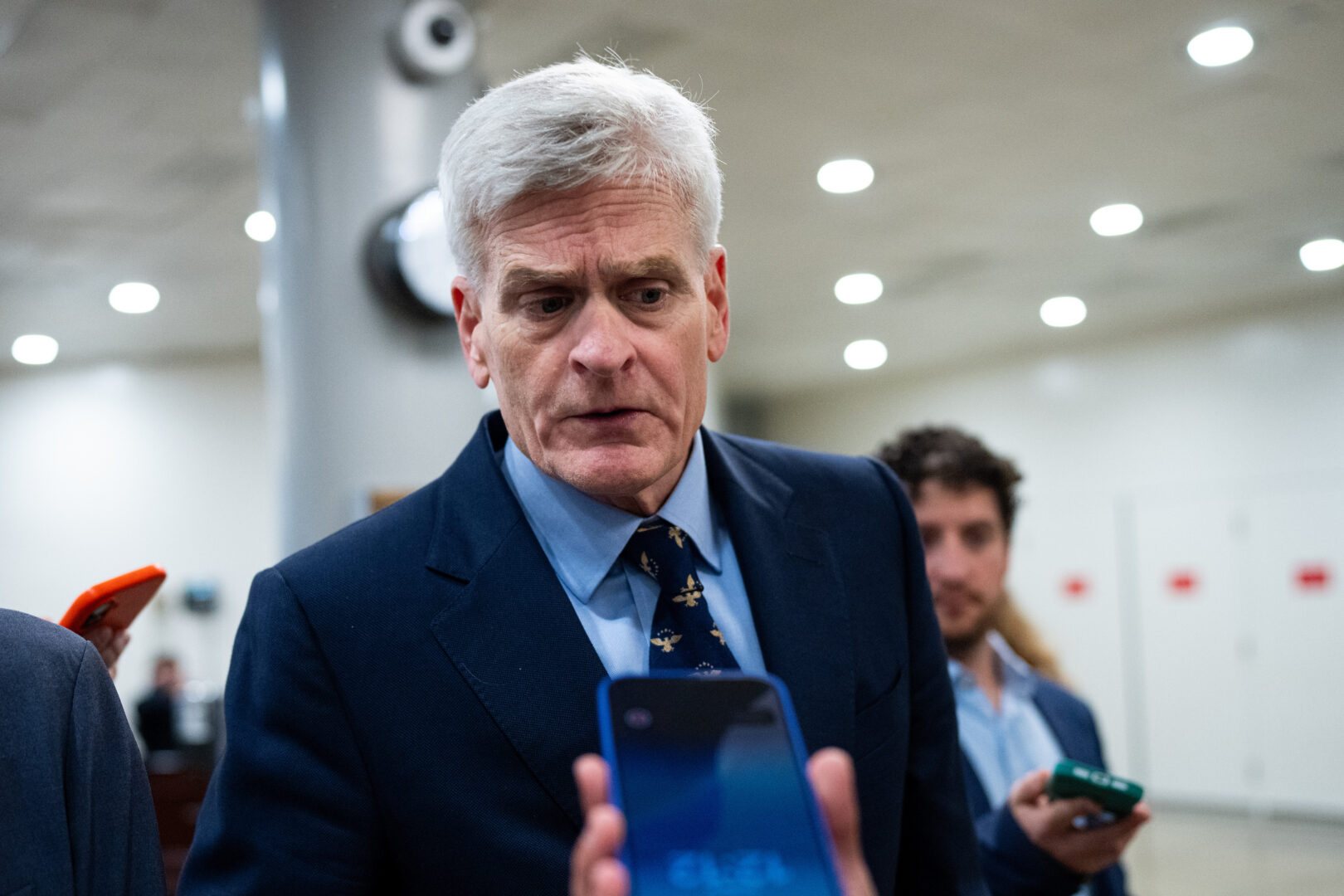
“This is May 19,” said Sen. Lisa Murkowski, R-Alaska, who described the sour vibes Tuesday after Sen. Bill Cassidy voted with Democrats on a key war powers measure. Cassidy lost his primary to a Trump-endorsed candidate Saturday.
“There are still many, many weeks, many months to go before the election, and this president is going to have to continue to deal and work with and partner with or battle with this group of lawmakers,” she said.
Throughout the primary season, Trump has been slowly picking off sitting GOP lawmakers who he views as insufficiently loyal.
The litmus test has been wide-ranging: For Cassidy, R-La., it was his vote to impeach Trump in 2021 that spelled his doom — a decision he has defended in recent days.
For Rep. Thomas Massie, R-Ky., it was his bipartisan work to make public the Epstein files as well as other Democrat-aligned votes on war powers and tariffs. Massie lost his primary Tuesday.
“Do not ever doubt President Trump and his political power,’’ White House Communications Director Steven Cheung posted on social media. “Fuck around, find out.”
Retiring Sen. Thom Tillis, R-N.C., who has already taken an “unleashed” approach to voting, said he can be “more vocal” after his retirement announcement. It begs the question — as more sitting Republicans are on the outs, will they also dare to defy Trump?
Cassidy’s newfound freedom was on display soon after he lost his primary election, when he voted with Democrats to advance a war powers resolution seeking to end the Iran war.
It was the eighth such vote — and the first to succeed.
‘Complicated’ dynamics
With Senate Republicans up against a narrow majority, and a number of lawmakers facing tight races in battleground states, GOP leadership recognizes the increasingly uphill battle that comes with advancing the Trump agenda.
Majority Leader John Thune, R-S.D., told reporters Wednesday that the chamber dynamics are “slightly more complicated” given Trump’s pushback against incumbent senators, especially as the White House pushes hard to advance projects that are facing some skepticism.
A $1 billion Secret Service funding provision in the immigration enforcement budget reconciliation bill that’s connected to the proposed White House ballroom, for example, is poised to fall out of the package after a lack of GOP support. Cassidy told reporters on Tuesday that he wouldn’t vote for the legislation if the provision stayed.
Trump also ruffled feathers when he endorsed firebrand candidate Texas Attorney General Ken Paxton over Sen. John Cornyn, R-Texas, in that state’s primary runoff next week.
Cornyn, once the second-ranked Republican in the Senate, is widely viewed as one of a handful of dealmakers left in the chamber — but that willingness to work across the aisle meant he ran afoul of Trump.
Senators from across the conference had thrown their support behind Cornyn in the primary, and mourned the blow to a longstanding senator in the wake of the endorsement Tuesday.
“None of us control what the president does,” Thune told reporters after the endorsement. “He made his decision about that. That doesn’t change the way I feel, and I am certainly supportive of, will continue to be supportive of Sen. Cornyn and his reelection.”
Muted reaction
In the House, the reaction to Massie’s loss was more muted among many rank-and-file members. That’s in part because Massie was already a firebrand in his conference with a number of controversial votes on his record.
“We need people here who are not trying to carve out their own lane and do something that’s destructive or counterproductive to the agenda, and that’s what’s happened,” Speaker Mike Johnson, R-La., told reporters of Massie’s primary loss.
Many Republicans said Massie’s loss was simply the manifestation of the will of the voters. But at least one member of the House GOP is taking issue with Trump’s approach.
Retiring Rep. Don Bacon, R-Neb., warned of the prospect of “a totally loyal party that’s in the minority, that’s maybe where we’re headed,” adding that room for disagreement is essential.
“I would recommend the president win these debates with persuasion, not bullying,” Bacon said. “Americans don’t respond to all the bullying, and I don’t think it works well for November.”
Rep. Brian Fitzpatrick, R-Pa., who has also been criticized by Trump, said the criticism “doesn’t impact me at all. It doesn’t hurt my feelings.”
“It’s a very simple calculus on how to do this job. Every bill that comes to the floor is either a net positive or net negative for your district. They’re your bosses. Nobody here is your boss, no party or no person here is your boss,” he said, adding “People can choose who to endorse. Everyone has the right to free speech. Nobody should treat that personally. I wish the dialogue was more respectful.”
A primary loss doesn’t mean these ousted lawmakers will take their frustrations out on all GOP priorities.
But the Trump administration has a laundry list of priorities ahead of the midterms, with items like a third reconciliation bill, election administration legislation and annual appropriations bills all on the docket.
Cassidy, who is considered a pivotal vote on both the security funding provision and the war powers measure, said he is making decisions that are “rational,” consistent with the Constitution and “consistent with what’s good for my country.”
“There’s this narrative going around that Bill Cassidy is somehow doing things irrationally,” Cassidy said. “I just tell people to look at my rationale for what I’m doing.”
Still, some lawmakers warn that the White House shouldn’t take the votes of these departing members for granted.
“Maybe he doesn’t think he needs us, but last I checked, the laws don’t just appear on his desk to sign,” Murkowski said. “Funding just doesn’t come.”