NIL bill advocates see goal line in sight after recess
Veteran sports writer compares chamber’s drama to 'Pac-12 after dark'
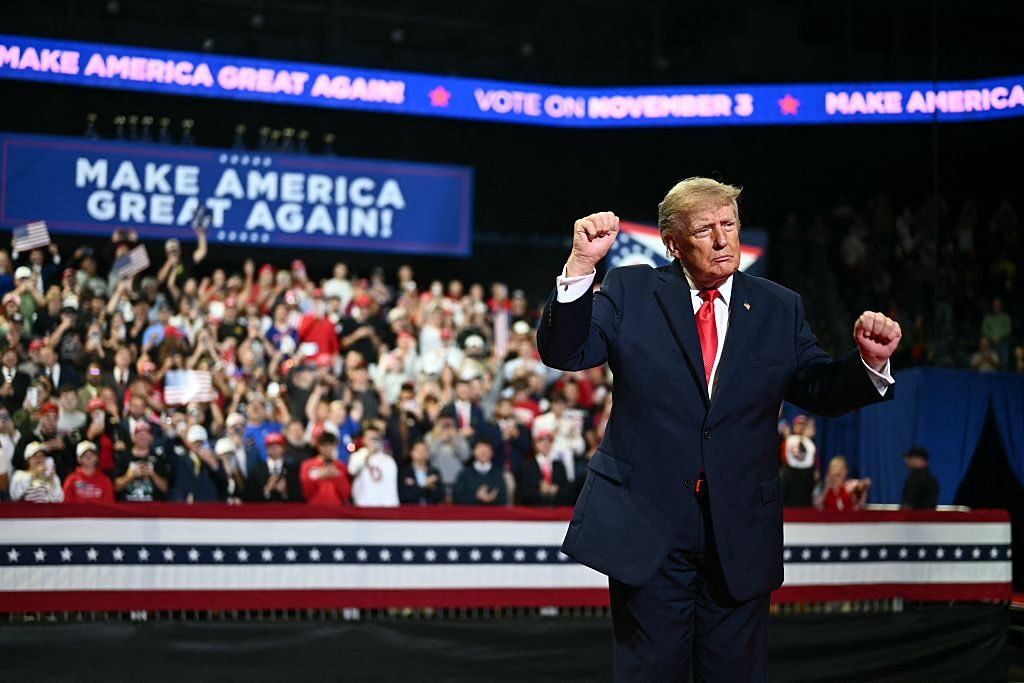
After 16 wild hours that ended with a bipartisan college sports bill being punted in the middle of the night, President Donald Trump’s involvement was not enough to trigger votes on legislation he would like to add to his midterms and legacy sales pitches.
As senators and senior aides bickered and postured all day and night Friday into Saturday morning, the so-called Protect College Sports Act was part of a “global agreement” on which Senate Republican leaders hoped to lock in before leaving town until Sept. 14. By mid-afternoon Friday, it was out again, before making a comeback, until ultimately, the late rally from its authors, and even Trump, fell short.
In football terms, the bill’s growing number of skeptics had essentially won a wild shootout in double overtime by a score akin to something like 54-48.
It all conjured comparisons, for some longtime college sports observers like Sports Illustrated senior writer Pat Forde, to a Capitol Hill version of a college football phenomena known as “Pac-12 after dark.” That’s a reference to the previous incarnation of the largely West Coast collegiate conference. Its football games often would end after viewers on the East Coast had turned in — and with high scores and chaotic finishes.
All that was missing Saturday morning was ESPN’s “College Football Final” crew dramatically recapping the highlights.
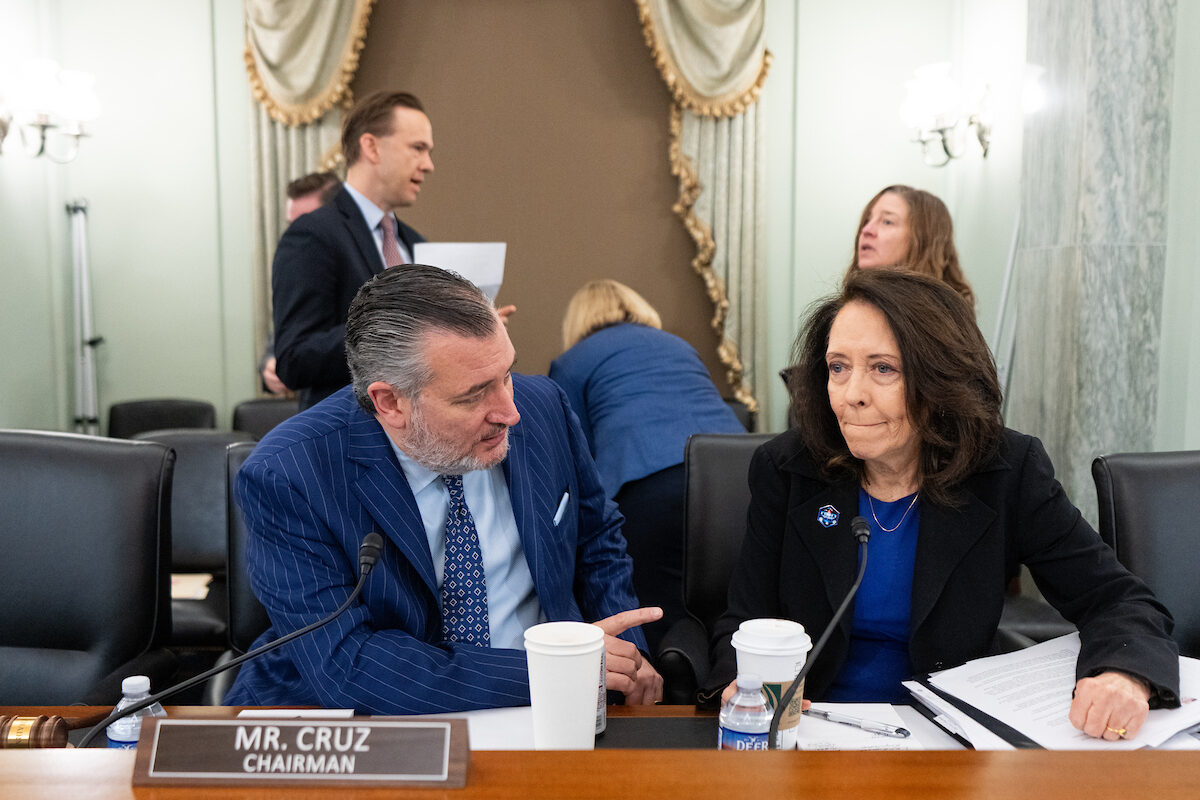
The president — who had weeks ago backed the bill from Senate Commerce Chairman Ted Cruz, R-Texas, ranking member Maria Cantwell, D-Wash., panel member Eric Schmitt, R-Mo., and Delaware Democratic Sen. Chris Coons — got involved in what was basically the second quarter of the drama.
“Without this Bill, millions of young Athletes will be hurt, programs will be canceled, Women’s and Olympic Sports will go away, the fans will be robbed, and Universities will go broke,” Trump wrote on social media as the bill had appeared to lose momentum for even a procedural vote before the summer break.
The other GOP senator from Missouri, Josh Hawley, introduced an amendment Friday that would have altered the measure’s language to state it would not supersede state laws prohibiting “biological men from competing in women’s collegiate sports.”
It was yet another example how the college sports bill had created odd political divisions. On one side of the legislative line of scrimmage were Hawley and other conservatives, and on the other were Trump and Cruz — hardly considered among Washington’s shrinking roster of moderates.
Cruz headed to a camera for a hit on right-leaning Newsmax TV to deny the “Protect” bill would allow transgender women into women’s sports. Trump, who was on his way for a weekend at a LIV Golf event at his Bedminster, N.J., club, weighed in on social media.
“This Bill CLEARLY protects the Laws in 27 States protecting Women’s Sports, and banning Men from Women’s Sports. Anyone who tells you differently is LYING! Stop grandstanding, and try getting this done,” he wrote.
Both the bill’s proponents and skeptics, as the clock ticked down to recess, claimed to have the upper hand. But no one was quite sure what was going on.
Commerce Committee aides from both parties used descriptors like “fluid” and “moving target” and “in flux” to describe what was happening behind closed doors. When some college sports reporters, citing GOP sources, wrote on the social platform X late in the afternoon that the measure was officially being kicked into a scheduled brief Senate September session, one Commerce aide texted about their side’s most current intelligence: “I really don’t know.”
As screenshots of an apparent Senate “hotline” question emerged on social media that included the name, image and likeness (NIL) bill, aides involved in the debate offered contradictory assessments of its seriousness.
‘More clarity’
By that evening, amid murmurs that the “hotline” effort to gauge Senate support for expedited consideration of the bill had produced too much resistance for any votes on the bill before recess, GOP leadership aides cautioned reporters to not believe everything they read on X. A Commerce Committee aide replied to an email about the “hotline” resistance by providing a link to Trump’s social media post.
Senate Majority Leader John Thune, R-S.D., told reporters in a Senate hallway that lawmakers needed “more clarity” on the bill. But Michael McCann, a University of New Hampshire law professor, reacted to that update by questioning how much more it would take for some lawmakers to get to “yes” on any name, image and likeness bill.
“After more than 40 NIL-related college sports reform bills and numerous hearings over six years, if Congress still doesn’t have ‘clarity on’ NIL, not sure it will suddenly emerge hours from a recess,” he wrote on X.
By late Friday night, some sources had gone dark. After hours of closed-door meetings, Thune around 2:05 a.m. Saturday spoke on the Senate floor. The college sports bill would be punted to September.
Commerce Committee leaders contended early Saturday that they had secured a guarantee from Thune.
“Time may have run out to protect college sports in August, but there is plenty of time in September. I’m glad Senator Thune set a date certain in September to bring it up because the challenges facing student athletes and universities aren’t going away,” Cantwell said in a statement sent around 2:45 a.m. Saturday. “I look forward to its passage in September.”
During what was a hectic and confusing day, Florida GOP Sen. Ashley Moody filed what some college sports stakeholders and analysts calculated was a sort of legislative Hail Mary pass. She introduced an amendment that would have given colleges and universities 180 days after Trump potentially signs the bill to change conferences.
The move appeared aimed at Florida State University and the University of Miami, which have flirted with leaving the Atlantic Coast Conference for some time. Their likely destinations would be either of the so-called Power Two leagues, the powerful and revenue-rich Southeastern and Big Ten conferences.
As written, the bipartisan bill would make conference realignment much more difficult — and would prohibit the SEC and Big Ten from breaking away to form their own so-called superconference. Florida State and Miami officials have long questioned the financial viability of the ACC, viewing the SEC as more lucrative due to its massive media rights contracts with major networks.
Scott Schneider, an education and employment lawyer who teaches on those subjects as adjunct professor at the University of Texas, wrote on X during the Friday fracas: “I’ve been genuinely surprised that schools in the ACC and Big 12 support this bill as drafted (and apparently some don’t?).”
Fourteen amendments have been filed, so far. The recess will give the bill’s skeptics five weeks to intensify that blitz.