In American politics, has racism become a feature, not a bug?
We need to call out backsliding for what it is

Racism is no longer a deal breaker — in life or in politics.
It’s a tough truth to face, especially, I admit, for someone whose family members used nonviolence to fight dangerous civil rights battles, forcing a resistant America to live up to its ideals.
But it’s a truth that must be faced. The problem is, not too many are willing to call the backsliding out for what it is. We live in a world where racist words and actions are couched in euphemisms like “racially insensitive” or “racially tinged,” when those words or actions are noticed at all.
Maybe if we all close our eyes and pretend, racism will disappear, as Supreme Court Justice John G. Roberts Jr. asserted when he wrote the majority opinion eviscerating the Voting Rights Act of 1965 in the 2013 Shelby decision: “Our country has changed, and while any racial discrimination in voting is too much, Congress must ensure that the legislation it passes to remedy that problem speaks to current conditions.”
Remembering that as a young attorney in 1982, Roberts wrote that the landmark act represented “the most intrusive interference imaginable by federal courts into state and local processes,” it seems he was just playing the long game.
Today, being called a racist is worse than actual racism.
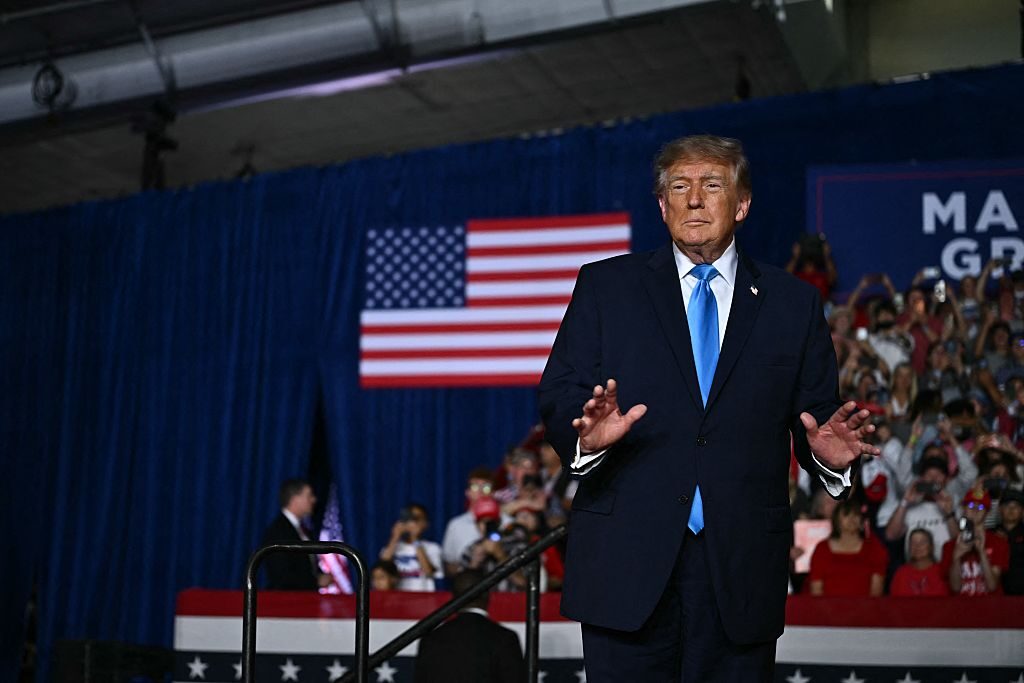
Consider Vice President JD Vance’s well-received speech at the recent Republican convention/Trump rally in Texas, with reports essentially proclaiming “A GOP Star Is Born.”
His applause line — “We were tired of being called racists for noticing that our country was becoming dirtier and poorer and less safe and less prosperous” — was couched in the language of policy difference over issues such as immigration, crime and culture, instead of being called out as hateful rhetoric that would not have been out of place at a white nationalist rally.
For the man next in line to the presidency, this was not a one-off. This is the guy who spread lies that residents of his home state — at the time legal residents revitalizing Ohio cities and towns — were eating people’s pets. Hard-working men, women and children of Haitian descent paid and continue to pay the price.
I expect to see the ambitious Vance’s words in future campaign ads, maybe alongside images of white South Africans strolling the red carpet the Trump administration has laid down for them.
Then, there’s Mike Davis, who is not some random social media blowhard, but a Republican leader, lawyer and Trump ally. Davis worked for the Senate Judiciary Committee under GOP Chair Charles E. Grassley and now leads a group called the Article III Project, which claims to “fight leftist lawfare” and “fearlessly defend” conservative judges.
His recent X post, ostensibly critiquing a speaker at a socialism conference, but containing a message that was clearly designed for a broader audience, was as offensive as it was cliched: “Dear Bitching Minorities: Here’s my proposal for your reparations: One-way tickets anywhere. 6 months of living expenses. Renounce your U.S. citizenship. Never come back. Good luck. You’ll need it. (Especially with that nappy-ass head of hair.)”
So, he wants the people who built this country, who continue to contribute to its prosperity, to just go away? Not a chance.
Unfortunately, there is also no chance that Davis will suffer consequences for his hate or his weird obsession with hair texture.
In today’s GOP, he might just get support and a push to run the Smithsonian, where the stellar visionary Lonnie Bunch, who recently announced his resignation, has served as secretary. I’m sure Davis would love to censor the museums that tell America’s beautiful, horrible, triumphant story, replacing the exhibits with a comic-book whitewash so his racist post would make some kind of twisted sense.
What I haven’t heard are condemnations from GOP elites or media questions asking every Republican at a microphone if he or she supports the Davis solution for making America whiter.
That’s opposed to the inquisition that greets Democrats, asking them to comment on the latest extremist rant from streamers and social media warriors.
The thing is, Republicans could make inroads with more Black voters, if only they pretended to care about them as Americans, or just as human beings.
My mother was a Maryland Republican and elections official who was proud to vote for GOP candidates such as Sen. Charles Mathias. He worked for civil rights, clashed with the Nixon and Reagan administrations over justice policies and was called “the conscience of the Senate” by its Democratic leader, Mike Mansfield. But those days, when party members bucked leadership over issues and actually had a conscience, are in the past.
Not that Democrats are pure of heart when it comes to respecting or just acknowledging one of the party’s most loyal group of voters.
When Democratic Senate candidate James Talarico of Texas recently said, in an interview on MS NOW, that his party has taken Black voters for granted, he got credit for saying out loud what many were already thinking.
Listening carefully would help. Recent history proves Black voters could have saved the party some trouble if only it had paid attention.
In 2022, some Pennsylvania voters pointed out possible character flaws in Senate Democratic primary candidate John Fetterman, who while mayor of Braddock detained a Black jogger while holding a shotgun, and then refused to apologize or simply acknowledge how badly that scenario could have played out.
When the party placed South Carolina first on its primary calendar, and received some pushback from critics who downplayed the importance of the state’s Black Democratic voters, labeling them establishment and controlled by the church and Rep. James E. Clyburn, it was noted by folks who’ve had to be strategic — in voting and in life.
And remember who warned Democrats that Michael “Stop and Frisk” Bloomberg was never going to come close to the presidency, with so many base voters reminding everyone about the hell he put a lot of young Black and brown New Yorkers through when he was mayor.
“Vote for the Democrat, what choice do you have?” may not be the motivation many Democrats think it is.
That is, unless Republicans continue to proudly unleash the racist rhetoric that seems a feature, not a bug, of the party in 2026.
Mary C. Curtis has worked at The New York Times, The Baltimore Sun, The Charlotte Observer, as national correspondent for Politics Daily, and is a senior facilitator with The OpEd Project. She is host of the CQ Roll Call “Equal Time with Mary C. Curtis” podcast. Follow her on X @mcurtisnc3.