Into the uncanny valley of ‘Musk’
Director Alex Gibney unpacks the world’s richest man
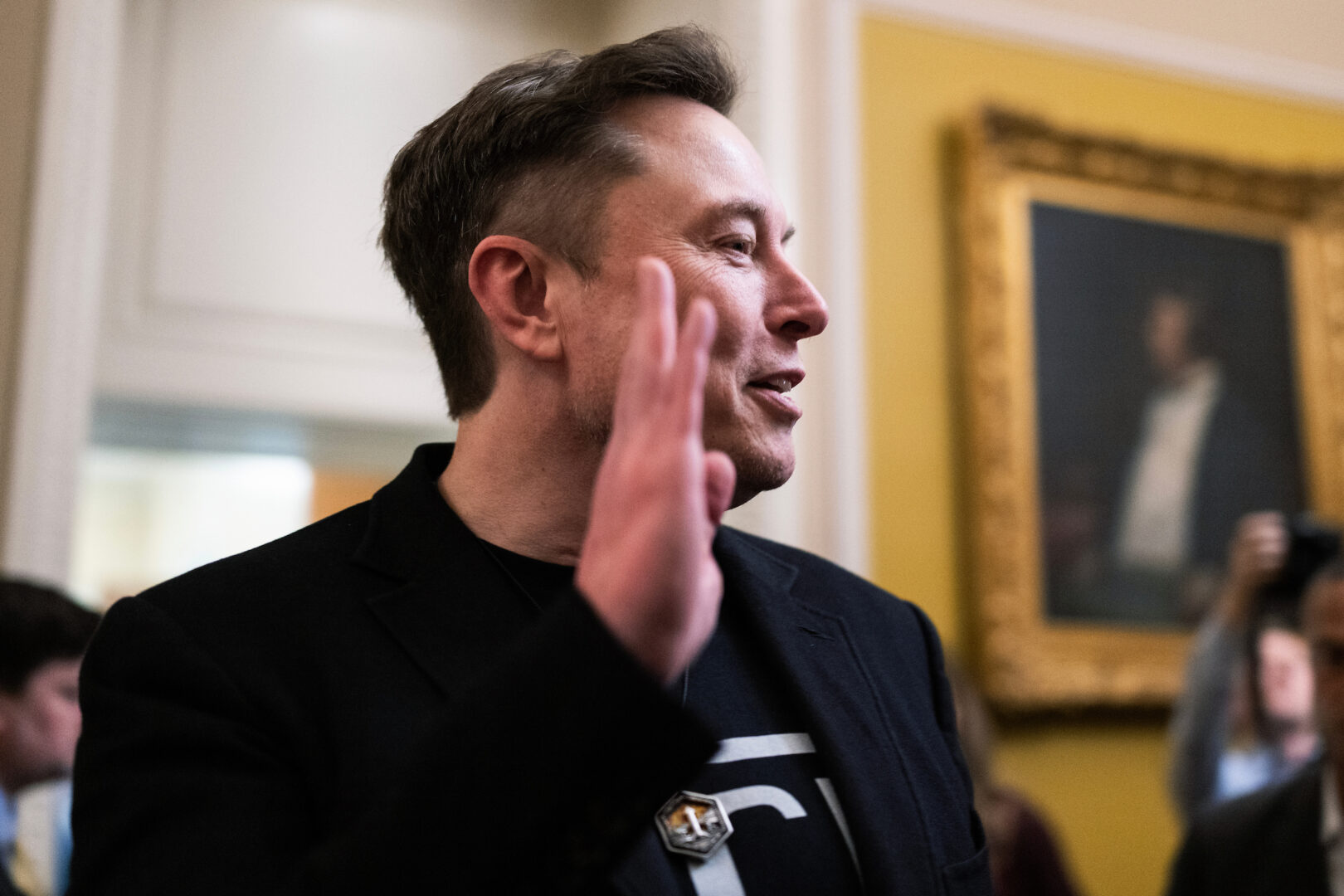
Alex Gibney knows a thing or two about confidence men. The director has probed the hubris of Enron executives, the political grift of Jack Abramoff and the rise and fall of Elizabeth Holmes’ blood-testing company, to name a few.
So where does Elon Musk fit into that Mount Rushmore of characters?
“Let’s give him some credit where credit is due,” the director says of the world’s first trillionaire. “He’s created an unfathomable fortune for himself by bullshitting us.”
At nearly four hours long — including an intermission — Gibney’s latest documentary is not short, to put it mildly. But “Musk” shows how much power one man has amassed over America’s economy and politics, whether by shooting rockets into space, falling in and out with Donald Trump, or taking a chainsaw to the federal government through the so-called Department of Government Efficiency.
What does Musk think of all this? “Gibney is a douche,” he wrote on X a few years ago. When the Tesla CEO declined to participate in the film, Gibney turned to the next best thing — an AI-generated avatar that stares out of the screen, voicing some of Musk’s past statements. It looks and sounds like him but also has an “uncanny valley.”
After all, Musk believes “we’re living in a simulation designed by some advanced intelligence of the future,” Gibney says. “I thought, why not lean into that idea?”
This interview has been edited and condensed. For the full conversation, listen to the Political Theater podcast.
Q: You worked on this film for longer than you expected.
A: I actually started this in 2022, and I more or less finished a version of the film in spring of ’24. And then there was the near assassination of Trump, and Musk hitched his wagon to the Trump train. That’s when HBO said, “Keep following the story.”
Q: I don’t want to dwell on the running time at all.
A: Let’s just say there’s an intermission. I remember as a kid going to see “Lawrence of Arabia.” I think I saw it six times, and there was a long intermission, and there was a prologue where they play the music. I dug it. It was a long-form movie experience.
Q: How do we get to the version of Musk we know now from this balding nerd engineer who did a version of the Yellow Pages, or from somebody who just kept on getting fired?
A: He got fired over and over and over again until he was almost unfireable. I guess when he fell out for a brief period with Trump, that was the last time somebody kind of fired him, even though he’d already left DOGE at that point. But he kept failing up, massively. And for many people, that’s the Silicon Valley MO. You can fail, and then you just install yourself as the founder of another company.
Q: Musk has dismissed your work as a “hit piece,” but this isn’t a revenge flick. I mean, you owned a Tesla product.
A: Well, I owned a Tesla solar system. I had the panels and the Powerwall, which I liked, though I couldn’t get anybody to help me buy another one because you couldn’t reach a human being. But yeah, I liked the product.
I always hesitate to say he was doing great stuff, because these were companies full of a lot of very talented engineers and executives. But his companies were doing great stuff. We have a lot of footage in the film of the reusable rockets coming down and landing on the pad. It’s extraordinary footage, and his ability to send rockets into space and bring them back cheaply saved the government a ton of money, and also set the stage for another business he would start called Starlink.
Q: The later part of the movie gets into AI — why Musk might have pivoted from being somebody who was concerned about its potential threat to humanity to being somebody pushing it on silly things in Grok or studying autonomous weapons for the Pentagon.
A: One of the biggest challenges in making the film was communicating two ideas simultaneously. Here is a guy who has tremendous amounts of money and power, and he’s also not that bright and not that serious a person, and that’s a scary combination.
Among Elon watchers, it’s called “the realization” — the realization that this guy is not Leonardo da Vinci. He’s closer to Alfred E. Neuman, but in point of fact, he has the power of the Manhattan Project. So that’s a disquieting thing to come in contact with. Same thing with AI. Like, we know these LLMs and some of the programs that these frontier AI companies are running have extraordinary power, but they’re also deceptive, untruthful, untrustworthy, and that should give us all concern.
Q: You talked to a lot of people who have known Musk over the years, like Reid Hoffman or his first wife, Justine. But when Musk refused to be a part of it, you and your team assembled his public statements.
A: We even had outtakes from documentaries, extended versions of podcasts — a tremendous amount of audio and video material.
Q: You constructed an avatar, and it’s somewhat flattering. It doesn’t look exactly like the Musk we’ve seen recently, but an idealized version.
A: As the director, I want the main character in my movie to look good.
The reason we went down that road, from a journalistic perspective, is I wanted Musk’s point of view. I wanted that voice in the film forcefully advocating for his position. But in terms of how it was rendered cinematically, we chose to put that real voice of Elon, as we collected and edited it, into an avatar, a facsimile of Musk that was both realistic-looking and also had an uncanny valley — him, but not him.
And that came out of Elon Musk’s contention that we’re living in a simulation designed by some advanced intelligence of the future which had exfiltrated all knowledge from planet Earth and is now playing a kind of existential video game. I thought, why not lean into that idea? And at the same time, I kind of leaned into the idea of some of the stuff that Musk was recklessly playing with with AI.
Q: He’s sitting in a gaming chair, and you take that video game metaphor even further when he goes into the Consumer Financial Protection Bureau or different places.
A: We imagined it was a first-person shooter game, because in a way, that’s how he treated people at both Twitter and then later federal employees while he was running DOGE. He sees them kind of as NPCs in a video game, and he’s the guy who has the trigger. It allows him to evade any kind of moral responsibility for the firing of real human beings.
Musk called the shutting down of USAID putting it “into the wood chipper.” The performative cruelty, which really did result in the loss of an estimated 500,000 children within the first year of the shutdowns — that’s a pretty big body count, and particularly for somebody who was warned in advance that a sudden shutdown of USAID’s activities would be disastrous. He did it with glee, and he made a joke out of it. That’s something to take very seriously.
Q: But you also suggest we’re missing the bigger point of Elon Musk if we just pay attention to the chainsaw.
A: And that’s the salient feature of the trickster, right? Watch me pull a rabbit out of my hat. You’re always showing something that is hiding what you’re really doing. It wasn’t about waste, fraud and abuse. It was about destroying the government, particularly the regulatory nature of the government, that was protecting all of us as citizens from predators like Elon Musk.
Elon Musk is not something new; he’s something old in a new bottle — and the old is the confidence man who ultimately cons us, but also loses his own bearings with the power he accretes.