Trump’s Russia moves could complicate lame-duck agenda
Pro-Ukraine lawmakers pledge support for Kyiv ahead of busy post-election period
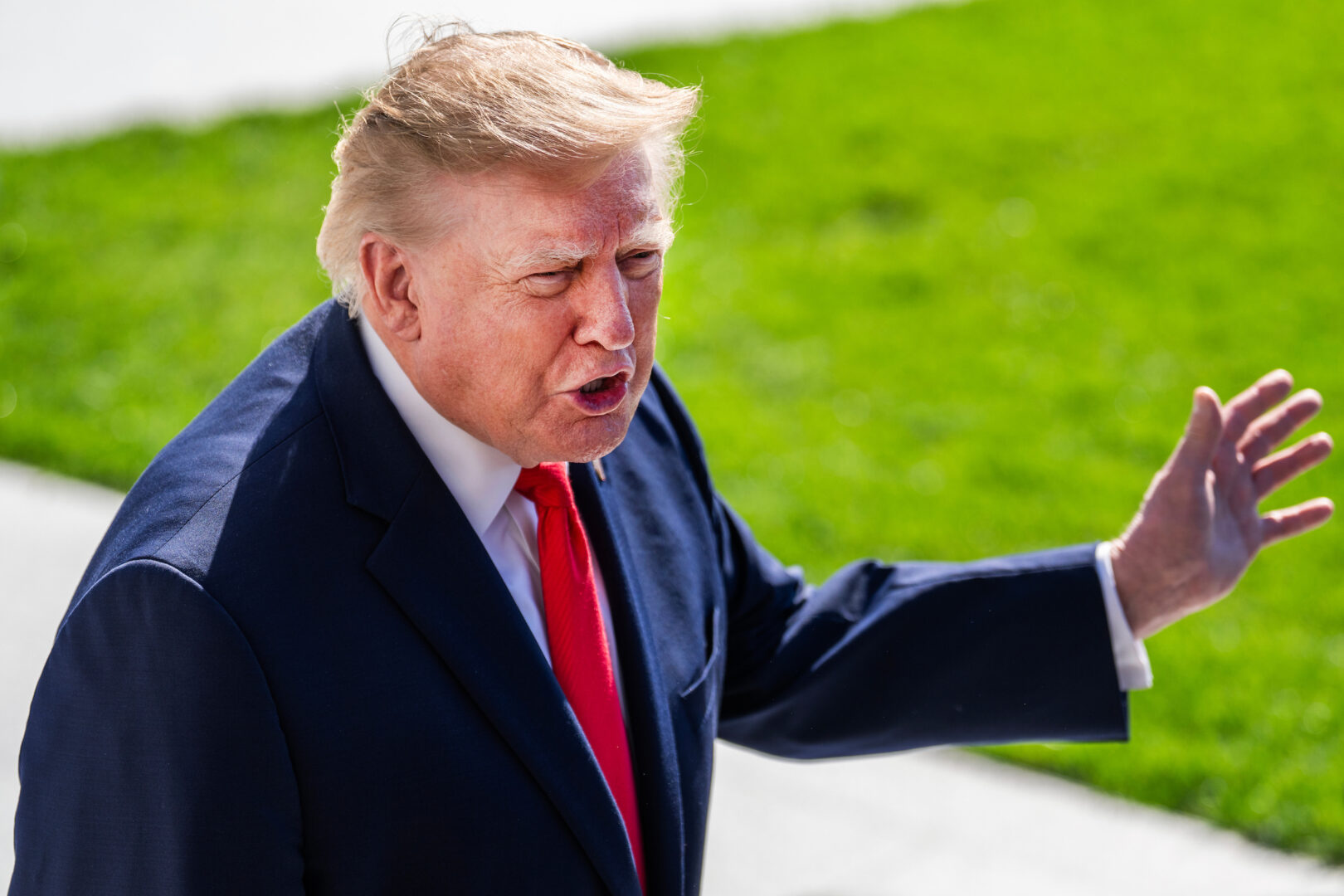
Lawmakers in both parties are assailing President Donald Trump for a series of decisions this month that critics say ally the U.S. government with the Kremlin amid its ongoing war on Ukraine, now in its fifth year.
In the last 10 days, the U.S. government:
- Announced a six-month waiver of sanctions on purchases of Russian diesel fuel.
- Waived sanctions on Russia’s economy that were required under a recently enacted law named after the late Sen. Lindsey Graham, R-S.C., a waiver that the legislation permitted.
- Reportedly throttled
- Withheld early warning of missile attacks, Zelenskyy said on social media on Monday. “Another Russian ballistic attack in multiple waves overnight, and once again, there was no warning from our partners,” Zelenskyy posted on X.
Zelenskyy has also said Ukraine is being pressured by U.S. officials to halt strikes on Russian energy infrastructure.
And Ukraine’s president told Bloomberg News over the weekend that the United States is slowing deliveries of U.S.-built Patriot antimissile interceptors already paid for by European nations.
Zelenskyy has publicly criticized these moves with unusual candor. Trump has attacked Zelenskyy, telling reporters earlier this month that the Ukrainians “should get a new president.”
GOP concerns
A handful of Ukraine’s Republican allies in Congress, joining with most Democrats, are promising obstacles for the president’s lame-duck legislative agenda if the perceived tilt toward Moscow continues.
Even more resistance on this issue could arise next year if Democrats gain control of the House or Senate in the 120th Congress.
With thin majorities in both chambers for the rest of the year, it would not take many GOP mavericks to threaten, for example, the prospects for the NDAA and the Defense spending bills, among other measures.
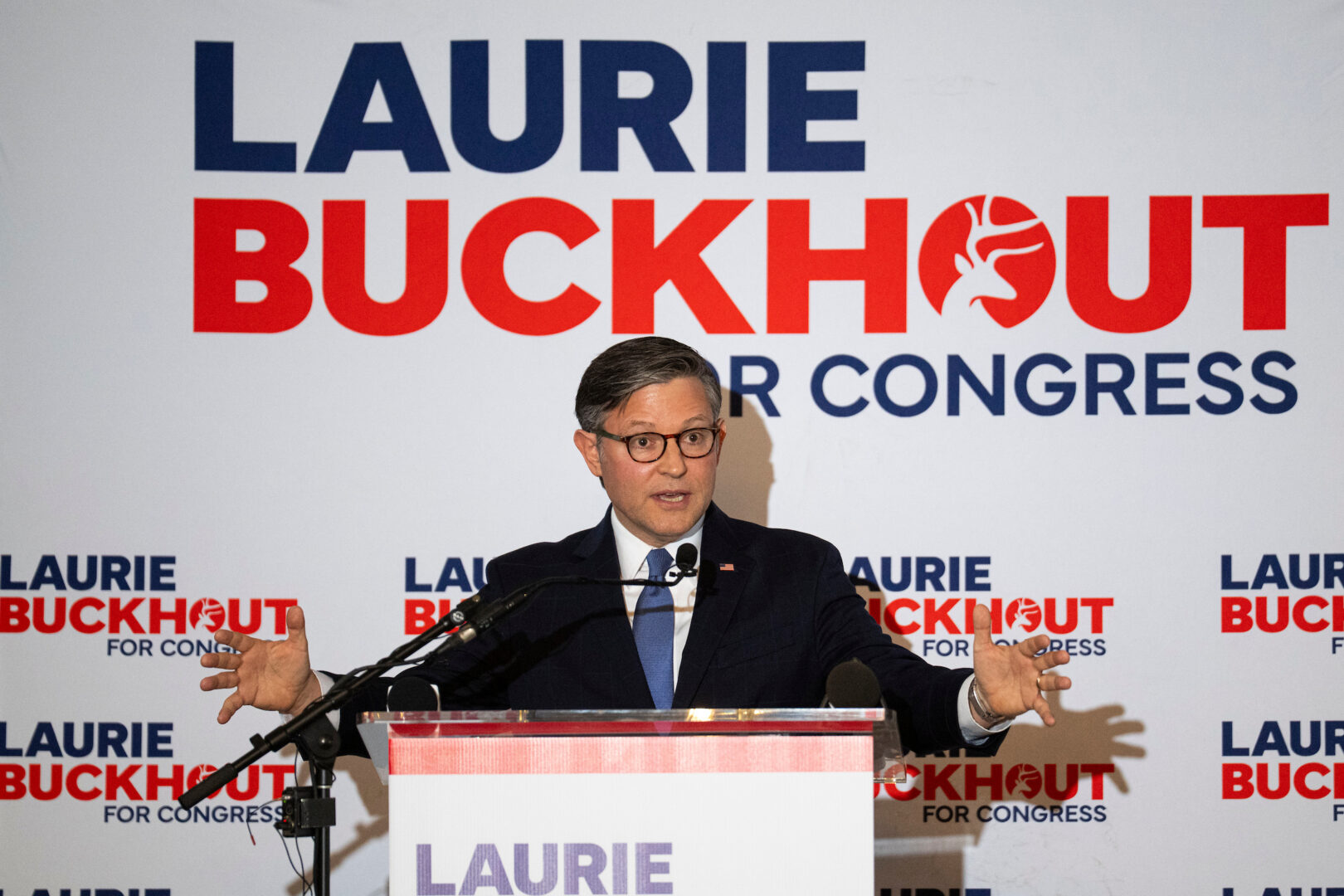
On Sunday, Speaker Mike Johnson, R-La., a Trump loyalist, said on Fox News’ “Sunday Morning Futures” that there are concerns in House panels such as Intelligence and Foreign Affairs about the president waiving Russia sanctions, and he said more discussions need to occur with the White House on the issue.
Johnson said he told White House officials this past weekend that “we need to talk about it and I think carefully consider the unintended consequences that may ensue” from the waivers.
“Congress voted on this decisively just several weeks ago, and we understand that Putin cannot be trusted,” Johnson said. “He demonstrates that over and over and over.”
Rep. Brian Fitzpatrick, R-Pa., who is locked in a competitive reelection battle, pushed back Monday morning against Trump’s Russia moves.
“The United States must provide any and all defensive equipment that Ukraine needs to defend itself,” Fitzpatrick said on X. “The United States must not import a single drop of Russian oil. Sanctions against the Russian regime must be harsher and stronger than they’ve ever been before. Each and every one of these items will be brought to the House Floor — and each and every one of these items will pass on the House Floor by an overwhelming margin.”
Fitzpatrick, a senior Intelligence Committee member, said he plans to speak to Zelenskyy directly this week to assure him that “anyone who attempts to limit the use of Starshield for Ukraine will be fully investigated and will be held fully accountable, to include public congressional oversight hearings, and immediate harsh and punitive budget cuts to any responsible agency or agency head.”
Fitzpatrick had said on Oct. 10 that a measure that would impose an energy embargo on Russia “will be forced to the Floor via discharge and it will pass overwhelmingly.”
Likewise, Rep. Don Bacon, R-Neb., a member of the Armed Services Committee who is retiring after this Congress, said on X on Oct. 14 that the Trump administration will have legislative difficulties in the lame-duck session if the president continues to do more for Russia than Ukraine.
“The Administration’s decision to reduce intel sharing to Ukraine & access to Starlink equates to aiding the invader & the war criminal who bombs cities,” Bacon said. “Does the Administration think it will get ANY support for the remainder of the 119th Congress? Their agenda is dead unless they change paths.”
Senate pushback
Numerous Republican senators have also joined their Democratic colleagues in resisting the president’s softening of sanctions on Russia and apparent withholding of some security help for Ukraine.
Sen. Shelley Moore Capito, R-W.Va., who serves on the Defense Appropriations Subcommittee, told reporters Monday morning she was “extremely surprised” Trump waived the Graham sanctions.
“You’ve seen opposition across the board, I think, Republicans and Democrats,” Capito said. “This was an act of Congress that we had worked with the White House on. We had timed this to when the president and the White House felt it was a good time to move forward with this, where it could be effective.”
In the House on Monday, Rep. Craig Goldman, R-Texas, also decried the undoing of the Graham sanctions.
“I certainly would be in favor of keeping those sanctions on Russia until the war is over,” Goldman told reporters.
On Oct. 13, 12 senators — six Republicans and six Democrats, including several senior ones from both parties — criticized Trump’s proposal to lift sanctions on purchases of Russian diesel fuel.
That chorus has gotten louder.
For example, on Oct. 15, nine senators from both parties called on the Pentagon inspector general to investigate the reports of restrictions on Starlink and Starshield.
On Satuday, Sen. Thom Tillis, R-N.C, criticized the administration’s moves on Russia in no uncertain terms.
“It’s unconscionable that this administration is capitulating to a Russian dictator who illegally invaded Ukraine and butchers innocent civilians every single day,” Tillis said on X.
Sen. Kevin Cramer, R-N.D., added his voice to the critique in an appearance on CBS News’s “Face the Nation” on Sunday.
“Capitulating to a bully generally means they’re going to make more demands going forward,” Cramer said. “That’s the problem with taking sort of a business negotiation approach to negotiating with a thug, which is what Vladimir Putin is.”
Sen. Ted Cruz, R-Texas, said on Fox News on Saturday that he wishes the president had not waived the Graham sanctions law.
Sen. Roger Wicker, R-Miss., chairman of the Senate Armed Services Committee, has been pushing an arrangement, which he says Zelenskyy has agreed to, under which Ukraine would stop striking Russian energy facilities in exchange for Ukraine receiving U.S. assistance in targeting Russian missile launchers.
Zelenskyy has also offered to withhold such deep strikes in exchange for more Patriot antimissile interceptors.
On Monday, four Democratic senators wrote to Space X’s vice president for legal affairs, Christopher Cardaci, asking for a thorough explanation for the reported scaling back of Starlink and Starshield support to Ukraine.
The Senate signatories were Jeanne Shaheen of New Hampshire, the ranking member of the Foreign Relations Committee; Chris Coons of Delaware, the ranking member of the Defense Appropriations Subcommittee; Sheldon Whitehouse of Rhode Island; and Blumenthal.
Bipartisan House protest
In the House, 17 Democrats and five Republicans wrote Trump on Oct. 15 urging him to implement the Graham law’s sanctions “to their fullest extent and without delay.”
The letter’s GOP signatories were Bacon, Fitzpatrick and Reps. Michael McCaul, R-Texas, Dan Newhouse, R-Wash., and Joe Wilson, R-S.C.
Another House Republican, Rep. Michael R. Turner of Ohio, called Sunday for a congressional investigation into the throttling of Ukraine’s defensive systems, saying on “Face the Nation” that “lives are at risk, and lives are lost over these things.”
Turner stopped short, though, of saying Trump’s legislative agenda should be halted to secure changes in his Russia policy.
“I don’t think there’s any brinkmanship that needs to have to occur on this,” Turner said.
At the same time, Rep. French Hill, R-Ark., the House Financial Services Committee chairman, called for a classified briefing on the rationale for suspending sanctions, posting on X: “We should be increasing economic pressure on Russia, not easing up.”
Democrats have, with virtual unanimity, condemned the president’s actions.
On Oct. 16, Rep. Gregory W. Meeks, D-N.Y., the ranking member of the House Foreign Affairs Committee, said he filed a bill that would block U.S. purchases of Russian energy.
Many Democrats criticized the Graham sanctions bill when it was being debated, partly because of the tariffs power it gave Trump but also because the waiver authority was, in their minds, too broadly worded.
Meeks said Congress must address the law’s perceived shortcomings.
“All of these measures should become law making clear where America stands: with Ukraine and against Putin,” Meeks said in a statement.
Summit talk
On Sunday, though, Trump doubled down on his approach to Russia.
“My decision on Russia is a very simple one,” he said on social media. “I am in the process of negotiating Peace in the war between Russia and Ukraine, and don’t want to do anything that will drive, foolishly, Russia away from the bargaining table.”
Meanwhile, The Wall Street Journal reported on Sunday that Putin is working to secure a summit meeting to resolve the Ukraine war, a conclave that reportedly would exclude Zelenskyy and would comprise just the leaders of Russia, America and China.
That proposal drew a quick rebuke Sunday night from Coons.
“There can be no talks about Ukraine’s future without Ukraine at the table, and there can be no real negotiations as long as Trump signals weakness and servitude to Xi and Putin at every opportunity,” Coons said on X.
All these developments came amid reports of Russian technical support for Iran’s military attacks on U.S. and partner forces and facilities in the Middle East.
The Kremlin is also widely seen as the culprit in a recent spate of sabotage and violence across Europe, which leaders there have ascribed to an attempt to weaken support for Ukraine and intimidate governments.
Moreover, a Russian satellite has recently been spotted suspiciously tracking a U.S.-registered commercial satellite that provides radar data to Ukraine.
Aris Folley contributed to this report.