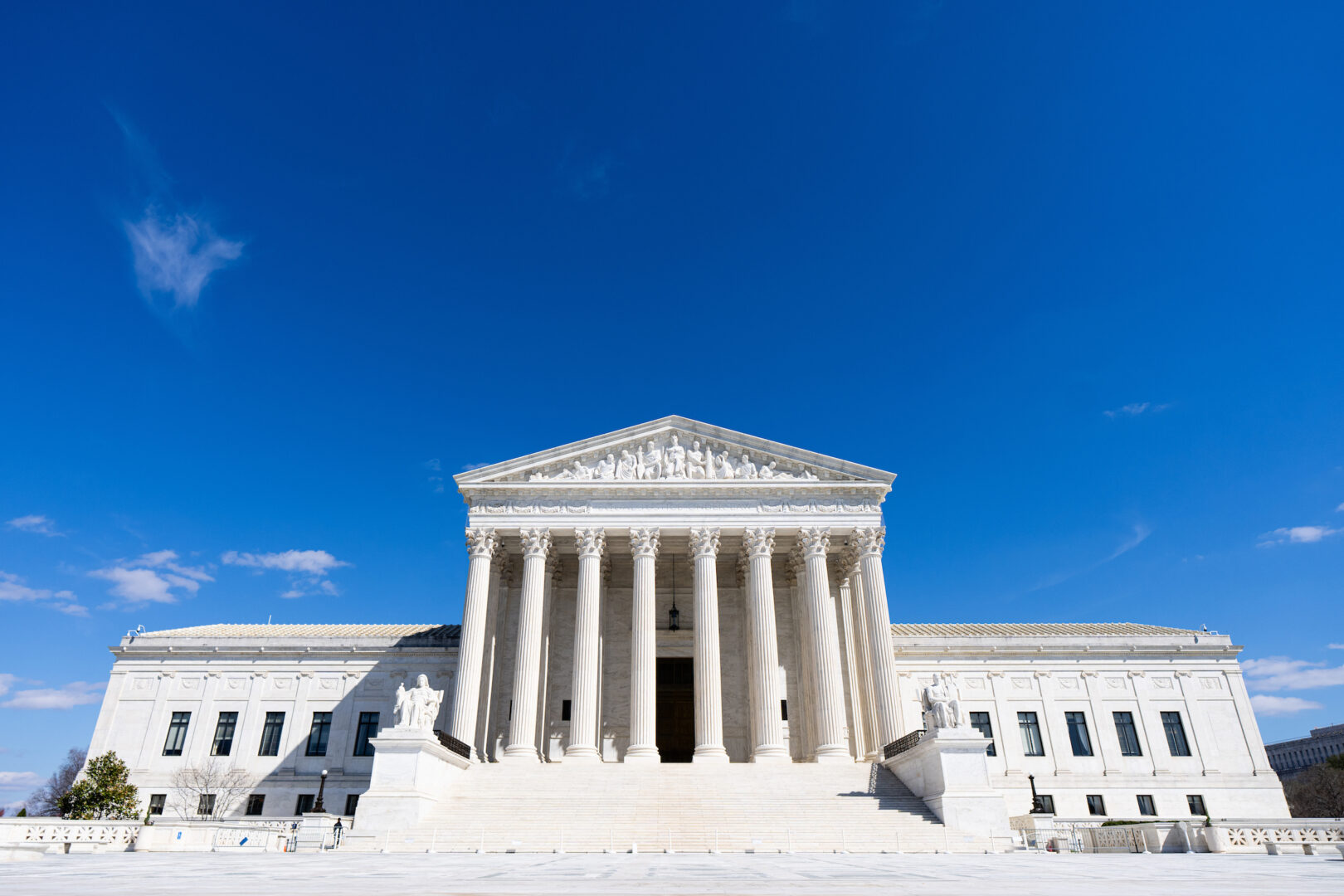
Alabama officials asked the Supreme Court on Friday to quickly clear the way for the state to change its congressional map for the upcoming elections. The emergency applications to the justices came an hour after the state legislature passed a new congressional map that would reduce the Black-majority districts in the state from two to one. The Alabama officials point to the recent decision that invalidated Louisiana’s congressional map, which was drawn with a second Black opportunity district — or a district designed to allow a Black minority to elect a minority-preferred candidate — to comply with the Voting Rights Act. “Alabama’s case mirrors Louisiana’s, and they should end the same way: with this year’s elections run with districts based on lawful policy goals, not race,” the application says. The state officials asked the justices to act by May 14 so that the state could have a primary under the new map, rather than the regularly scheduled May 19 primary. In the wake of the Supreme Court ruling in Louisiana v. Callais, officials in Alabama, Louisiana and Tennessee have sought to draw new congressional maps targeting Black majority seats long held by Democrats. Alabama Gov. Kay Ivey’s office announced Friday afternoon that she had signed the legislation, which would allow the state to call special primaries “in anticipation of favorable court action in the state’s ongoing redistricting litigation.” “With this special session successfully behind us, Alabama now stands ready to quickly act, should the courts issue favorable rulings in our ongoing redistricting cases,” Ivey said. After the decennial count, the state adopted a congressional map with a single Black-majority congressional district out of six in a state where about 30 percent of voters are Black. Voters and voting rights groups sued, arguing that the map violated the VRA by diluting the power of Black voters deliberately. The state has fought for years against court rulings which would require the state to draw a second Black opportunity district. After a Supreme Court ruling in 2023, the state abandoned its original 2021 plan and drew a second one with slightly different lines but still no second Black opportunity district. The panel of judges that struck down the original first map selected a map with a second Black opportunity district, which was used for the 2024 elections. Separately, the state’s second map was found to be impermissible under the VRA after a trial last year. The three-judge panel wrote that the 2023 plan could not be seen “as anything other than an intentional effort to dilute Black Alabamians’ voting strength and evade the unambiguous requirements of court orders standing in the way.” In Friday’s three applications, the state officials argued that those lower court proceedings should be thrown out, allowing the state to use the map adopted Friday, which mirrored the 2023 map’s lines. “Americans, no less in Alabama, deserve a republic free of racial sorting now, and state officials deserve an opportunity to give it to them,” one application states. The applications argued that the 2023 plan, which was passed by the legislature Friday, best achieved state officials’ political goals, and kept the Gulf Coast counties around Mobile together. Democrats in the state legislature opposed the new map, arguing it violated the state constitution. At the lower court, the state had sought an emergency pause on those rulings, but those motions were still pending, according to Friday’s application. The original challengers to the Alabama maps had opposed the pause at the lower court.