Appeals court questions Trump executive orders targeting law firms
Lawyer argues firms were singled out because they ‘raised the president's ire’
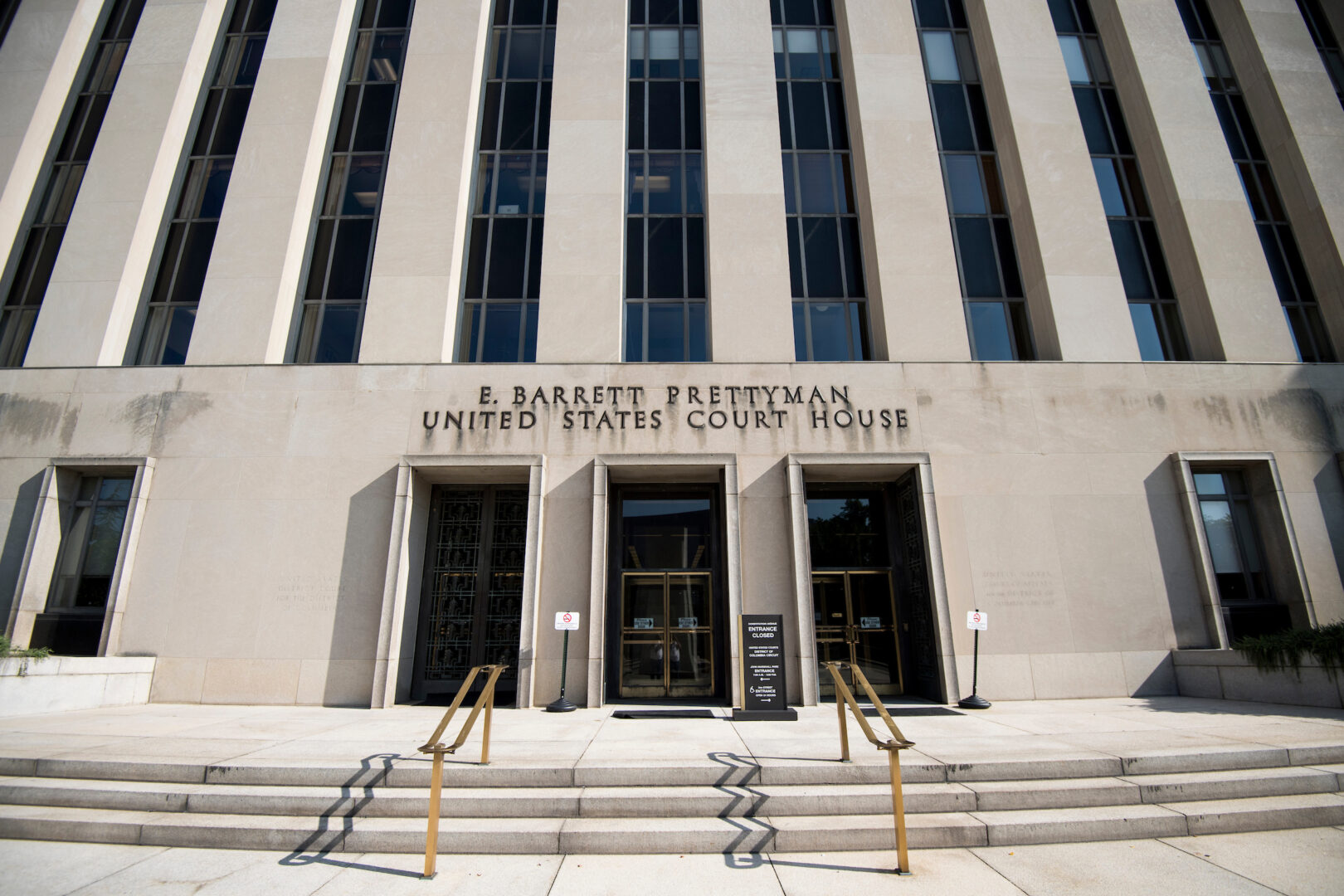
A federal appeals court appeared skeptical Thursday of a push from President Donald Trump to punish four major law firms, in a case that could outline the bounds of presidential power and have broader ramifications for the legal industry.
The three-judge panel of the U.S. Court of Appeals for the District of Columbia Circuit, during oral arguments, asked probing questions of the scope of executive power in a legal clash over a string of Trump executive orders from more than a year ago that targeted the firms.
The orders took aim at law firms over their pro bono practice, work they did on behalf of their clients, attorneys they hired or their perceived violations of discrimination law for diversity, equity and inclusion efforts.
Trump directed the suspension of security clearances for law firm attorneys, limited their access to government buildings and ordered a review of their clients’ government contracts.
Four of the targeted firms — WilmerHale, Perkins Coie, Jenner & Block and Susman Godfrey — challenged the orders in court separately. Trial level judges sided with the firms.
Paul Clement, the former Republican-appointed solicitor general, argued for the law firms and said the Trump orders “strike at the heart of the First Amendment, and the ability of lawyers to zealously represent their clients.”
“They were singled out because they represented clients or associated with attorneys who raised the president’s ire. That is not conjecture,” Clement said.
Judge Cornelia T.L. Pillard on Thursday questioned the Trump administration on whether a president would have the power to order the government to deny security clearances to any lawyer in firms that represented Catholics, African Americans or Asian Americans.
Pillard then sought clarity on the administration’s position, asking if the government believed that courts could not hear claims questioning a presidential proclamation that revoked security clearances, because it is a “political question.”
“Yes, your honor,” responded Justice Department attorney Abhishek Kambli. “Because the Constitution does commit that decision to the president, and Article Two of the Constitution is just as important as the rest of it.”
Judge Sri Srinivasan also sought to drill down the sweep of the administration’s position in another hypothetical for the Justice Department. “It could be, ‘I’m denying a security clearance because of the race of the person who has it, and I actually don’t have any concerns about whether they can be trusted with the information. I just don’t want that person to have it,’” Srinivasan said.
Kambli told the panel that Congress could rein in presidents who misused the power, through impeachment or restricting their authority over security clearances.
The law firms argue the orders are a blatant and egregious violation of the First Amendment and are plainly retaliatory. The orders have received sharp condemnation from lower courts.
In the case brought by Perkins Coie, the first of the four firms who were targeted with an order, Judge Beryl A. Howell of the U.S. District Court for the District of Columbia wrote that the case presents an “unprecedented attack” on foundational principles.
“In a cringe-worthy twist on the theatrical phrase ‘Let’s kill all the lawyers,’ EO 14230 takes the approach of ‘Let’s kill the lawyers I don’t like,’ sending the clear message: lawyers must stick to the party line, or else,” Howell wrote.
The appeals court also heard arguments Thursday on a case brought by Mark Zaid, a lawyer who was in a separate Trump executive order that rescinded security clearances from certain individuals. A lower court ruled in Zaid’s favor.