‘That’s where I wanted to be’ — from appropriations to Au Bon Pain scoops
Oddities, rhythms of Capitol Hill are the draw


As part of Roll Call’s 70th anniversary, we’ve asked several notable alumni to reflect on their time working for the paper. We’ll run these columns throughout the summer.
When I arrived, everyone was still talking about the merger.
Just days before, the newsroom had triumphed over a neighborhood-wide blackout — the notorious “NOMA-geddon” — and kept publishing. But still, everyone was more eager to fill in a newcomer with details of the years-old merger.
In August 2009, two Capitol Hill mainstay publications, Congressional Quarterly and Roll Call, joined forces to form CQ-Roll Call Group. Almost everyone I met in 2011 had come up through one side or the other: CQ policy wonks and rambunctious political obsessives at Roll Call.
I was hired on the CQ side of things, first as a 19-year-old intern, barely halfway done with a political science degree. I was already obsessed with Congress but had to sheepishly ask about the basics of constructing a news story. I kept my eye on the reporters who seemed to move seamlessly between those worlds; that’s where I wanted to be.
There were growing pains, layoffs and remaining tensions, but lucky for me the barriers between the two sides of the newsroom were breaking down and the mantra of “one newsroom” was being put into practice. I was joining this place at the start of a new era and the potential for what I could learn from these brilliant journalists seemed unlimited.
CQ taught me to never rely on a bill summary, as there’s usually something major lurking in the legislative text. Bipartisanship does exist, in the co-sponsorships of amendments that very few will ever read and measures that move without fanfare. Process can be king, and procedure can be used as a political weapon.
Roll Call taught me that the story of Congress isn’t made up solely of the endless well of conflicts between lawmakers and parties, although those do make great stories. My time at what’s been called the “community newspaper of Capitol Hill” taught me to seek out the humanity, and humor, that exists alongside every partisan political fight.
While tracking every action on the House floor for CQ, I strategically set myself up in the House Daily Press Gallery within earshot of Emma Dumain and Matt Fuller, our House leadership reporting team. I learned so much from lurking nearby, both about how to approach covering Congress as well as how to fight like hell for an idea and then back it up with solid reporting.
I jumped at the chance to make the move over to Roll Call to cover the Capitol campus beat in 2018 under Jason Dick’s leadership, allowing me to dig into the oddities of life on Capitol Hill and put my obsession with the Legislative Branch spending bill to good use.
It was a beat that Roll Call had owned for decades and I had big shoes to fill, following in the footsteps of Dumain (now my editor at POLITICO), Jackie Kucinich and Bridget Bowman. Just as legislative issues always come back around on Capitol Hill, so do campus problems. Hannah Hess’ scoops on Capitol Police leaving loaded firearms in bathrooms across Capitol Hill laid the groundwork for me when the same thing happened on my watch just a few years later.
Our photographers Bill Clark, Tom Williams and Caroline Brehman were sometimes my best tipsters, getting photos of a flooded Cannon Tunnel or an assembling protest before a situation was even on my radar.
I scoured the print Roll Call archives as impeachment came into view in 2019 to see how Roll Call legends like Paul Kane, John Bresnahan and others had approached the Bill Clinton impeachment story 20 years prior. It emphasized for me how almost nothing is truly “unprecedented” on Capitol Hill. Counterfeit tickets to the Clinton proceedings? The Donald Trump trial fakes were now sold on eBay.
There’s a haunting and humbling truth of my almost decadelong career at CQ Roll Call, where the Capitol Hill community was central to how we approached the news. After covering nine appropriations cycles, two presidential impeachments, an insurrection and even writing our obituary of the late Rep. John Lewis, the most read story I produced for Roll Call was headlined: “&pizza, Au Bon Pain coming to the Capitol complex.” At least it was a scoop.
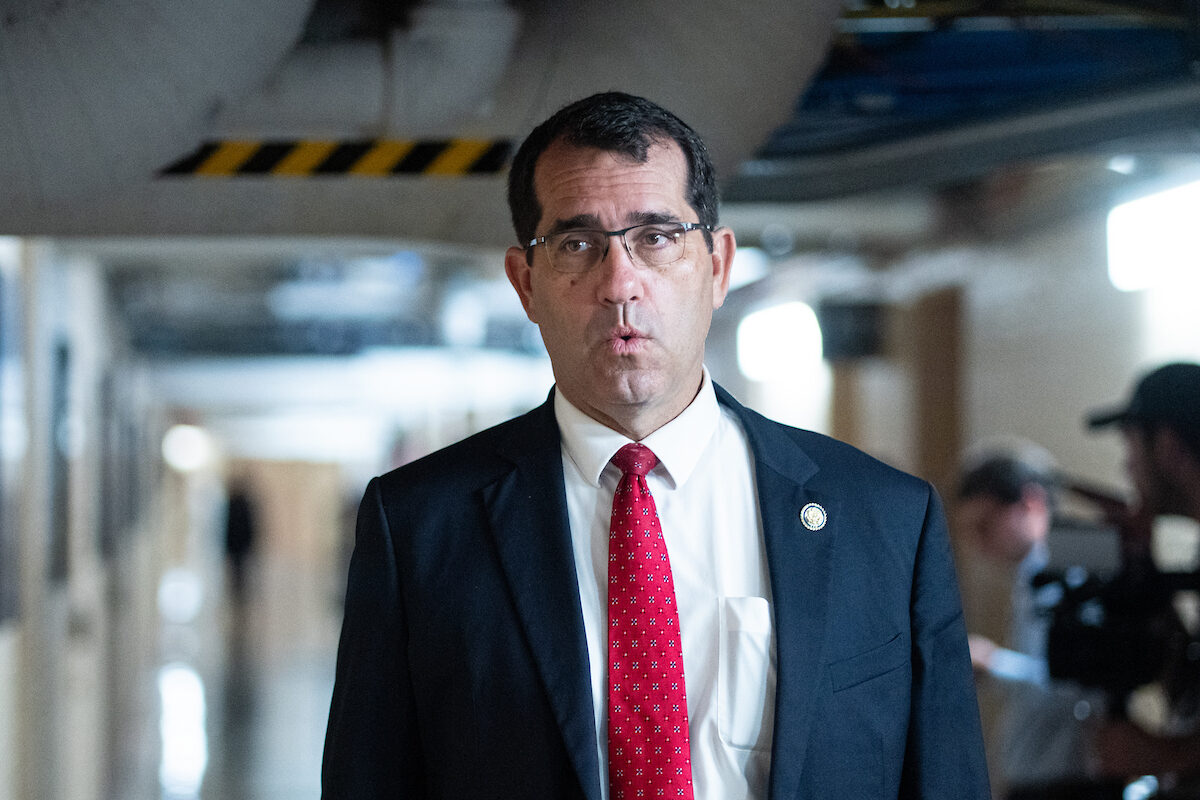
Katherine Tully-McManus worked at CQ Roll Call in 2011 and 2013-21. She’s now a Congress reporter at POLITICO, focusing on budget and appropriations.