Congress must become a champion guard dog to defend its watchdog
A hostile executive branch could be in charge of the legislative branch's investigations

On Dec. 29, the 15-year term of Comptroller General Gene L. Dodaro will end, leaving the Government Accountability Office without a Senate-confirmed leader. The Trump administration has made no secret of its hostility toward GAO, and this creates a dangerous opening for the executive branch to undermine or even capture the agency that exists for one purpose: to help Congress do its job.
The current president and his allies in Congress have publicly targeted GAO, recognizing that a weakened watchdog means weakened oversight of executive action.
GAO support to Congress extends beyond any single administration. If GAO is captured or hollowed out, the damage will outlast the current presidency. Rebuilding independent investigative capacity takes decades. Losing it takes a moment of inattention.
At stake is the legislative branch authority and responsibility set forth in Article I of the Constitution to oversee the executive branch.
Congress must act immediately to protect GAO during the transition. This means forming a visible, bipartisan, bicameral coalition — backed by constitutional experts—to reject any executive interference with the legislative branch agency. Any attempt by the current president to appoint, nominate, or direct GAO leadership should be challenged publicly and legally.
The message must be unambiguous: GAO belongs to Congress.
Most Americans have never heard of GAO. That’s by design. The agency operates as Congress’s nonpartisan, nonpolitical right hand — conducting audits, evaluations, and investigations that give legislators the facts they need to oversee federal programs and hold the executive branch accountable.
GAO doesn’t make policy or substitute its judgment for Congress’s. It provides the independent, professional analysis that makes genuine oversight possible.
Governance, not ‘gotcha’
GAO’s focus is on governance, not “gotcha”. Its investigators are skilled, trained and experienced to examine the details of federal programs — spending, implementation, compliance — at a depth no congressional office can match. GAO is what makes congressional oversight real. The best professional staff on House and Senate committees and subcommittees know to be prepared for the first questions that their bosses will ask them: “What has GAO done on this? Have you spoken with them?”
GAO is the institutional memory and investigative capacity that Congress cannot maintain on its own. When GAO is strong, Congress can govern. When GAO is compromised, Congress is flying blind.
Without reliable and rigorous examinations conducted using independent information about how laws are implemented, and money is spent, the exercise of oversight responsibility by the legislative branch devolves into political theater.
In the 1976 book “The Power to Probe: A Study of Congressional Investigations” by James Hamilton, Sen. Sam Ervin, D-N.C., chairman of the Watergate Committee, warned that such freewheeling uses of investigative power in Congress are “pernicious pursuits.” That’s an all-too-familiar pattern in Congress today.
Ninety-five percent of all GAO work is driven by requests from Congress. GAO works closely with both sides of the aisle not only to ensure a level playing field, but to meet and explore subjects with Congress whether the agency produces a report or not.
GAO handles more than 600 requests annually from Congress for analysis, investigations, and reports. These include numerous statutory mandates for continuous and updated GAO review of problems in government programs, operations, and spending controls.
Complex problems in government do not simply disappear with one GAO review. GAO testifies before Congress more than 60 times each year and provides “real time” assistance responding to more than 1,000 requests to provide quick turnaround, informal analysis and advice.
Certain senators and representatives instinctively step up to champion and reinforce GAO’s value to Congress and the American people.
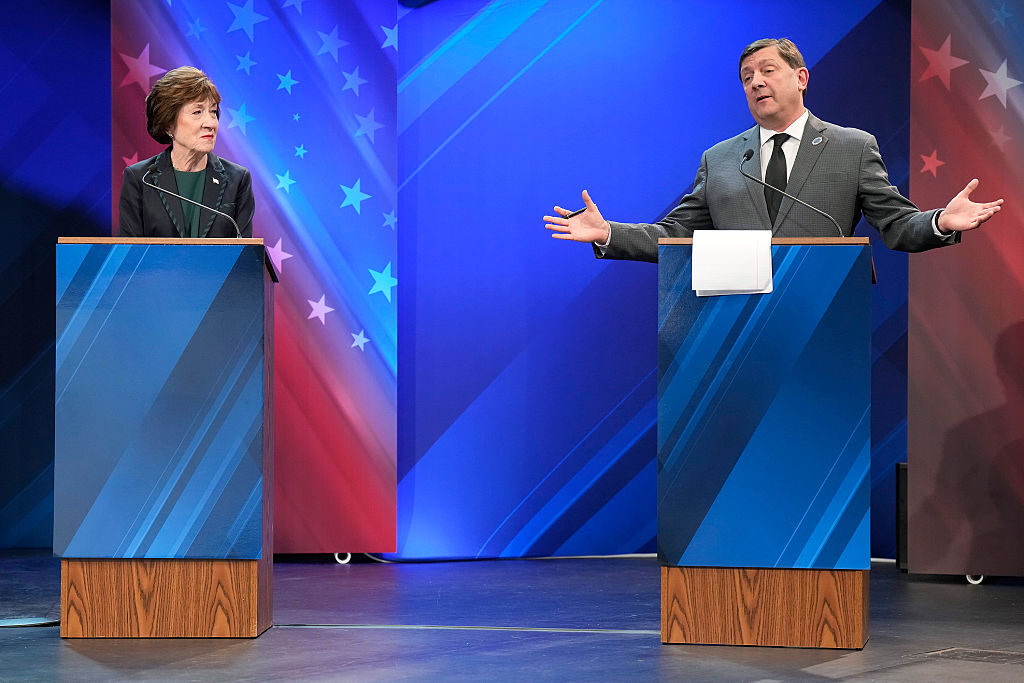
Senate Appropriations Chair Susan Collins, R-Maine, and ranking member Patty Murray, D-Wash., have led the effort to restore GAO’s appropriations in the face of a more than 50 percent cut proposed by House Republicans. Sen. Chris Van Hollen, D-Md., another senior Appropriations panel member, needs no encouragement to expertly refute the current Office of Management and Budget director’s blind defense of the unilateral violations of the Impoundment Control Act by this president.
However, GAO must now be able to stand upon broader shoulders for support. Lawmakers on other committees, from Armed Services and Foreign Relations to Veterans’ Affairs, should speak up about their GAO experience to conduct oversight, hold hearings, and to formulate legislation.
It is also too easy to simply blame the current president in raising concerns about the future of GAO. Decades of oversight obsolescence by Congress towards GAO has persisted for too long. Its oversight committees in the House and Senate are now the least sought-after assignments, and Congress has weakly accepted the adage that “the cobbler’s children have no shoes.”
Congress, not the president, must control GAO appointments
Congress cannot put pressure on power without putting pressure on itself to act.
The prime example is the constitutional contradiction of Congress allowing the president, as head of the executive branch, to appoint the comptroller general and deputy comptroller general for the legislative branch.
When Congress last addressed the appointment authority for these legislative branch officers, it was 45 years ago in the GAO Act of 1980. Yet Congress failed to place the sole and exclusive appointment authority for the comptroller general and deputy comptroller general in the legislative branch where it belongs.
Instead, the process is so dysfunctional and labyrinthian that filling either GAO vacancy is a sore subject in Congress. In 45 years, there has never been a deputy comptroller general nominated and confirmed by the Senate. None exists today to succeed outgoing comptroller general on Dec. 29.
Congress can fix this for GAO just as it did recently in the Architect of the Capitol Appointment Act of 2023, granting authority exclusively to Congress which was implemented in 2024. The trigger changing that appointment authority to Congress is particularly relevant today, because it was a scandal following the misconduct by the Trump-appointed Architect of the Capitol and who was removed from office.
As Sen. Charles E. Grassley, R-Iowa, wrote in February 2023, the Office of Inspector General investigation that led to the removal “describes conduct that is the very example of what a government employee should never do.”
Under current law — the GAO Act of 1980 — the president still has the authority to nominate the comptroller general. The law continues to place a legislative branch agency’s leadership in executive branch hands. That was a mistake in 1980, and it is now a vulnerability.
‘Selection Commission’ in name only
The 1980 law intended to give Congress a say in the nomination process by creating a bicameral, bipartisan “Comptroller General Selection Commission.” But Congress is authorized to merely provide “input” in the form of nonbinding recommendations to the president.
Over three comptroller general vacancies — under President Ronald Reagan in 1981, President Bill Clinton in 1996, and President Barack Obama in 2008 — each commission failed to operate under any professional executive search procedures commonly applied in public or private sectors. In 45 years, no professional position description for comptroller general has ever been prepared or used. No records of the work or meetings of any such commission exists in the National Archives and Records Administration.
At the last two Senate confirmation hearings for comptroller general nominees, in 1998 and 2010 respectively, Sens. Richard J. Durbin, D-Ill., and Collins were outspoken and troubled by how politicized, divided, and unprofessional the process had become. The nominations and hearings did not even occur for at least two years into the vacancy for GAO’s agency head. The hearings were unceremoniously rushed at the end of year without the Senate committee being properly notified or introduced to the nominee. The use of the commission process should not be repeated.
[Katz: Congress needs to change GAO hiring process]
Congress should introduce legislation rescinding presidential appointment authority and establishing a congressional process to appoint the comptroller general directly. This is not a partisan maneuver — it is a restoration of constitutional design. Legislative branch officers should answer to the legislature. But legislation takes time, and the vacancy arrives in weeks. There has been no advance preparation in Congress.
Comptroller General Gene Dodaro has spent his career strengthening GAO and ensuring equal access for every member of Congress. His departure should prompt both the gratitude and interest by Congress in meeting with him to understand how GAO is prepared to ensure that it will be responsive to Congress after the comptroller general’s term ends.
Congress has the tools, the legislative branch precedent, and the constitutional duty to protect its own watchdog. The only question is whether it has the will.
Steven L. Katz served as counsel to the Senate Governmental Affairs Committee under Chairman John Glenn, D-Ohio, in senior administration positions including Chief Counsel to the Chairman of the U.S. Merit Systems Protection Board, and as senior adviser to Comptroller General David M. Walker at the Government Accountability Office.