Senate panel releases NIL bill, plans hearing
House pulled its version from floor schedule last week
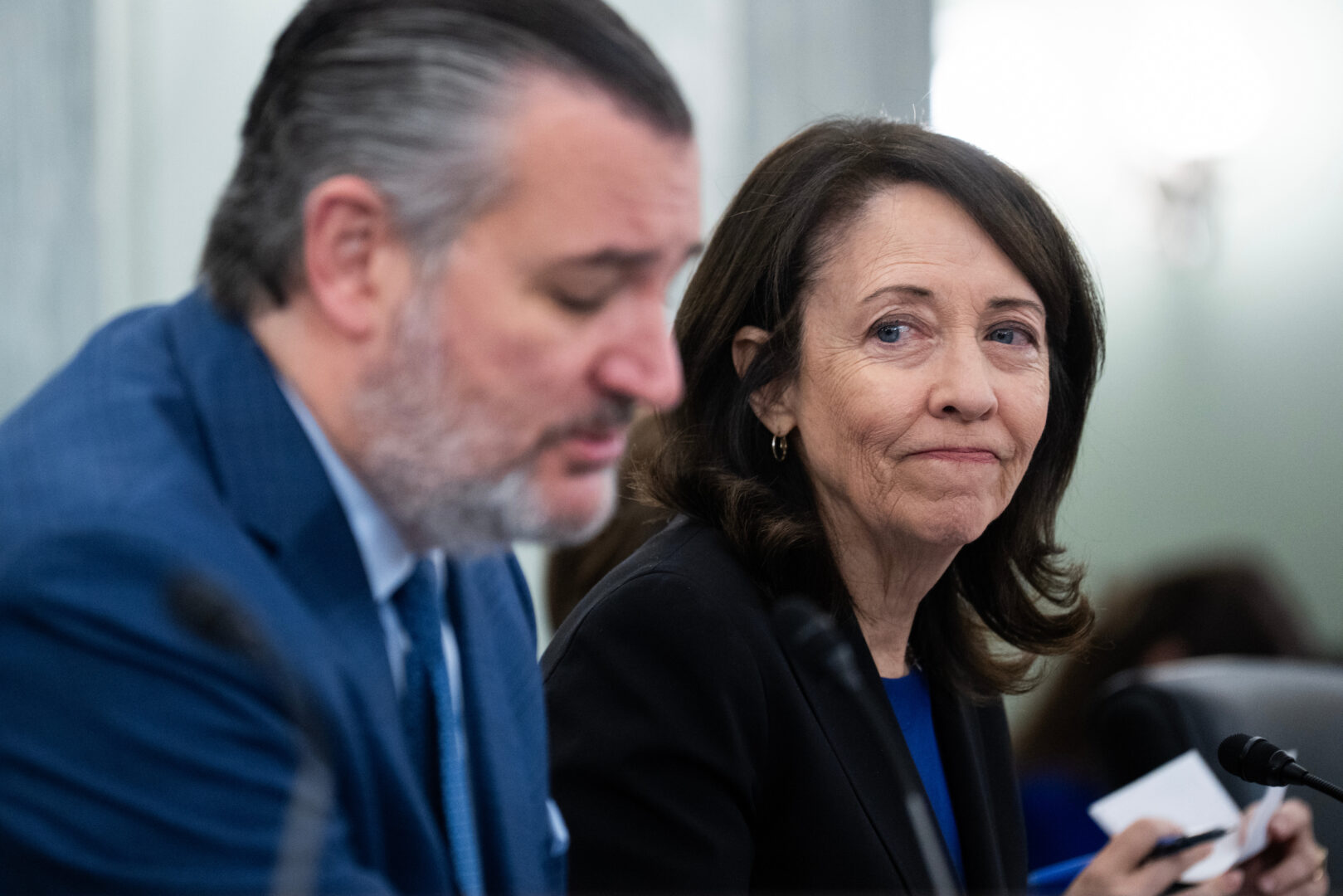
The top lawmakers on the Senate Commerce Committee released a bill Wednesday aimed at addressing the myriad issues with college athletics stemming from its largely ungoverned name, image and likeness era.
In a call with reporters, a Republican Commerce Committee aide said the panel plans to hold hearings and mark up the “Protect College Sports Act” in June. The measure, released along with a summary, was largely worked out by the panel’s GOP chairman and Democratic ranking member, Ted Cruz of Texas and Maria Cantwell of Washington.
The Cruz-Cantwell measure might be the only college sports overhaul measure with a chance of passing both chambers. A House version that had been crafted largely by Republican leaders, known as the “SCORE Act,” had to be pulled from the floor schedule last week.
The Congressional Black Caucus, in announcing opposition to the House bill, cited silence from major athletic conferences and institutions on Black voting rights and political power. And a handful of GOP members had concerns the House version would have been too tilted toward big schools and conferences.
One of the biggest differences between the bills is the Senate measure would etch into law more-specific NIL rules than the House version, which would give the NCAA more power to craft new nationwide guidelines.
Another major difference would be the Senate measure remaining neutral on whether student-athletes would be considered employees of colleges and universities. The House bill would prohibit them from being considered employees, a provision that in part led the AFL-CIO to call it a “union-busting bill” that would diminish the voices and job protections of college athletes.
Cruz, in a news release, said the Senate bill “is a bipartisan plan to restore order.”
“Student athletes can profit from their name, image, and likeness, but college sports still needs real rules, competitive balance, rivalries, and a true connection to education,” Cruz said.
Cantwell, in the news release, noted that “we’re seeing thousands of men’s and women’s athletic roster slots and a hundred athletic programs being cut.”
“This bill puts new tools and new rules on the table to rein in runaway costs while still preserving NIL, revenue sharing, and women and Olympic sports,” Cantwell said.
House Energy and Commerce Chairman Brett Guthrie, R-Ky., and House Education and Workforce Chairman Tim Walberg, R-Mich., issued a statement later Wednesday that criticized the Senate version for leaving “unresolved” the question of whether student-athletes would be treated as employees.
“Congress cannot deliver real stability, consistency, or certainty to schools, conferences, and student-athletes while leaving that question unresolved,” the chairmen said. “Without addressing employment, smaller universities along with women’s and Olympic programs may face massive financial burdens and be forced to cut programs and scholarships across their athletic departments.”
Senate version
The committee aide said the duo’s bill would update a federal law by requiring agents to register and be certified, as well as by standardizing NIL contracts between agents and student athletes. The aide said it also would empower the NCAA to sanction agents found to have engaged in foul play.
Like the House version, it would cap agents’ takes from NIL deals at 5 percent of the total value of the contract and build in penalties for agents that make fake NIL promises to clients.
The House version would create a revenue-sharing system among the top 70 biggest revenue-generating colleges and universities. The Senate bill would establish a revenue pool from media deal dollars that would be shared among institutions — but only if 75 percent of Football Bowl Subdivision (FBS) schools decide to participate. Right now, it would take 102 participating institutions to trigger that pool.
Notably, the Cruz-Cantwell measure would essentially block the much-talked-about superconference. In college sports circles, that typically is shorthand for a merger between college sports’ revenue behemoths, the Southeastern Conference (SEC) and Big 10.
Doing so would prevent those so-called Power Two conferences from basically creating their own media revenue-sharing system that would essentially keep those dollars from the other eight FBS conferences.
Cruz said his bill “protects athletes and fans and keeps college sports from becoming a two-conference minor league.”
The Senate version also goes further than the House bill by proposing to freeze college sports’ current conference framework.
The Senate measure would attempt to protect regional rivalries where teams are in different conferences by cracking down on state-specific carve-outs to NIL rules to benefit one of the schools, the aide said.
Like its House companion, the measure would etch into law a five-year participation window for student-athletes and one free transfer among schools, as well as sit-out provisions for any additional moves to other institutions. The latter is a throwback to the pre-NIL era, when student-athletes were allowed to transfer, but typically had to sit out one full season of their chosen sport.
The Senate bill would direct the NCAA to create an ombudsman to advise student-athletes over NIL- and sports-related concerns. The House bill would also have the NCAA set up adjudication processes, but it does not call for an ombudsman.
The Senate version also would go further than the House bill by prohibiting coaches from changing jobs during a sporting season. During the most-recent college football season, head coach Lane Kiffin left the University of Mississippi (Ole Miss) for Louisiana State University (LSU) while the Rebels were still in the mix for the national championship.
The committee aide did not disclose any target date for securing floor time if the panel advances the bill. President Donald Trump has said he wants lawmakers to send him a bill this year.