More air traffic control modernization funding needed, Duffy says
Transportation secretary says more money needed for software
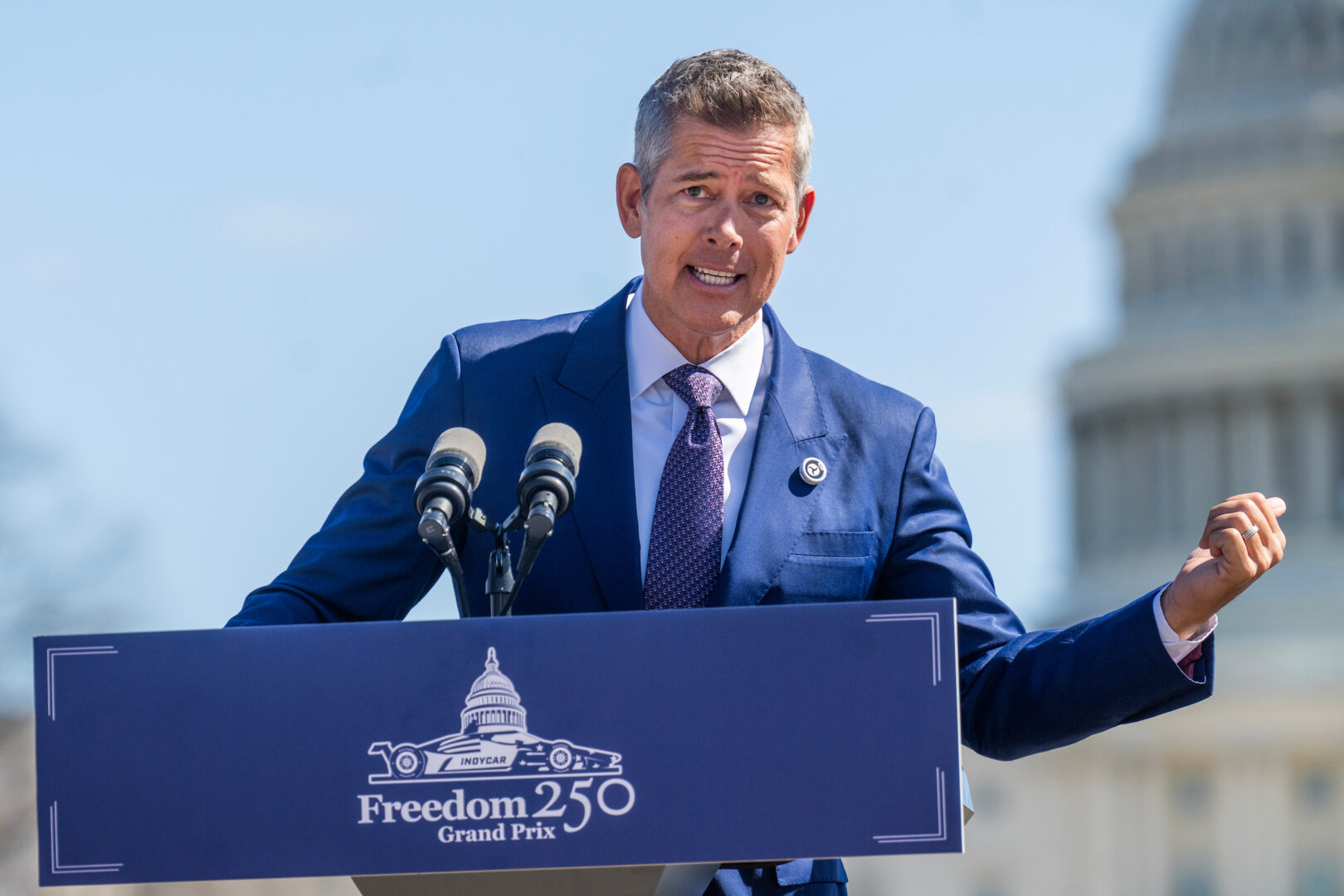
Efforts to modernize the nation’s air traffic control system are moving along with the support of funds provided in last year’s reconciliation law, but the Transportation Department will need even more money from Congress to finish the job, Secretary Sean Duffy said Tuesday.
Congress authorized $12.5 billion in funds to update the U.S. air traffic control system in the July 2025 reconciliation law, an amount Duffy said could help reduce the number of delays, cancellations and other complications in the aviation industry.
Since that law was implemented, the Transportation Department and the Federal Aviation Administration have replaced nearly half the copper wires in the nation’s air traffic control system with fiber optic cables, converted about 270 radio sites, installed new surface awareness systems for 54 airports and moved 17 towers from using paper to electronic flight strips, the agencies said Tuesday during a briefing at DOT headquarters. Other efforts they’re undertaking with the funds include a hiring surge of air traffic controllers and an overhaul of the more than 4,600 FAA sites across the country.
“This project is going to take us two and a half years — only two and a half years to do this build with $12.5 billion,” Duffy said. “We are going to need more money for the software side of this build.”
The president’s budget request for fiscal 2027, released early this month, sought $4.9 billion for a modernized air traffic control system.
While he noted bipartisan support for aviation concerns, Duffy added, “They’re going to have to find a pathway to get us the rest of that money. It’s gonna take us time to develop it, deploy it, debug it, train on it, and so getting that software started now — hopefully as our build completes with all the infrastructure — we’ll have the technology of the software ready to meet up in two and a half years and have a brand new system for America to use.”
The Trump administration has made updating the air traffic control system a priority for the department, undergoing an extensive hiring campaign for controllers and working on implementing equipment updates at sites across the country.
Duffy said the department has hired a “record-breaking” 2,400 staff members for air traffic control since March 2025, creating what he said is the highest staffing level in six years.
All these efforts, Duffy said, followed the January 2025 midair collision near Ronald Reagan Washington National Airport between a commercial airliner and a military Black Hawk helicopter that killed all 67 people aboard both aircraft.
“A little over a year ago, we had the DCA air crash,” Duffy said. “What happened in the weeks after it prompted us to take a look at the systems that we are using to manage our airspace.”
That assessment, performed with the FAA’s assistance, demonstrated that the nation’s air traffic control system “used an incredibly old, antiquated system,” Duffy said.
Airlines for America chief executive officer Chris Sununu spoke at the DOT event Tuesday on behalf of industry members, saying the joint effort between the department and FAA has cut through government bureaucracy and brought industry experts together to see the modernization through.
The president of the National Air Traffic Controllers Association, Nick Daniels, called the effort a “real down payment” on building a safer system not only for current air traffic but also for the future.
FAA Administrator Bryan Bedford expanded on Duffy’s call for additional funding for new software, saying it could help manage conflicts inherent in the current system.
“We know today, when we open up the airspace every morning, it’s filled with conflicts and delays and potential cancellations,” Bedford said, “and then we ask the men and women in the towers … to sort out that mess and put this into some organized flow that can actually have a chance of getting done safely and reliably.”
“We can do better,” he said.
The goal, Bedford said, is to develop a strategically managed air routing system — powered and enabled by artificial intelligence — to aid in predictive management of traffic. That system, he said, would “get us to a place where we can actually start the day knowing that we can deliver for the American public.”
“That is what we’re asking Congress to fund for us,” he added.
The House Transportation-Housing Appropriations Subcommittee, chaired by Rep. Steve Womack, R-Ark., has scheduled a markup of its not-yet-released fiscal 2027 bill for May 21, and the full Appropriations Committee is scheduled to mark it up June 4.