Trump backs off ‘anti-weaponization’ fund after GOP backlash
Move could clear the way for reconciliation bill to fund immigration enforcement
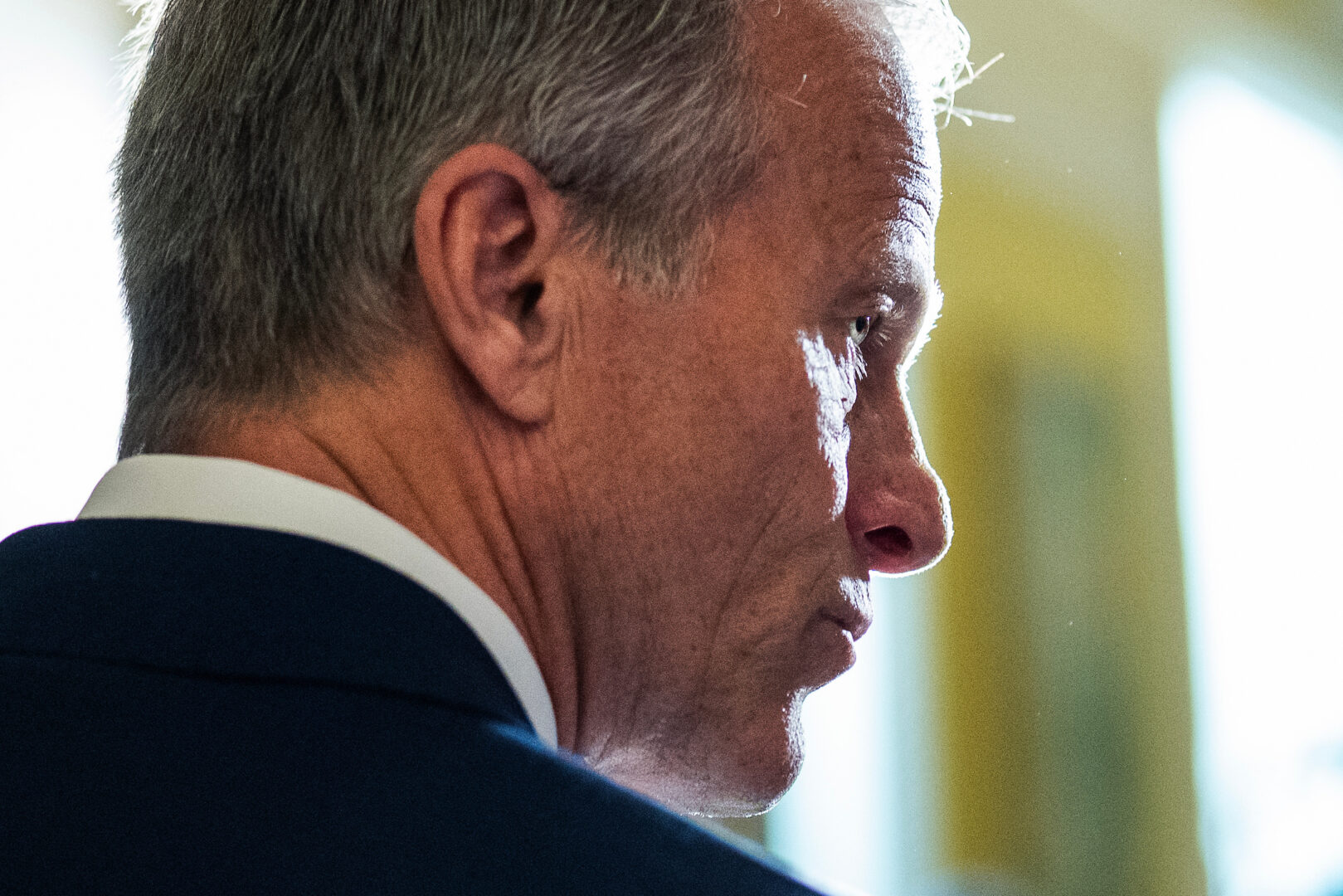
The Trump administration prepared to abandon its $1.8 billion “anti-weaponization fund” Monday after intense pushback from GOP lawmakers, potentially removing the biggest obstacle to a reconciliation bill for immigration enforcement.
The administration will comply with a Friday order from a federal judge that temporarily blocked the fund, though it “disagrees strongly” with the ruling, the Justice Department said Monday in a post on the social platform X. The White House declined to provide additional comment on the statement.
But Republican senators appeared divided Monday night on whether the Justice Department statement goes far enough to address their concerns over the future of the fund — and whether they could vote for a reconciliation bill that lacked new restrictions over a fund that took lawmakers by surprise when it was announced late last month.
In an effort to shore up GOP support for the reconciliation package, Senate Majority Leader John Thune, R-S.D., said he was preparing to strip nearly $1.5 billion in Justice Department funding for terrorism prosecutions, drug enforcement and other matters that had been part of the bill designed mostly for immigration enforcement.
Thune said he would discuss the state of the bill with his conference at their Tuesday policy lunch, while acknowledging that many members were seeking greater clarity on the administration’s intentions.
“I think the statement they made effectively shuts it down,” Thune said of the Justice Department fund. “We’ll find out.”
U.S. District Judge Leonie Brinkema, in the Eastern District of Virginia, blocked the formation of the fund, as well as any payouts, until a June 12 hearing where she will hear arguments on extending the order. “The Department will abide by the Court’s ruling,” the Justice Department said.
The fund was aimed at those deemed “victims of lawfare and weaponization” by previous administrations, according to Justice Department talking points circulated to lawmakers last month. But lawmakers of both parties had expressed concern that people convicted of attacking law enforcement officers, particularly in the Jan. 6, 2021, attack on the Capitol, could be eligible for compensation.
The backlash was significant enough that senators left town for their Memorial Day recess after a testy meeting with acting Attorney General Todd Blanche without voting on the nearly $72 billion budget reconciliation package — a sharp rebuke to the White House and a hard pivot from the beginning of that week, when the bill seemed poised to sail through both the House and the Senate.
But it wasn’t yet clear whether the White House’s move would be enough to fully assuage Republican concerns. Senate GOP leadership punted on the reconciliation package ahead of the recess in part because there was interest from within the conference to back potential amendments from Democrats to impose guardrails on the fund.
Republicans divided
Some Republicans who were sounding the alarm about the fund saw the Justice Department’s statement as a step in the right direction.
Senate Appropriations Chair Susan Collins of Maine said she was “pleased to see that the president appears to be no longer pursuing” the creation of the fund.
Sen. John Cornyn of Texas, who recently lost his Senate primary to a Trump-backed challenger, said the Justice Department’s statement “sounds pretty permanent to me” and that further efforts to impose guardrails would be a “moot point.”
But Senate Judiciary Chairman Charles E. Grassley of Iowa said he still wanted to see more clarity from the White House. “The only thing that’s going to solve this problem, to get immigration funded and law enforced, is for the president to do away with the weaponization fund,” he said.
Sen. Bill Cassidy of Louisiana, who also lost his Senate primary to a Trump-backed challenger, told reporters he needs to be “convinced” by the administration that the fund isn’t moving forward, and he hasn’t ruled out voting for legislation to block the fund that is likely to be offered by Democrats.
And Sen. John Kennedy, R-La., also stressed the importance of more clear communication from the White House, especially given the proposed fund’s impact on the budget reconciliation package.
“We shouldn’t play games here. If the administration has changed its position on the weaponization fund, it should say so definitively,” Kennedy said. “Saying you’re going to follow a court order doesn’t tell me anything.”
Republicans had already signaled they were prepared to drop from the bill another troublesome provision: $1 billion for Secret Service security upgrades, partly linked to the planned White House ballroom. But the Justice Department fund had presented a greater problem, with many Republicans leery of Democratic attacks on a “slush fund” designed to reward Trump allies.
Amendments fight
The apparent about-face on the Justice Department fund could further clear a path for passage of the filibuster-proof reconciliation package, should Senate Republicans feel their concerns have been addressed. However, Democrats were already preparing to offer amendments to prohibit the fund during the required “vote-a-rama,” during which senators can offer unlimited amendments to a budget reconciliation package.
Thune said he expects the impact of any amendment proposals to be blunted by a commitment from the administration to kill the fund. And by moving to strip Justice Department funding from the bill, Thune could make it easier to defeat Democratic amendments on the “anti-weaponization” fund on procedural grounds, by arguing they would no longer be germane to the bill.
Senate Minority Leader Charles E. Schumer, D-N.Y., said on social media Monday that Democrats also plan to push a separate bill aimed at banning such a fund, because “Trump’s word is nowhere near enough.”
“If Trump and Republicans are truly abandoning this corrupt scheme, they should have zero problem banning it in law,” Schumer wrote.
Thune told reporters he wasn’t sure whether there was an appetite within his conference for further legislative efforts outside of budget reconciliation to restrict or prevent such a fund.
“But I do think that the best way to handle it is if the administration decides to shut it down themselves,” he added.