Where have all the Blue Dogs gone? Ask Vicente Gonzalez
Texas Democrat says the center was less lonely when he first interned on the Hill

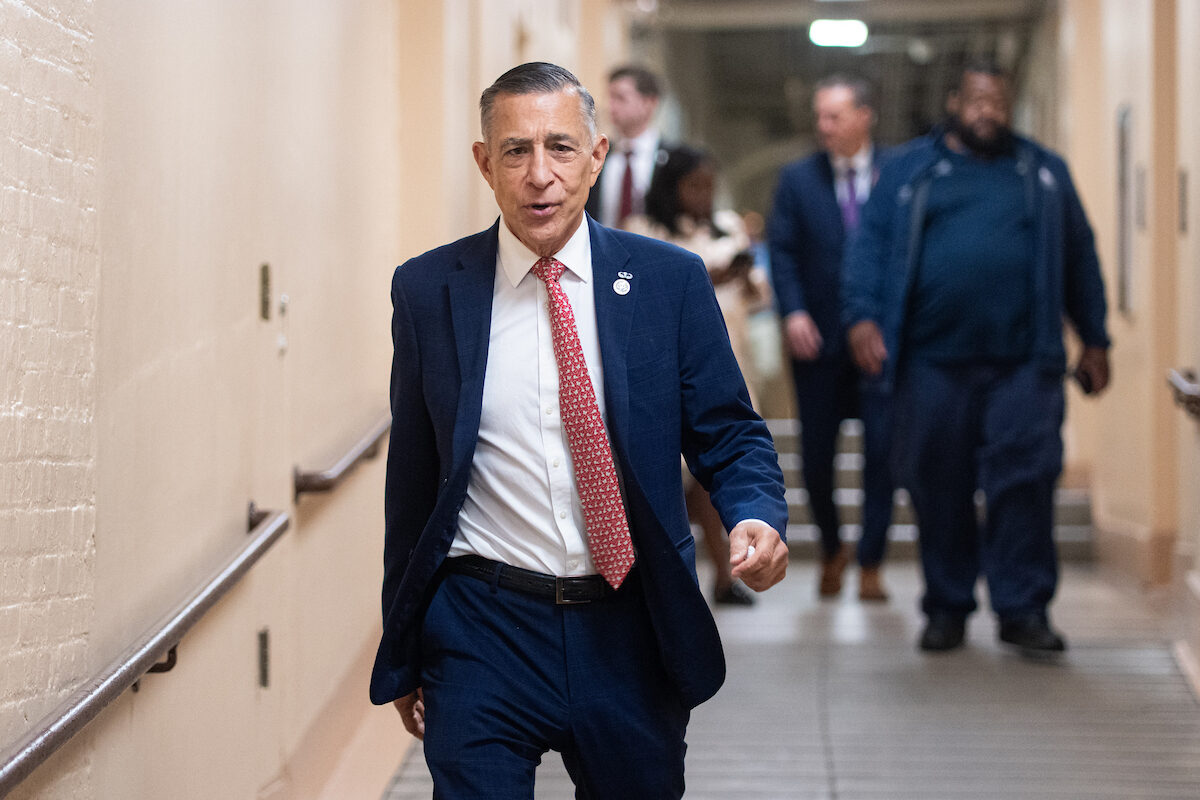
Texas Rep. Vicente Gonzalez is part of a dwindling breed — he co-chairs the Blue Dog Coalition of moderate Democrats, which counts just 10 members in the current Congress.
The ideological middle was a different place when he interned at the Capitol in the 1990s, according to Gonzalez.
“Back then, there was 50 or 60 Vicente Gonzalezes … where now, sometimes I feel like I’m almost totally alone,” he says.
As a law student, Gonzalez spent a summer as an intern for Rep. Solomon P. Ortiz, who represented Corpus Christi, Texas.
“It was also before the extreme redistricting in this country that we have today,” Gonzalez says.
Now in his fifth term in the House, Gonzalez is facing a tough reelection race. He saw his district boundaries change again this cycle after Republican state legislators redrew Texas’ congressional map in their favor as part of a multistate blitz.
Even so, Gonzalez is projecting optimism and making a pitch for his brand of centrism: “A lot of people don’t want to hear this, but I do believe that as our caucus moved further and further to the left, we started losing elections. … We talk about being a big tent? We should really be a big tent.”
He has broken with his party on topics like guns and energy and was one of two Democrats, alongside fellow South Texas Rep. Henry Cuellar, who voted with Republicans on legislation aimed at barring transgender students from participating in girls’ sports.
“I tell everybody, ‘Look, that is just a very critical issue that doesn’t go well in districts like mine,’” he said. “And I think forcing Democrats — especially frontline Democrats — to take those votes hurts us at election time, and we need to let people vote their own district.”
This interview has been edited and condensed.
Q: What is your first memory of politics?
A: My dad was a merchant marine, and I remember knocking on doors for the National Maritime Union in Corpus Christi, trying to help Democratic candidates get elected at the time.
It wasn’t until I got to law school that the bug really hit me, when I helped campaign for Victor Morales for Senate, just as a canvasser. He was an underdog, and nobody thought he would get the nomination. He wins it, though in the end he got defeated by Phil Gramm.
But anyway, I went out to West Texas and registered people. It was a lot easier back then, and we actually carried voter registration applications with us. Nowadays, you have to be a registrar and get certified.
Q: You were a Hill intern in the ’90s. What was that like?
A: It was the summer of 1994, right before the Republicans took the House. People who had been there for a long time, I remember they would come in the office crying, because they were going to lose their jobs. I guess they were already getting the message that the end was coming.
Those were good times, though. There was more respect across the aisle, and Democrats and Republicans were working together a lot closer than they are today.
In fact, I still say the most fun I ever had on Capitol Hill was as an intern. Every night, I used to rollerblade around the Supreme Court. You’d probably get shot nowadays. But they had that very slick marble, so it was fun to rollerblade on, and the guards, I just kind of stayed away from them.
Q: What did you work on?
A: That summer in the office we were getting ready for BRAC, the Base Realignment and Closure round, and that was a major project because my congressman was from Corpus Christi. And now I’ve been redistricted into Corpus Christi, oddly enough, and I’ll be representing the Naval Air Station, which I worked to keep open.
I’m back where I started as an intern in the district where I was born and raised, and I don’t think the map-drawers knew I was going home.
Q: Did you see many Latinos on the Hill 30 years ago?
A: We were a serious minority. Even Latino interns were super rare. So in that sense, it’s changed, but in terms of actually getting large Latino populations out to the polls, we should have done a lot better by now. And this year is an opportunity to do it.
Q: Ortiz at one point chaired the Congressional Hispanic Caucus.
A: It was a lot smaller back then, but it was pretty influential, and there was a lot of excitement around it. They used to call us a sleeping giant. I hope we’ve awoken somewhat. But everybody thought we were on the verge of just exploding politically, and we still have a ways to go.
By now, I would have thought we would have seen a Latino in the White House. I would have thought we would have seen a lot more Latinos in Cabinet positions, leading federal agencies, and a lot more governors and mayors of major cities.
The speculation was that Latino voters were going to mostly be Democrats, but we’ve hemorrhaged Latinos, and especially in Texas, to the Republican Party. Without a doubt, I believe the Democratic Party has done a lot more for the Latino community in this country than the Republicans ever have, and I think we’ve not sold that.
Q: You won your 2024 election by a couple of points, even in a district that went for Donald Trump. How will you keep your seat this time around?
A: I think it’s having honest conversations with folks, being able to communicate that you’re not an extremist one way or the other, that you have common sense.
Coming from Texas, I have a great relationship with American energy, and that’s one of the top issues I’ve been trying to work on with our leadership, to build a bridge. We don’t have to always agree, but I think we should be communicating.
And I was one of the most critical Democrats in the country on how President Biden handled the border, which I believe is why Democrats took a real bath last cycle. All those Democratic counties along the border, they voted Republican.
I always say Obama deported way more people than Trump has, but we didn’t feel it because he did it in a humane way — and that’s not happening in this administration. And now there’s a shift in South Texas, especially among Latinos, who say, “Hey, this is too far.”