At the Races: Incumbents on the line

Welcome to At the Races! Each week we bring you news and analysis from the CQ Roll Call campaign team. Know someone who’d like to get this newsletter? They can subscribe here.
By Mary Ellen McIntire and Daniela Altimari
Our friend Nathan L. Gonzales has cautioned against calling 2026 an “anti-incumbent election.”
The Republicans who have lost primaries so far this year have been on the outs with President Donald Trump and his MAGA movement, as we saw Tuesday when Texas Attorney General Ken Paxton beat Sen. John Cornyn in a runoff. That seems to be a sign less of anti-incumbent fervor and more that, at least for Republican primary voters, alignment with Trump is still paramount.
But as primary season rolls on, some of the most closely watched races involve Democratic incumbents facing challenges from within their party.
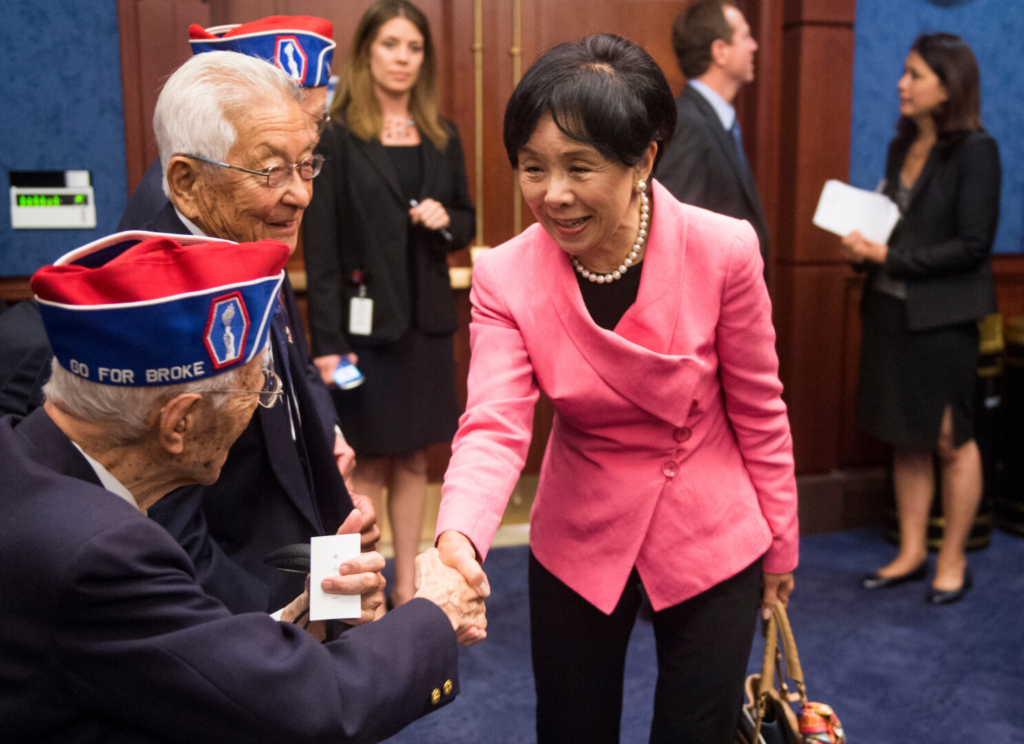
In California next week, longtime Rep. Doris Matsui faces Sacramento City Councilmember Mai Vang, though both could advance to the November election under the state’s all-party primary system.
New York will hold its primaries in a little under a month, and several races are heating up. An Emerson College poll released last week showed Rep. Dan Goldman, who we included in our latest list of the most vulnerable House incumbents, trailing former New York City Comptroller Brad Lander.
Fellow New York Rep. Adriano Espaillat faces a primary challenge from the left via organizer Darializa Avila Chevalier. The New York Times reports that as the race tightens, Mayor Zohran Mamdani may weigh in to endorse Avila Chevalier, reconsidering a commitment to back Espaillat.
Meanwhile, Connecticut Rep. John B. Larson faces a challenge from former Hartford Mayor Luke Bronin that has captured attention ahead of an August primary. A poll by the group VoteVets found Larson trailing Bronin by 8 points on the initial ballot. Bronin won the Democratic endorsement at a party convention earlier this month.
A pair of August Senate primaries in Minnesota and Michigan will also ask whether voters want their nominees to have forged their political careers in the House or through state government.
In Minnesota, Lt. Gov. Peggy Flanagan is set to get a boost this weekend, after Rep. Angie Craig said she would forgo the Democratic-Farmer-Labor Party endorsement at a state convention, essentially ceding the nod to Flanagan. Still, Craig filed Wednesday to be on the primary ballot in August.
Starting gate
Redistricting roundup: The window for redistricting in South Carolina ahead of this year’s midterm elections appears closed after a procedural vote in the state Senate fell short Tuesday. Meanwhile, a federal court blocked Alabama from using a congressional map preferred by Republican state officials this fall, Michael Macagnone reports. State officials proceeded to ask the Supreme Court to halt the lower-court ruling, including a request for the justices to act by Monday.
Swing-seat visit: Trump traveled last week to New York Rep. Mike Lawler’s Hudson Valley district, one of three House seats held by a Republican that he didn’t carry in 2024, offering an example of the role he may play on the trail leading up to the midterms, our colleague John T. Bennett reports.
Talkin’ Texas, Senate version: Republican Sen. John Cornyn had never lost an election — until Tuesday, when he lost the primary runoff to Ken Paxton, the firebrand state attorney general endorsed by Trump. Paxton will compete against Democrat James Talarico in November.
Talkin’ Texas, House version: Voters in the Lone Star State also selected nominees in several key House contests. In the Democratic runoff in the redrawn 18th District, centered on Houston, freshman Rep. Christian Menefee, 38, vanquished 11-term Rep. Al Green, 78. In the newly open 9th District, Trump-backed Army veteran Alex Mealer defeated state Rep. Briscoe Cain. Former Rep. Colin Allred is favored to return to the House next year after defeating Rep. Julie Elizabeth Johnson in the Democratic runoff in the deep-blue Dallas-based 33rd District. And in the newly redrawn San Antonio-area 35th District, Bexar County Sheriff’s deputy Johnny Garcia defeated Maureen Galindo, a sex therapist and housing advocate who called for converting an immigration detention facility into “a prison for American Zionists.” Garcia will face the winner of the Republican runoff, Air Force veteran Carlos De La Cruz.
Vote by mail: A federal judge denied a request from Democratic leaders to pause Trump’s March executive order restricting mail voting in federal elections, saying it was too soon to determine if any harm to voters had yet occurred, Macagnone reports.
ICYMI
Florida reverberations: Florida Rep. Debbie Wasserman Schultz will seek reelection in the newly drawn 20th District, a decision that prompted pushback from some of the state’s Democratic National Committee members. Meanwhile, fellow Democratic Rep. Jared Moskowitz said he would run in the 25th District, setting him up for a competitive reelection race under the state’s new map.
Dropping out: Democrat Evan Munsing ended his campaign for Colorado’s 8th District, leaving the race for the nomination to take on freshman GOP Rep. Gabe Evans a two-way contest between former state Rep. Shannon Bird and state Rep. Manny Rutinel.
#NY17: VoteVets released a polling memo showing veteran Cait Conley leading the Democratic primary for New York’s 17th District by 7 points over Rockland County legislator Beth Davidson, her next closest competitor. The group also announced a $1 million ad buy supporting Conley, highlighting her roots in the district and her military background.
Polls on polls: Florida Democrat Leela Gray released a poll showing a close race against GOP Rep. Anna Paulina Luna this fall. The PPP poll found Gray trailing Luna 39 percent to 41 percent. A University of New Hampshire poll found presumptive Democratic nominee Graham Platner leading GOP Sen. Susan Collins in Maine’s Senate race, 51 percent to 42 percent, with both candidates increasing their support from February. The same poll found a close race for the Democratic nomination in Maine’s open 2nd District, with former House staffer Jordan Wood and state Sen. Joe Baldacci getting 23 percent and 22 percent, respectively, of first-choice support. Maine uses a ranked-choice voting system for congressional races.
What we’re reading
Paxton heads to K Street: Fresh off his win on Tuesday, Paxton will make a fundraising stop in Washington next week, accompanied by his fellow Texan, Sen. Ted Cruz, our former colleague Kate Ackley reports for Bloomberg Government.
From rising star to also-ran: The Lexington Herald-Leader tracks former Kentucky Attorney General Daniel Cameron’s political journey, from his star-turning speech at the 2020 Republican National Convention and his place on Trump’s list of potential Supreme Court picks to his defeat in a pair of high-stakes races.
Age over party: While the Democrats’ generational challenges have been widely discussed, the Republican Party also has its own share of aging members, including Kentucky Rep. Harold Rogers, who at 88 is the oldest House member who isn’t retiring. NOTUS looks at how the GOP has navigated the age debate in Congress.
The count: 7
Of the 16 candidates who managed to deny a sitting senator’s bid in their party primaries or nomination conventions over the last 50 years, that’s how many went on to win in the general election — just 44 percent.
Republicans are hoping to improve on those returns later this year, with two of their candidates fitting that bill.
Fortunately for them, just one of those seats is at all competitive. A Republican is still overwhelmingly favored in Louisiana to become the state’s next senator, even after incumbent Sen. Bill Cassidy failed to make the June 27 primary runoff.
But in Texas, Democrats are trying to turn Cornyn’s loss into their gain, though they haven’t won a Senate race there since 1988. They’re hoping Paxton’s baggage will be enough to sink his candidacy, much as it did in 2017 for scandal-plagued Roy Moore, who lost a special election in Alabama after felling Luther Strange at the primary stage.
In another sign that primary voters don’t always get the final say, some incumbents who lost their renominations in recent decades ended up with the last laugh. Joe Lieberman won as a third-party candidate in 2006 after losing the Democratic primary in Connecticut to Ned Lamont, while Lisa Murkowski pulled off a write-in campaign in Alaska in 2010.
– Ryan Kelly
Key race: #UT01
Candidates: Four Democrats are competing in the newly redrawn 1st District: state senator and renewable energy advocate Nate Blouin, tax attorney Michael Farrell, tech policy expert Liban Mohamed and former Salt Lake County mayor and former Rep. Ben McAdams, the last Democrat to represent Utah in Washington. The winner of the June 23 primary will face Republican Navy Reserve intelligence officer Riley Owen in November.
Why it matters: The seat is currently held by Republican Rep. Blake D. Moore, who opted to seek reelection in the 2nd District after a judge ruled that the existing congressional map violated a voter-approved anti-gerrymandering initiative. The new map shaded one of the state’s four deep-red districts blue, shifting the 1st District to one Kamala Harris would have carried by 24 points in 2024, according to Inside Elections. The race has become a test of the strength of Democrats’ progressive wing, represented by Blouin, Mohamed and Farrell, while McAdams occupies the centrist lane.
Cash dash: McAdams is the fundraising leader and had $863,000 in his campaign account as of early April when the candidates filed preconvention reports. Blouin had $232,000. Farrell loaned his campaign $200,000 and had $88,000 banked, and Mohamed ended the first quarter with about $25,000 on hand.
Backers: Blouin has the support of Vermont Sen. Bernie Sanders, the Congressional Progressive Caucus and Leaders We Deserve, which backs younger progressives. Mohamed won the endorsement of Democratic delegates at last month’s party convention and also picked up the support of Minnesota Rep. Ilhan Omar. Former Maryland Gov. and former Social Security Administration Commissioner Martin O’Malley is behind McAdams, as is the group Defend the Vote.
What they’re saying: The race has grown increasingly acrimonious. At a debate Wednesday, the candidates tangled over data center regulations, housing policy and Trump’s immigration crackdown. In an effort to consolidate the field of progressives, Blouin called on Farrell and Mohamed to join his pledge to drop out unless they place first in an independent poll he promised to commission, but both rejected his call. McAdams, meanwhile, has cast himself as a pragmatist who can get things done in Washington, though his opponents have criticized his campaign for accepting donations from corporations and pro-Israel groups. Blouin has come under fire for past social media posts denigrating members of the Church of Jesus Christ of Latter-day Saints and making light of sexual assault, according to Punchbowl News. He subsequently apologized.
Terrain: Under the map used in 2024, blue-leaning Salt Lake County is split among the state’s four congressional districts, diluting the power of Democratic voters. The new map largely consolidates the northern part of the county, including Salt Lake City — a blue dot in a red state — into the 1st District.
Wild card: Although the district now heavily favors Democrats, Republicans aren’t ready to concede the race. Owen, who does not face a primary opponent, is running on a platform that largely avoids culture war issues and the polarizing approach of the MAGA movement in favor of building consensus and focusing on affordability. State Democratic Party Chair Brian King told KUER last month that the seat is “not out of reach for Republicans.”
Coming up
It’s another busy primary day on Tuesday, with voters in California, Iowa, Montana, New Jersey, New Mexico and South Dakota set to pick their party nominees.
Photo finish
Subscribe now using this link so you don’t miss out on the best news and analysis from our team.