Judge declines to block parts of Trump mail voting order, for now
Democrats, civil rights groups had urged court to intervene ahead of midterms
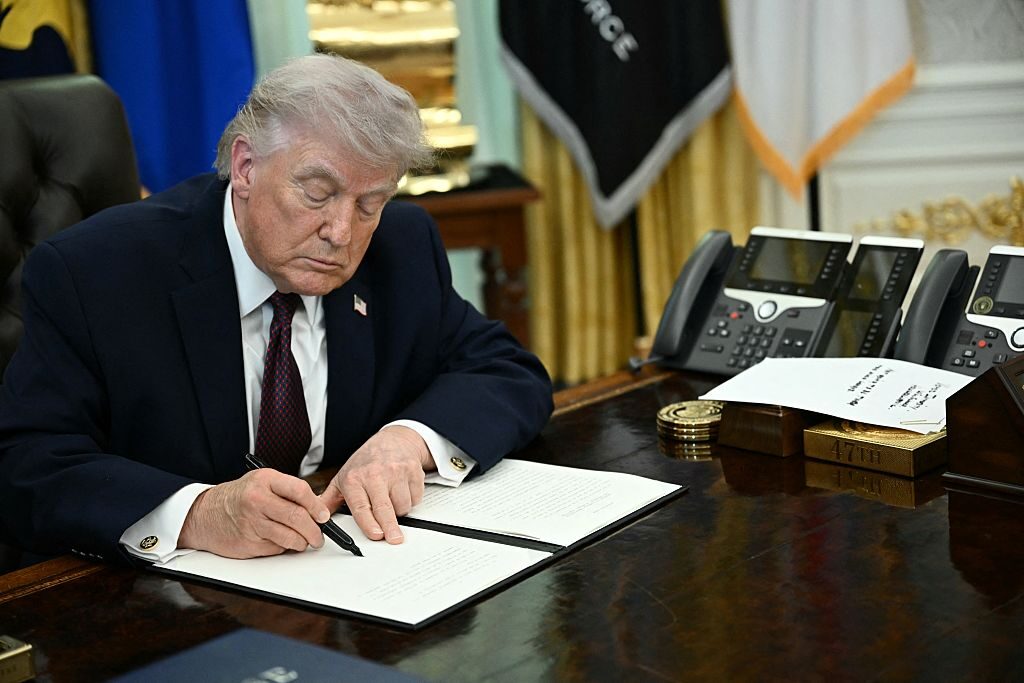
A federal judge on Thursday denied an effort to pause President Donald Trump’s executive order seeking to restrict mail voting in federal elections, finding that it was too early to say whether anyone has been harmed by the effort.
The opinion and order, from Judge Carl Nichols for the U.S. District Court for the District of Columbia, turned aside arguments from congressional Democratic leaders, national Democratic committees and civil rights groups to pause the implementation of Trump’s mail voting order.
Trump issued the order in March as part of his latest attempt to assert federal authority over the conduct of elections. The challengers asked for a preliminary injunction to block two of the main aspects of that order — compiling a nationwide list of eligible voters and having the U.S. Postal Service create a rule restricting what election mail may be delivered.
Nichols wrote that the Postal Service may eventually issue a rule on election mail, and the government may finalize state voter lists that exclude some voters, but those harms have not occurred yet.
Nichols wrote there was no guarantee that the lists would be inaccurate, or that the eventual Postal Service rule would harm voters.
“Plaintiffs may, of course, renew their motions if and when those future actions occur. Until then, however, Plaintiffs cannot show that preliminary injunctive relief is warranted,” Nichols wrote.
In court filings and at a hearing earlier this month, the challengers argued that waiting to block the order could cause irreparable damage to the midterm elections, sowing “chaos and confusion” according to one of the attorneys.
In the executive order, Trump directed the government to create “state citizenship lists” of eligible voters and send those lists to states to manage their voter rolls. Separately, the order directed the Postal Service to issue a rule restricting delivery of election mail only to people on state voter lists.
Additionally, the order directed the Justice Department to investigate state and local officials who did not comply and potentially rescind federal funds.
Congressional Democrats, national party groups and civil rights groups filed lawsuits seeking to block the order in Washington, D.C., and the cases were consolidated before Nichols. Several Republican-led states intervened seeking to defend the order.
Another set of lawsuits over the order is still pending in Massachusetts federal court.
Over the course of his second term, Trump has taken multiple steps to assert more authority over elections. That includes an executive order last year seeking to mandate proof of citizenship to register for elections and blocking the counting of late-arriving ballots.
That order has been blocked by multiple lower federal courts.
Separately, the Justice Department has sued dozens of states seeking sensitive information about voters but has largely been blocked by federal courts.