He hasn’t been seen in months. The Congressional Record disagrees
Tom Kean may not be in D.C., but his speeches are in the written record of proceedings
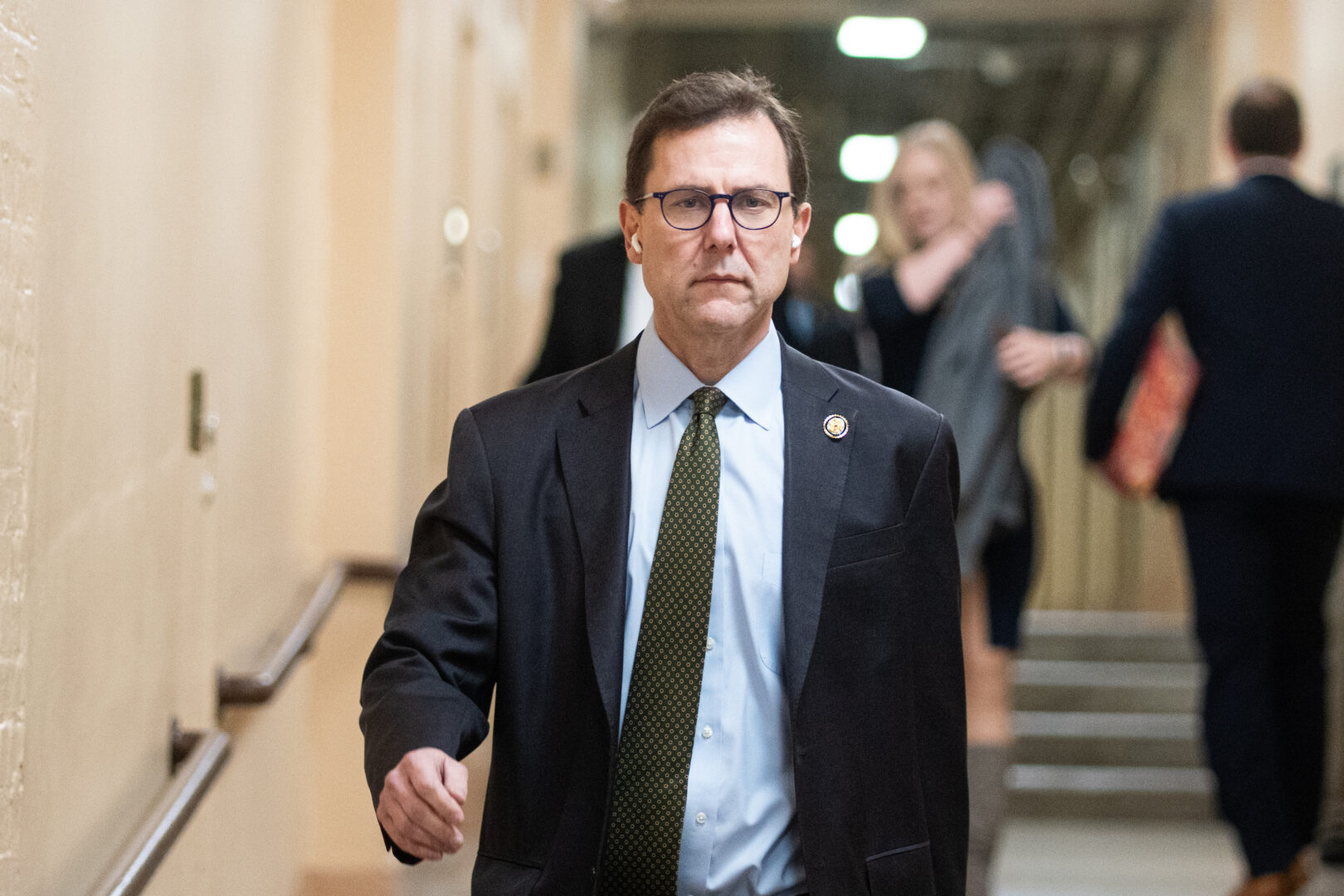
It’s been nearly three months since he last cast a vote on the House floor, but Rep. Thomas H. Kean Jr. has been keeping busy — or at least trying to look like he is.
In the New Jersey Republican’s absence, five speeches under his name have appeared in the Congressional Record.
Staff in congressional offices continue to work even when their bosses don’t, which is nothing new. But Kean’s disappearance has raised long-overdue questions about transparency on the Hill, some experts say.
“The appearance of impropriety is just as bad as the real thing because it casts a cloud on the individual or the institution, and Americans already have a pretty dismal view of Congress and of government broadly,” said Dylan Hedtler-Gaudette, director of government affairs at the nonprofit Project on Government Oversight.
In the 89 days since he last voted, Kean has also disclosed stock trades and introduced legislation. And in the official written record of Congress’ proceedings, his speeches have covered a range of topics.
He celebrated the 100th birthday of a constituent, honored the New Jersey Taiwanese Chamber of Commerce and recognized a century of “community, history and civic pride” in the borough of Watchung, among other things.
It’s not uncommon for members to file a speech to be published in the Congressional Record on a day they did not actually speak on the House floor. But Kean’s frequent submissions while he’s been away from Washington have raised eyebrows. According to guidance from the House Republican Cloakroom, material for the Congressional Record “must bear the original signature of the submitting member,” and the cloakroom “cannot accept faxed or electronic copies” of what are known as “extensions of remarks.”
Kean’s office did not provide answers to emailed questions about how he submitted his Congressional Record speeches.
The two-term lawmaker, who faces a competitive reelection fight in the fall, has remained mysteriously out of public view even as he faces mounting pressure to disclose details of the “personal medical issue” that has kept him away from the Capitol. “I will be back to the job I love very soon,” he said in an April statement posted on X.
In a statement Tuesday, he said he hoped to return to “in person work within a matter of weeks” and promised to be “completely transparent as to the nature of my medical condition” at that time, while providing no new details.
“There is a core problem,” Hedtler-Gaudette said. “A lack of candor and transparency around his situation.”
Less representation, more problems
When the House is in session but a lawmaker is out sick or campaigning, constituents lose out on a primary function of their elected official — casting votes on the floor.
“The district he’s supposed to be representing is not being represented,” Hedtler-Gaudette said.
But staff are the backbone of Congress and routinely keep offices up and running, answering constituents and handling day-to-day affairs. They have a number of ways to make their bosses look busy, from issuing press releases to posting on social media and more.
That only becomes a problem when the public can’t be sure whether their representative is involved in key decisions at all, some observers say. Prolonged absences from Washington — especially without full transparency — shouldn’t be seen as business as usual, they warn.
Kean last voted on the House floor on March 5. Since then, in addition to submitting speeches for the record, he has introduced three pieces of legislation and signed on as a co-sponsor to several others.
Casey Burgat, an associate professor at George Washington University, said Kean’s behavior draws more attention to his absence, ultimately leading to more questions.
“If you can do this, then why aren’t you there doing the other significant portion of your job, which is voting?” he said. “At the same time, I get what the office is trying to do. … They have policy ideas, they can submit these things without a member present and voting, so maybe it’s their way of showing legislative representation on important issues without the member actually being there to vote.”
It’s not the first time a member has vanished from Washington with little to no explanation. In 2024, for example, the Dallas Express reported that former Texas Republican Rep. Kay Granger had been quietly living in an assisted living facility while still serving as a sitting member of Congress.
While Granger did not introduce bills in her absence, she continued to submit remarks appearing in the Congressional Record like Kean has, including speeches recognizing long-serving staffers on the House Appropriations Committee.
In other cases, members are chronically absent from Washington but remain visible on the campaign trail. Former Democratic Rep. Mikie Sherrill, for one, submitted a speech for the record on Sept. 9, 2025, despite missing votes that day, part of a larger string of no-shows as she campaigned for governor of New Jersey.
‘He should be there doing his job’
In a time of tight margins in the House, every missing GOP voice can be a headache for Speaker Mike Johnson, which has only called more attention to the topic.
“At the end of the day, he should be there doing his job unless he’s got a medical thing that’s preventing him, and if you’ve got a medical thing that’s preventing him from doing a job, then he should probably not be in the job anymore,” Hedtler-Gaudette said.
Some members in recent years stayed in their jobs while dealing with medical issues keeping them away from Washington but ultimately died in office, leaving their seats vacant for months until a successor was elected. That was the case for former Rep. Raúl Grijalva, D-Ariz., who missed dozens of votes in 2025 while battling lung cancer.
While leaders in Congress can cajole or encourage their members to show up in D.C., they can’t compel them. And other ideas are scarce.
At least one member of Congress, Rep. Marie Gluesenkamp Perez, D-Wash., has called for ethics guidelines around any permanent “cognitive impairment” stopping colleagues from doing their jobs.
Others want to see the House revive options for proxy voting, which has been controversial since the pandemic. An effort to allow new parents to vote by proxy as they spent time with their newborns, led by Reps. Brittany Pettersen, D-Colo., and Anna Paulina Luna, R-Fla., fizzled out last year as Johnson reinstated a process known as “vote pairing” instead — essentially cancelling out the missed votes of absent members.
The way Burgat sees it, “members are humans too, and they’re likely going to … need extended breaks for an infinite number of reasons.”
“You can’t legislate all of that away,” he said. “Can you get close with maybe required check-ins or maximum time away? But ultimately, we have very few mechanisms to recall members of Congress.
“Really, the only ones we have are elections themselves.”
The spelling of Rep. Brittany Petterson’s name was corrected.