Senate clashes over fate of ‘anti-weaponization’ fund
Schumer tried to pass measure to block the fund but Hagerty objected
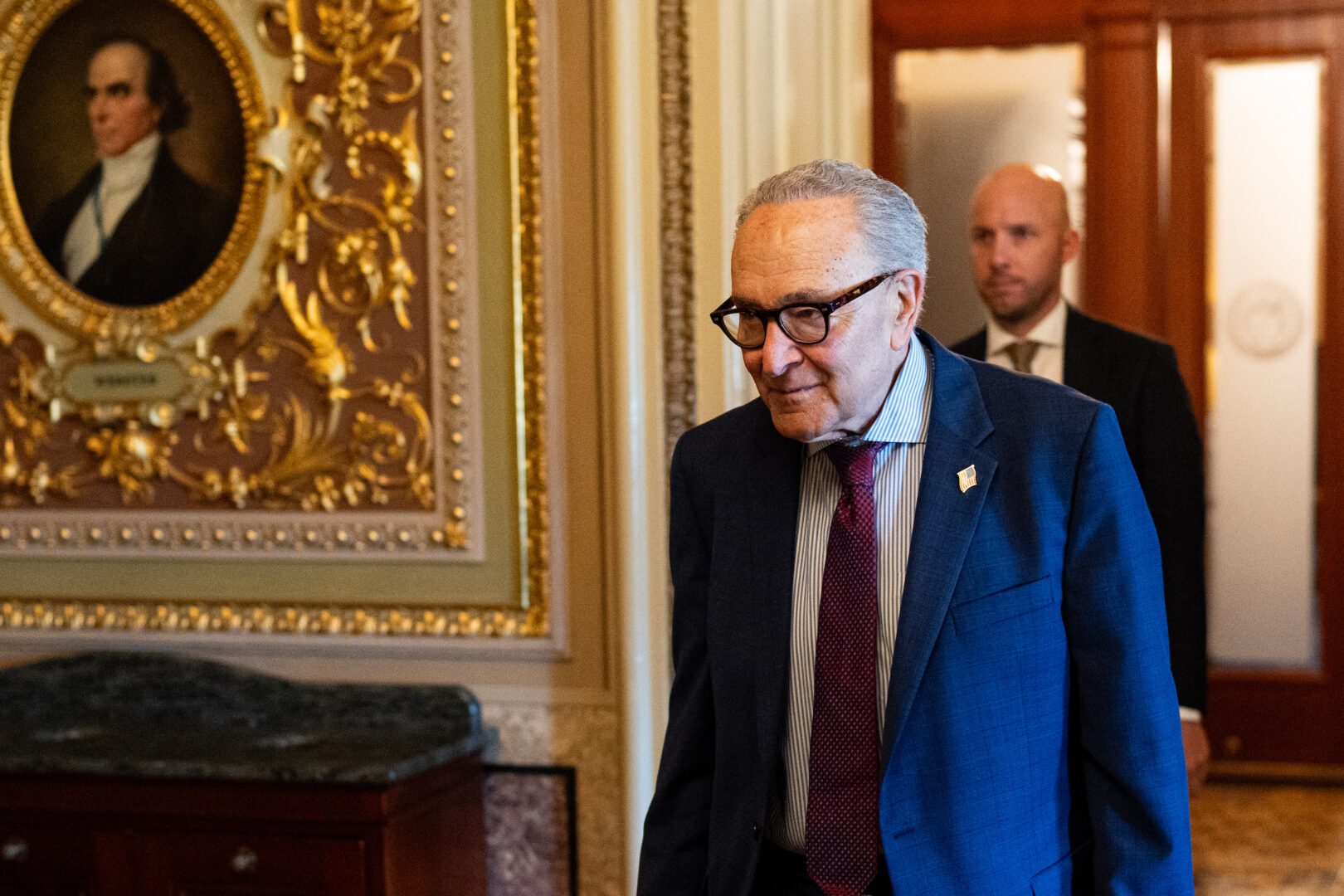
Senate Democrats sought to pass legislation to abolish the White House’s supposedly defunct “anti-weaponization” fund Tuesday, in a floor move blocked by Sen. Bill Hagerty, R-Tenn.
Senate Minority Leader Charles E. Schumer, D-N.Y., attempted to pass via unanimous consent the measure to stop the $1.8 billion fund from the Department of Justice and nullify the IRS’ ban on auditing the tax returns of President Donald Trump and his family.
The fund was created as part of a settlement in a lawsuit Trump brought against his own administration over the leak of his tax returns during his first term, and it has become increasingly caught in the crossfire on Capitol Hill since its announcement nearly a month ago.
Schumer said that Trump’s own statements about the fund show he intends to move forward with it, despite statements from Acting Attorney General Todd Blanche that the fund is not moving forward.
“He’s going to do it unless we stop it,” Schumer said.
“I invite Republicans to prove Trump wrong. Support this bill, outlaw this corruption, say it is a terrible idea on the floor so we can eliminate it permanently once and for all,” Schumer said.
Hagerty’s objection to unanimous consent is enough to block the move. Hagerty said Trump has “made clear” he won’t “seek any compensation” from the fund. “Why is that not enough for my colleagues across the aisle,” Hagerty asked from the floor.
Hagerty also noted that Blanche told a House committee the administration was “not moving forward with the fund. Period.”
In one of the lawsuits challenging the fund, the judge noted that Blanche’s statements to Congress were not under oath, and that Trump himself has said he would like the fund to move forward despite an initial ruling from a federal judge pausing its creation.
Judge Leonie Brinkema of the U.S. District Court for the Eastern District of Virginia has blocked the administration from moving forward with the fund and given the Justice Department until Friday to enter a binding statement from both Blanche and Treasury Secretary Scott Bessent formally saying the fund would never go forward.
If that statement was entered, Brinkema said she may dismiss the lawsuit.
On Tuesday, Sen. Thom Tillis, R-N.C., said he is not satisfied with the administration’s statements that it had abandoned the fund, and the uncertainty could hold up his support for Blanche’s nomination to lead the Justice Department as attorney general.
“It will be an issue if the weaponization fund isn’t effectively dead by the confirmation hearing, because I’ve still got a real problem with it being out there,” Tillis said.
The fund has caused bipartisan consternation on Capitol Hill. It delayed consideration of the recent reconciliation law in the Senate and several Republicans have said they want it gone outright.
Sen. Bill Cassidy, R-La., signed onto a brief in the challenge to the fund calling it “an immediate and dire threat” to the constitutional order and Congress. Last week he said he may back legislation to ban it.
“I’d like to see the specific legislation, but I don’t like the fund,” Cassidy said.
The Louisiana Republican also tried during votes on a reconciliation measure to get an amendment that would bar the fund and repurpose it for law enforcement injured by the Jan. 6, 2021, attack on the Capitol.
While that effort failed to garner a simple majority needed to add it to the measure, several of his fellow Republicans supported the effort.
On the House side, Reps. Brian Fitzpatrick, R-Pa., and Tom Suozzi, D-N.Y., introduced their own bill to ban the fund and have sponsored a discharge petition to force a floor vote.
Fitzpatrick said although he viewed the ongoing legal challenges as an immediate solution, he still wanted to ban the fund permanently.