Wealthy House candidates eye payoffs in Florida Republican primaries
Redistricting and retirements create new opportunities for ambitious Republicans
More than a dozen House candidates in Florida have poured over $1 million into their campaigns ahead of Tuesday’s primary elections, a CQ Roll Call analysis of fundraising reports shows.
The investments — by 14 Republicans running for eight different House seats — come after the GOP-led state Legislature approved a new congressional map this spring, giving Republicans four pickup opportunities this fall. In some of those races, wealthy candidates are betting on themselves to get to Congress.
Take the newly redrawn and open 22nd District in South Florida. Both parties are targeting the seat, which Donald Trump would have carried by around 10 points in 2024, according to calculations by Inside Elections with Nathan L. Gonzales. Three of the seven Republicans seeking the nomination have each invested over $2 million into their campaigns.
Michael Carbonara, a fintech entrepreneur, loaned his campaign $4.3 million through Aug. 12, according to federal filings. University vice chancellor Belinda Keiser gave her campaign $3.7 million over the same period, according to her latest filings. And records show businessman Casey Askar contributing $3.1 million to his campaign and repaying himself $400,000.
Republican leaders have been largely hands-off with this race. Neither Trump, nor the National Republican Congressional Committee have endorsed a candidate.
On the Democratic side, Pia Dandiya, a tech executive and former high school principal backed by the Democratic Congressional Campaign Committee, contributed $247,000 to her campaign, according to her latest filings.
Inside Elections rates the race Tilt Republican.
Similarly, three Republicans seeking to succeed GOP gubernatorial front-runner Rep. Byron Donalds in the deep-red 19th District have contributed more than $1 million to their campaigns.
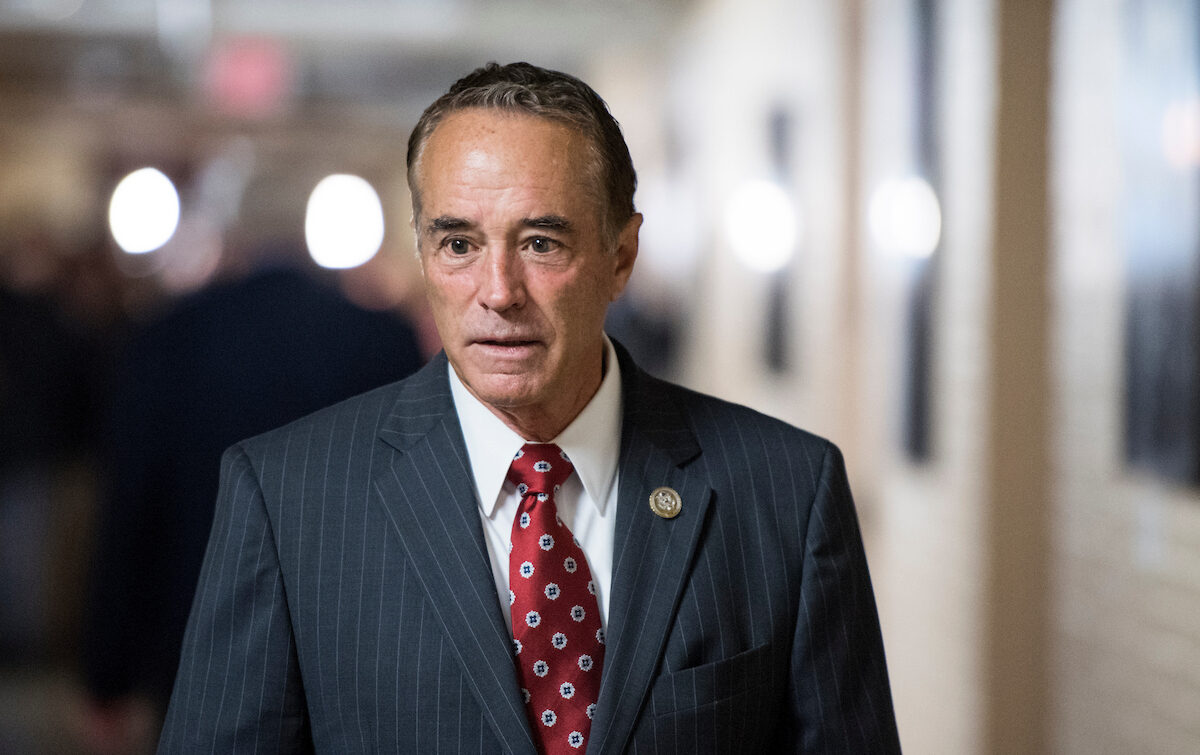
Former New York Rep. Chris Collins, who is seeking a comeback to the House after serving time in federal prison for insider trading, has funded 100 percent of his campaign, contributing $3.4 million through contributions and loans through July 29, according to his latest filings.
He’s not the only Florida transplant self-funding a campaign for the seat along the state’s southwest coast. Former Illinois state Sen. Jim Oberweis, who’s made several bids for office from his native state, has loaned his campaign $4.9 million, accounting for more than 90 percent of his total receipts.
And media company president Jim Schwartzel contributed about $1.1 million to his campaign in the second quarter, making up about half of his total receipts.
Still, it’s not clear whether any of their self-funding will be enough to overcome Trump’s recent endorsement of Catalina Lauf, a conservative activist and former Commerce Department adviser who also previously ran for Congress from Illinois. Lauf, who hadn’t done any self-funding through July 29, has been the beneficiary of $4.1 million in outside spending supporting her campaign.
Generating name ID
The Sunshine State is no stranger to wealthy politicians. A majority of members of the state’s congressional delegation have average net worths of at least $1 million, according to a CQ Roll Call analysis of lawmaker disclosures.
Putting millions into your campaign doesn’t always translate into wins. But in the crowded primary fields that have emerged in districts across Florida, more resources can help candidates increase their name ID, said Susan MacManus, a professor emeritus of political science at the University of South Florida.
“When you have an open seat, there’s pent-up demand or desire that if you’ve ever thought about it, now’s the chance to go,” MacManus said in an interview. “In a lot of these fields, none of these people with money have very big name ID. This is a state where you have to generate that.”
The 9th District in Central Florida is now a top GOP target after redistricting, with seven Republicans running to challenge Democratic Rep. Darren Soto for a seat Trump would have carried by 18 points two years ago.
Two of them — Army veteran Thomas Chalifoux, a former Osceola County School Board member who lost to Soto in 2024, and Navy veteran Dan Green, a Pentagon appointee during Trump’s first term — have put over $1 million each into the race. Chalifoux has loaned his campaign $3 million, although he’s been repaid $613,000, while Green has contributed $1.1 million, federal filings show.
Green boasts endorsements from several veterans now serving in Congress, as well as from former Florida Sen. Connie Mack.
Dairy farmer Ben Butler, whom Gov. Ron DeSantis appointed three times to the South Florida Water Management District Governing Board, trails other Republicans in fundraising but appears to be a contender. He’s earned endorsements from several Hill lawmakers, including House Agriculture Chairman Glenn “GT” Thompson.
Soto, meanwhile, raised $2.22 million through July 29, with no self-funding, and had $1.2 million banked. Inside Elections rates the race Likely Republican.
The Tampa-area 14th District, held by Democratic Rep. Kathy Castor, has also drawn a crowded Republican primary field thanks to its new GOP leanings. Two former state legislators have contributed more than $2 million to their campaigns: Kevin Steele loaned his campaign $2.5 million through July 29, while Mike Beltran put in just over $2 million.
Castor, who ranks among the wealthier members of the Florida delegation, reported raising $2.3 million through July 29, none of it from personal funds, and had $1.7 million on hand.
Inside Elections rates the race for the 14th District, which Trump would have carried by around 11 points in 2024, as Lean Republican.