An empty committee room defines Senate-White House relations
Senators — and FISA — left in the dark after Trump does a 180 on intelligence pick
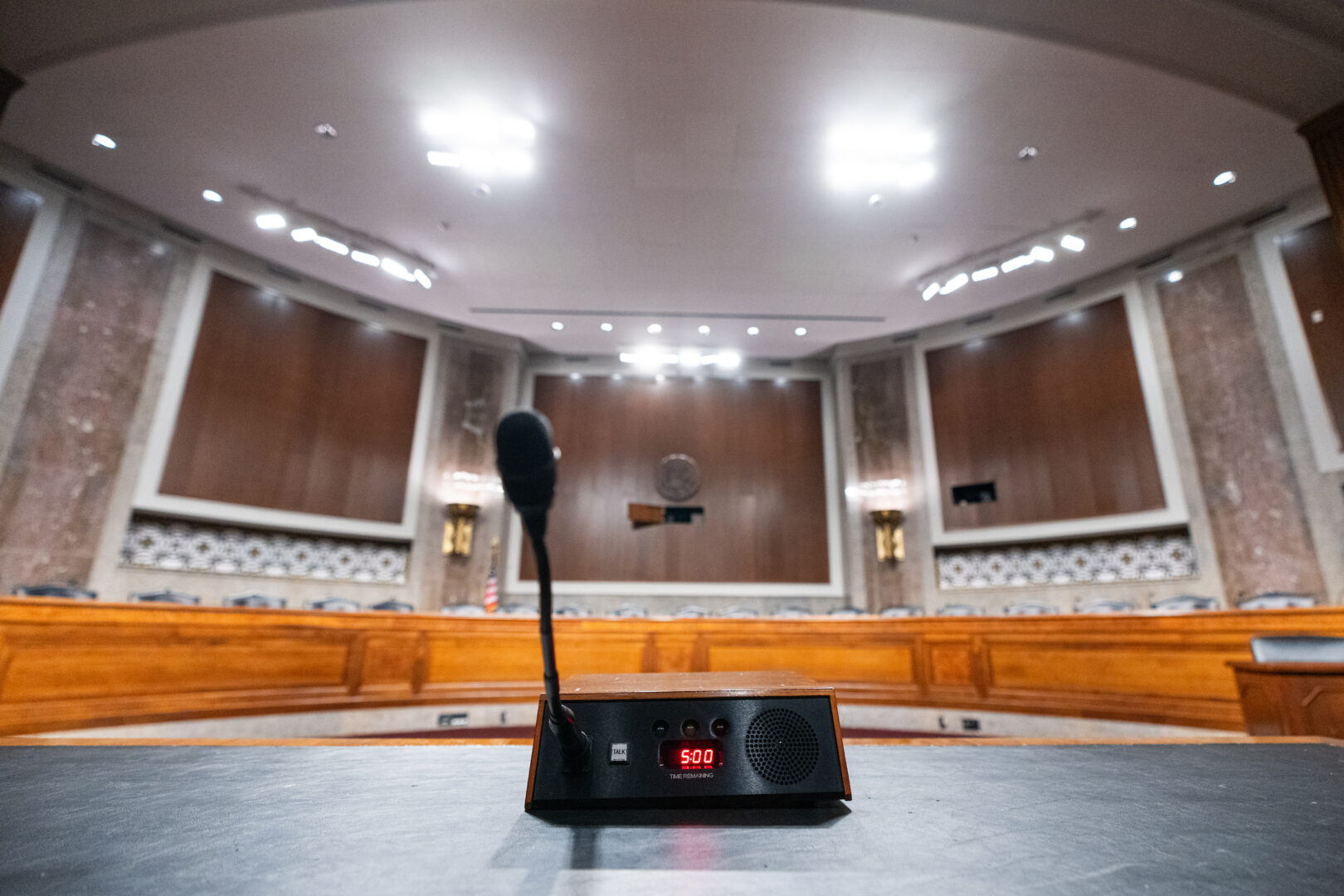
An empty Senate Intelligence Committee room summed up the mood Wednesday afternoon during what was supposed to be an easy step in Majority Leader John Thune’s plan to revive a lapsed surveillance authority.
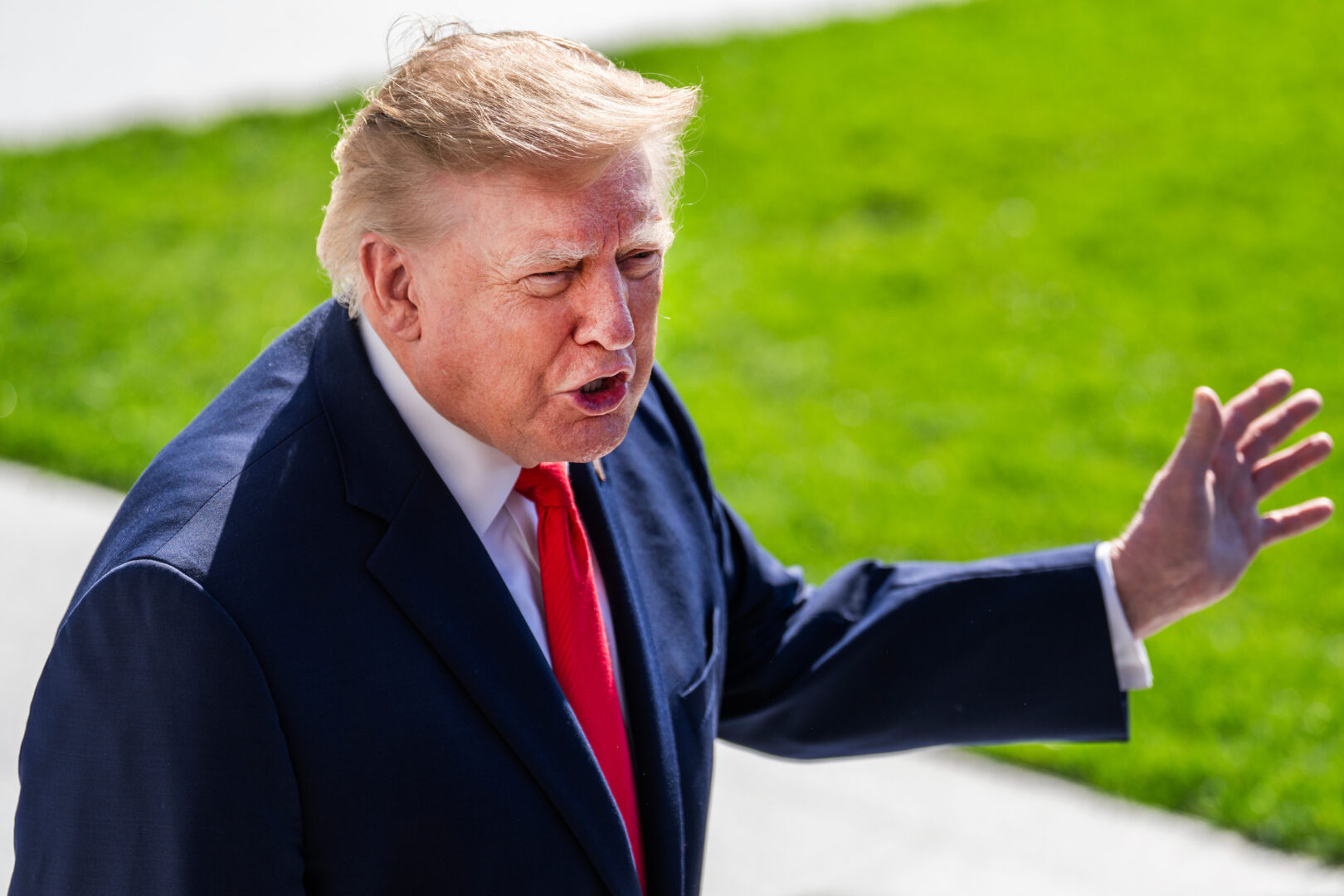
Instead, the key spy powers tool, the committee room and senators themselves were left in the dark after President Donald Trump directed the hearing’s witness — Jay Clayton, his pick to be director of national intelligence — not to appear.
“I have never seen anything quite like this,” Sen. Ron Wyden, D-Ore., the longest-serving member of the intelligence panel, told reporters earlier that day.
As the hearing’s scheduled 2 p.m. start time neared, not everyone had gotten the memo it was canceled. A handful of spectators sat in the public viewing chairs until about 15 minutes before, when a committee aide informed them the hearing wasn’t happening. By 2 p.m., the room was nearly empty.
“I mean, Jay Clayton was on the brink of having a very good hearing and probably even getting some Democrat support,” said Sen. Thom Tillis, R-N.C., who is retiring at the end of this term. “And now we’re in a posture to where it may be the reason why 702 doesn’t get reauthorized.”
“That’s a mistake,” Tillis added.
A week ago, Trump had nominated Clayton, seemingly offering an olive branch after Democrats said they would not vote to reauthorize Section 702 of the Foreign Intelligence Surveillance Act if Trump moved forward with his plan to have Bill Pulte temporarily head the intelligence agency. Meanwhile, on Friday night, that spy authority lapsed.
Senate Republicans this week rushed to schedule Clayton’s confirmation hearing in an effort to restart FISA negotiations with Democrats and confirm Clayton before the controversial Pulte takes over Friday.
That changed when Trump, in the wee hours of Wednesday morning, said Clayton won’t be going forward until “Jamie McDonald is approved to be U.S. Attorney,” and declared he wouldn’t approve a FISA reauthorization unless a separate voter ID bill was attached.
His demands perplexed Democrats and Republicans alike.
Sen. John Cornyn, R-Texas, said after a GOP conference lunch that “there’s some frustration because now 702 is going to stay dark, and that’s a danger for the country,” pointing to summer events to mark America’s 250th birthday and the World Cup.
“We have a lot of people here from around the world, and we’ve got regimes like the Iranian regime mad at us … and we basically blinded our intelligence community, because 60 percent of the president’s daily brief comes from 702,” said Cornyn, who won’t be returning to the Capitol next year after Trump backed his challenger in a primary runoff. “So, by tying all these together, and then also saying, ‘Well, you got to pass the SAVE America Act,’ which we know we don’t have the votes for — we got to find a solution.”
All week, Republican senators have been touting the FBI’s thwarting a planned drone and gun attack on Sunday’s UFC fight on the White House lawn as an example of why they need to reauthorize the program. But communication between the two sides of Pennsylvania Avenue has deteriorated, complicating calculations for Thune. The leader told reporters Wednesday he has not spoken to the president in a few days.
“Less than optimal,” was how Tillis described communication with the White House. “I think it’s undermining our ability to produce the very results he wants.”
‘A day at a time’
Thune said Wednesday he’s not sure what the next steps on FISA will look like. “We’ll take it a day at a time,” he said.
“I think [Clayton] would be confirmed quickly, but I can only do what I can do here,” Thune said. “The president — this is his nominee, and so obviously he made a decision not to move forward at the moment. We’ll see what comes next.”
Sen. John Kennedy, R-La., when asked about next steps, put it more simply: “I don’t know. Prayers?”
Senators said Wednesday that it’s too soon to move on the McDonald nomination, considering the committee has yet to receive the paperwork necessary to adequately process his pick. McDonald is part of Trump’s orbit of personal lawyers and would fill the plum U.S. attorney slot vacated by Clayton in the Southern District of New York.
“There’s no background investigation, there’s nothing for his nomination,” said Sen. Richard Blumenthal, D-Conn., a member of the Judiciary Committee. “What [Trump] is doing is just inflicting chaos.”
Even if they can figure out the nominations, some in Congress are still divided over policy questions tied to FISA, like warrant requirements and how to protect the privacy of Americans whose data can be swept up in searches.
Thune also threw cold water on Trump’s threat he will “not approve FISA without THE SAVE AMERICA ACT going along with it.”
“I know he said that, but he’s said that about a lot of other things,” Thune said Wednesday.
The leader has maintained that the Senate doesn’t have 60 votes for that measure, which would require voters to provide proof of citizenship when registering and photo ID at the polls. Thune has shared that message with the president — but more senators on Wednesday began cementing it, too, following the White House’s rug pull.
Kennedy noted that Senate Republicans tried and failed during the vote-a-rama to pass SAVE-related amendments. They couldn’t muster a simple majority, much less the 60 votes— the sweeping election overhaul bill would need to pass in the Senate.
“I want a Porsche for my birthday. I’m not going to get it. That’s not the way this place works, and that’s just the way it is,” Kennedy said. “I don’t blame the president for trying, and I can assure you if Thune could deliver the SAVE Act, he would, he really would.”
Nina Heller contributed to this report.