Senators want a briefing as Trump touts Iran ‘deal’
Even some Trump allies want more information about MOU
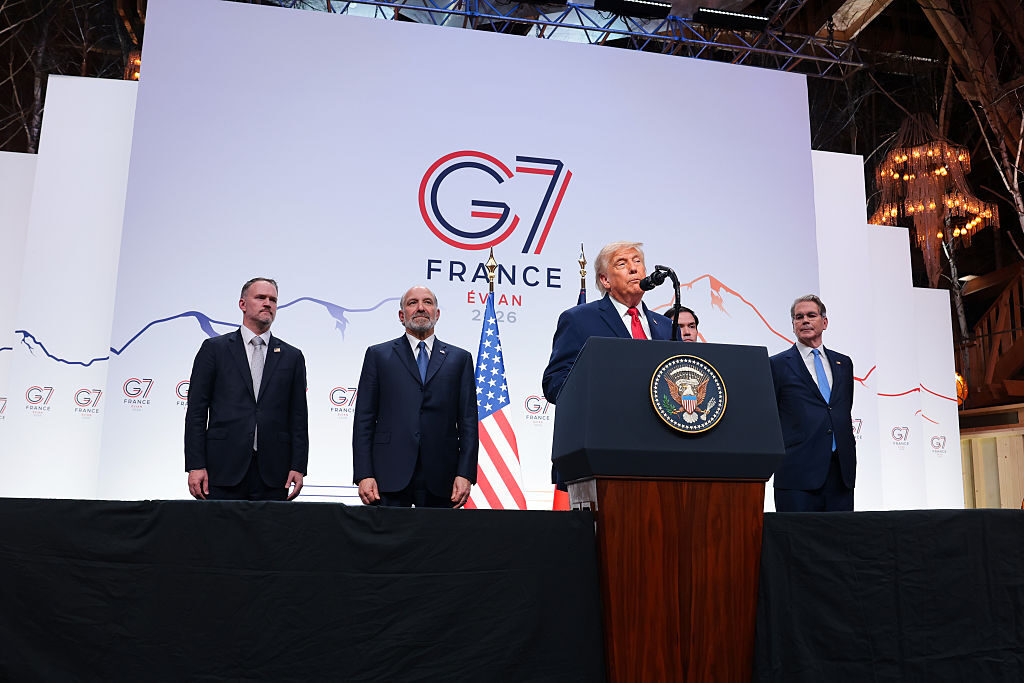
President Donald Trump used a press conference at the end of the G7 summit Wednesday in France to laud a war-ending pact with Iran, as senators back home criticized a lack of information about the deal and questioned his declaration the previous day that U.S. relations with Iran are “normalized.”
The administration’s preliminary pact with Iran hung over the summit, where Trump said he had a chance “to discuss the details of this historic agreement with many of our closest friends and allies.”
“They are thrilled, and we made a deal. Every one of them, there’s no one nation that came to us and said, ‘Please, sir, keep dropping bombs on them. Please keep dropping bombs,’” Trump said, with Secretary of State Marco Rubio and other U.S. officials beside him.
Despite the Islamic Republic government remaining intact, Trump said with a noticeably hoarse voice that the U.S. and Israel had achieved “regime change,” as he expressed optimism about the new leadership in Tehran.
A day earlier, during a meeting with United Arab Emirates President Sheikh Mohamed bin Zayed Al Nahyan, Trump said Iran wants “to get back to business. The relationship is now normalized, so I think it is going to go quickly.”
But senators on all sides met comments about the still-unreleased memorandum of understanding with skepticism and frustration, with many urging administration officials to brief them this week on the MOU.
“It’s hard to have a solid comment, when you don’t know what’s on the table,” Sen. Angus King, a Maine independent who caucuses with Democrats and is a member of the Intelligence and Armed Services committees, said Tuesday.
King said he was hopeful administration officials would brief senators this week on the MOU and next steps. “The president’s free to say what he wants,” he said of normal relations with Tehran. “But we’ll see what this agreement actually says and what the Iranians actually agreed to.”
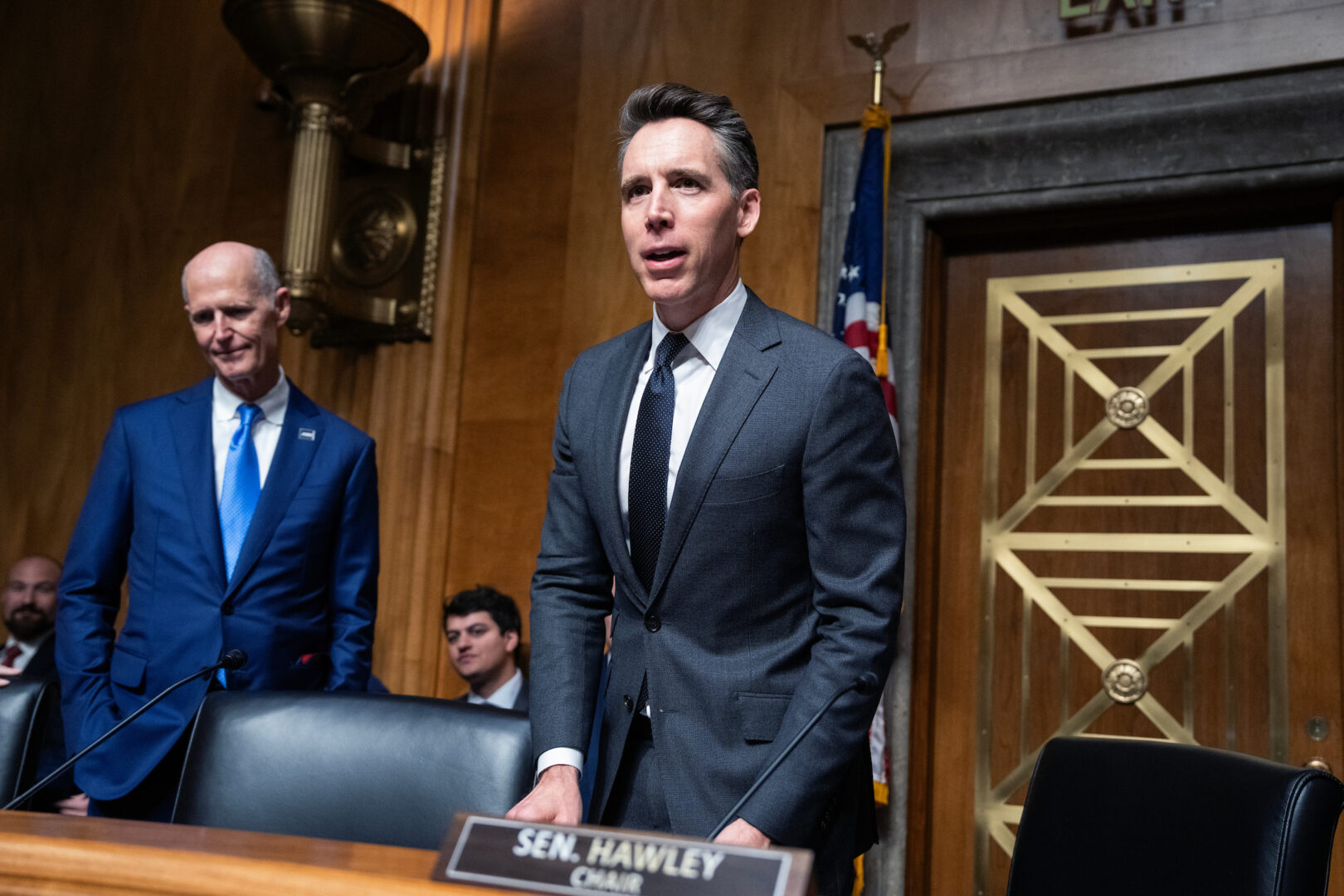
Sen. Rick Scott, R-Fla., a member of the Armed Services and Foreign Relations committees, also called for a briefing this week. “I’d like to see it,” he said Wednesday, “just like everybody else.”
Scott said he needs to see and hear more from Iranian leaders before making his own “normalization” declaration. “I’d like them to announce they’re not going to kill any more Americans, and they’re not going to build nuclear weapons,” Scott said.
“They’re not going to build ballistic missiles. They’re not going to support proxy groups,” Scott said. “They would pay us for all the costs it has taken to get them to this point. That would probably be normal relations to me.”
Collectively, Trump’s talk in France about “normalized” relations and “rational” leaders in Tehran marked a stark pivot away from decades of U.S. foreign policy. Washington severed diplomatic relations with Iran in April 1980, after the Islamic Republic government took power.
Senate Intelligence Committee Chairman Tom Cotton, speaking with conservative radio host Hugh Hewitt on Tuesday, injected key caveats into his assessment of what might happen next. The MOU started a 60-day window during which Iran’s nuclear program will be discussed.
“I’m not going to weigh in for good or for ill until we understand that exact nature of what was agreed to,” the Arkansas Republican said. “Whatever the shape of a final agreement with Iran, if they even reach a final agreement and they’re not constantly trying to walk back their commitments, as we know Iran has a history of doing, we’re in a much better position than we were before those two [U.S.] bombing campaigns.”
Reporters briefed
In a call with reporters Wednesday, a senior U.S. official read what they said was the verbatim text of the MOU while also providing commentary along the way to push back at critics of the agreement.
The MOU calls for the immediate end to fighting by Iran, the United States and each country’s allies; a 60-day negotiation for a final deal on Iran’s nuclear program and U.S. sanctions relief; an immediate sanctions waiver for Iranian crude oil exports; the full end of the U.S. naval blockade against Iran within 30 days; a reopening of the Strait of Hormuz by Iran without tolls for 60 days; the development of a plan for Iran to get $300 billion in reconstruction funds after a final deal is reached; and the lifting of U.S. sanctions after a final deal is reached, according to the reading by the U.S. official, who spoke under condition of anonymity under ground rules set by the White House.
Sen. Richard Blumenthal, D-Conn., a member of the Armed Services and Judiciary committees, was among Senate Democrats who this week accused Trump of billing the MOU as something it’s not.
“They’re clearly over-selling it,” Blumenthal said. “I mean, that’s Trump’s M.O. — over-promise and under-deliver. And the secrecy is absolutely stunning. They’ve briefed no one here, not even their closest allies. … And as a result, there are contradictory versions of what it actually applies.”
Blumenthal said he was concerned that the Trump administration was poised to “unfreeze assets, perhaps hundreds of billions, that could be used to fund Iran’s malign proxies, like Hezbollah.”
“Once again, Iran is promising that it won’t have a nuclear arms program, as it has done for decades. At the same time, Iran has continued to develop enriched uranium,” Blumenthal said. “I think the administration is trying to frame the public debate before they actually release the document to try to … deceive people into thinking there’s more there than, in fact, there is.”
Senate Majority Leader John Thune, R-S.D., responded “hopefully soon” when asked Wednesday when there might be a briefing for senators.
“There’s a bunch of things in here that I think we’re going to have questions about, but my understanding is this is a framework, it’s an MOU, and probably more to come in terms of any final agreement,” Thune said. “So, I don’t think probably what you’re seeing right now represents what a final deal will look like. It sounds like it’s still going to be negotiated, but we’ll know more soon.”
Rebecca Kheel and Valerie Yurk contributed to this report.