AI deepfakes bill advanced by Senate Judiciary Committee
Bill takes on nonconsensual images amid broader efforts on kids safety
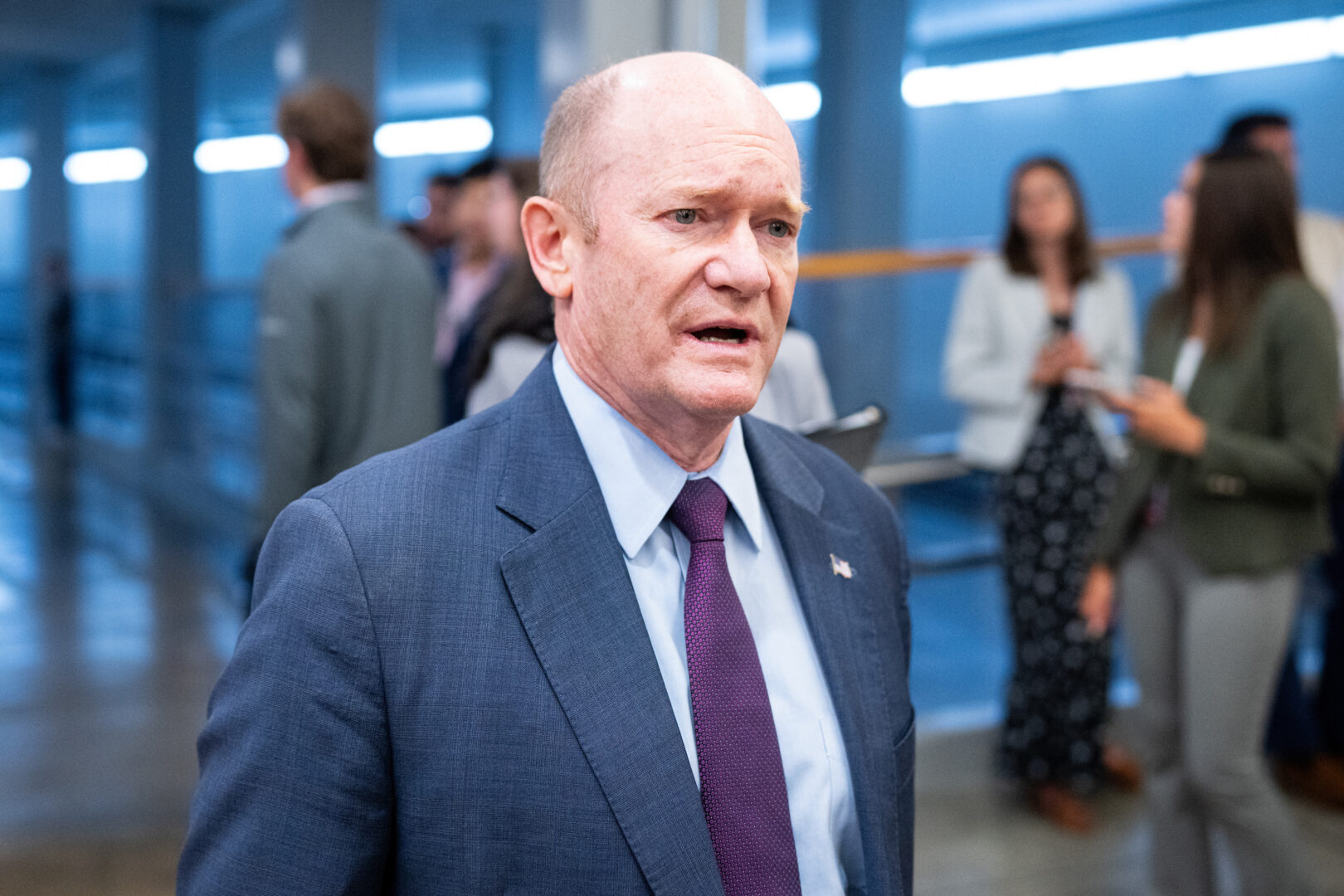
Unauthorized deepfake images generated by artificial intelligence would need to be removed from online platforms if they weren’t licensed by the person portrayed, under a bill the Senate Judiciary Committee advanced on Thursday.
The bill, which was approved by voice vote, would give individuals an intellectual property right to their voice and visual likeness, despite concerns from some senators that the bill needs refining in order to avoid chilling speech.
The bill would also prohibit distributing unauthorized deepfakes or offering a product or service primarily designed to create them.
Dubbed the “Nurture Originals, Foster Art, and Keep Entertainment Safe” or NO FAKES Act, the bill is sponsored by Sen. Chris Coons, D-Del., and has 15 co-sponsors, including seven Democrats and eight Republicans. Sens. Marsha Blackburn, R-Tenn., and Amy Klobuchar, D-Minn., have both been particular proponents of the legislation.
The bill attempts to address the proliferation of deepfakes online without infringing on speech rights. To that end, it includes exemptions for parody, news and documentaries, among others. It also would create a system for counter notifications if an individual believes their content has been mistakenly removed online.
Coons said the bill is the product of extensive conversations with stakeholders and that the bill is a “real compromise.”
“This bill is about protecting what’s most personal to us, what makes us us: our voice and our likeness,” Coons said. “Every American should have the right to decide how their voice and likeness will be used, especially when generative AI can create highly realistic digital replicas that make it look like we said things we never said and did things we never did.”
The legislation takes cues from a Tennessee law passed in 2024 that also created a right to an individual’s voice and visual likeness. That law is referred to as the Ensuring Likeness Voice and Image Security or ELVIS Act, and includes a section intended to protect the rights not just of individuals but of music labels that have contracts with recording artists. The Coons bill contains a similar provision.
Broader bill?
Blackburn, who is running for governor in Tennessee, has been a vocal advocate for AI regulation and online safety legislation, and she framed her support for the anti-deepfake bill as part of that work.
“I’ve always said that America needs one set of rules for AI, and NO FAKES is a critical component of that rulebook,” Blackburn said.
Last week, a spokesperson for Blackburn said the senator is working on a larger package that would include limited subject-area preemption of some AI and child safety laws.
“Senator Blackburn is spearheading the negotiation with the White House to finalize legislative text of an AI preemption package that includes protections for kids, creators, and communities through the Senate version of KOSA, the NO FAKES Act, and age verification requirements,” the spokesperson said, referring to the bill known as the Kids Online Safety Act, sponsored by Blackburn. It has bipartisan support in the chamber, with 76 co-sponsors, but has yet to be taken up in committee or on the Senate floor.
First Amendment concerns
The bill advanced Thursday contains financial penalties for individuals distributing unauthorized deepfakes and for online platforms that don’t make a good-faith effort to remove the deepfakes from their services. For platforms, the penalties could be as high as $750,000 per embodiment of an unauthorized work.
The committee also adopted, without objection, a manager’s amendment that would limit liability in cases where a deepfake bore a coincidental resemblance to a non-famous person. It would also lay out procedures for registering rights to the voice or visual likeness of a person who died in the 10 years preceding the bill’s enactment.
While the bill advanced on a voice vote, senators voiced concerns about the legislation, mostly centered on protecting free speech. Sens. Alex Padilla, D-Calif.; Ted Cruz, R-Texas; Mike Lee, R-Utah; and Eric Schmitt, R-Mo., all noted their concerns.
Lee said he hoped to work with the bill’s supporters to address free speech concerns.
“The legislation as drafted now raises some potentially significant concerns regarding free speech,” Lee said. “We do need to ensure that in protecting content creators’ rights, we don’t inadvertently chill free speech or undermine long-standing First Amendment principles.”
Padilla said the updated bill “has substantively and substantially improved” regarding implementation and innovation concerns, as well as some free expression concerns.
“There are still some issues that warrant additional attention to ensure that the obligations placed on the diverse stakeholders in our communications ecosystem, including music streaming services, video game developers, user-generated content platforms of all sizes and others, ensuring that those are appropriately tailored,” Padilla said.
Positions on the bill within the tech industry vary.
“Good intentions do not make good law,” Amy Bos, vice president of government affairs for industry group NetChoice, said in a statement.
“As written, this bill creates a dangerous financial incentive for platforms to aggressively over-remove lawful content, burdens creators with an unworkable counter-notification system, and fails to deliver the uniform national standard its sponsors promised,” Bos said.
However, social media giant TikTok praised the bill last month in a post on X, writing that the legislation “reaffirms our commitment to responsible AI use.”
“NO FAKES provides a clear, federal standard to safeguard human creativity and prevent unauthorized AI misuse,” the company said.
Google-owned YouTube has also expressed support for the bill.
The bill has strong support within the creative arts. SAG-AFTRA, the large union representing actors and broadcasters, released an open letter with more than 16,000 signatures in support of the bill.
The number of co-sponsors signed on to the Blackburn bill known as the Kids Online Safety Act was corrected.