Senate joins House in calling for stop to US war on Iran
Four Republicans vote for the nonbinding resolution
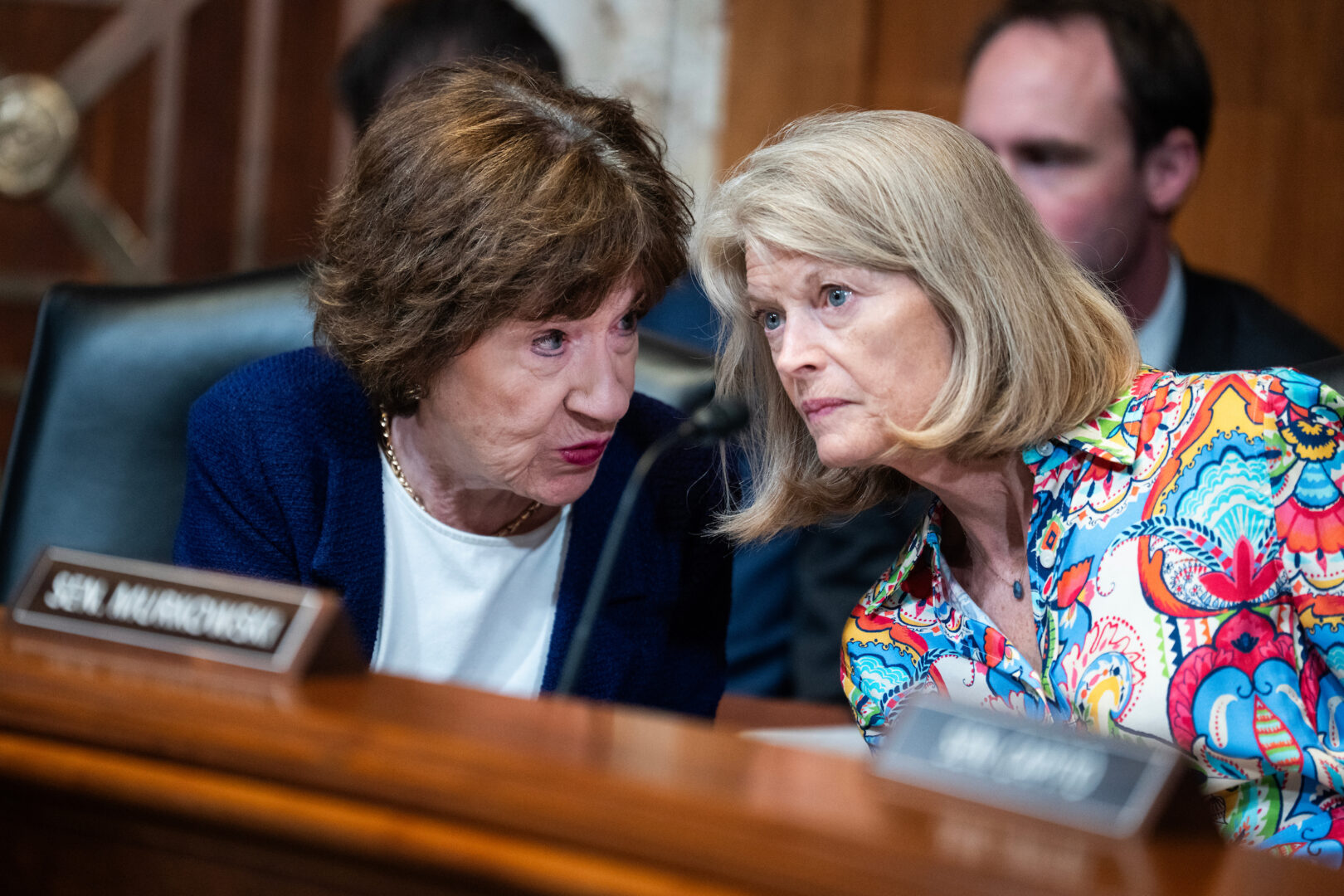
The Senate voted on Tuesday to adopt a House-approved war powers resolution calling for a halt to any additional military action against Iran that Congress has not authorized.
The Senate voted 50-48 to adopt a concurrent resolution by Rep. Gregory W. Meeks, D-N.Y., that the House had adopted by a 215-208 margin earlier this month.
Concurrent resolutions do not go to the president for a signature, and so are widely seen as nonbinding.
Still, Tuesday’s vote was Congress’s first adoption of an Iran war powers resolution. As such, even on a nonbinding proposal, the vote was arguably the clearest signal yet of bipartisan and bicameral opposition to the war, and of lawmakers’ concerns about it potentially reigniting.
The vote came during a 60-day U.S.-Iranian ceasefire and amid negotiations for a longer-term peace pact.
The Republicans who voted for the resolution were Sens. Rand Paul of Kentucky, Susan Collins of Maine, Lisa Murkowski of Alaska and Bill Cassidy of Louisiana.
Sen. John Fetterman of Pennsylvania was the only Democrat to oppose the measure.
Two GOP absences played a role in the outcome: Sen. Mitch McConnell of Kentucky remains hospitalized with an undisclosed condition. And Sen. Dave McCormick spent part of Wednesday traveling on Air Force One with President Donald Trump to visit a Mack Trucks facility in the senator’s state of Pennsylvania.
‘Chipping away’
The Senate’s antiwar faction may next force a procedural vote on a binding joint war powers resolution by Sen. Tim Kaine, D-Va., who has led the group of war critics.
But a binding resolution such as Kaine’s would likely be met with a veto, which Congress would be hard-pressed to override.
Congress has never used the War Powers Act of 1973 to force a president to cease military actions against his will.
Before holding another procedural vote on the Kaine resolution, the antiwar group first chose to force a Senate decision on the nonbinding Meeks resolution — and so to chalk up a win even if it was essentially rhetorical.
Tuesday’s vote was the 10th in the Senate pertaining to a war powers resolution since the U.S. and Israeli militaries began bombing Iran on Feb. 28.
Until Tuesday, the Senate votes had all been on procedural motions.
Since late April, Kaine and his allies have made steady progress in picking up Senate supporters, as the series of measures has come before the chamber in succession nearly every week since the war’s early days.
One of those allies, Sen. Cory Booker, D-N.J., acknowledged in an interview Tuesday that adopting a concurrent resolution, rather than a potentially binding joint resolution, is an approach that “has flaws.”
But Booker said the vote Tuesday is another “step in the right direction.”
“Every week we’ve been chipping away and seeing the truth that most of America doesn’t approve of this,” Booker said. “This has been a morally bankrupt war and an utter, abject failure when it comes to getting anything approaching all the promises Donald Trump made.”