Thune doesn’t guarantee NIL bill votes this week even with SEC, Big Ten backing
‘I hope they get it done,’ President Trump said of bipartisan measure
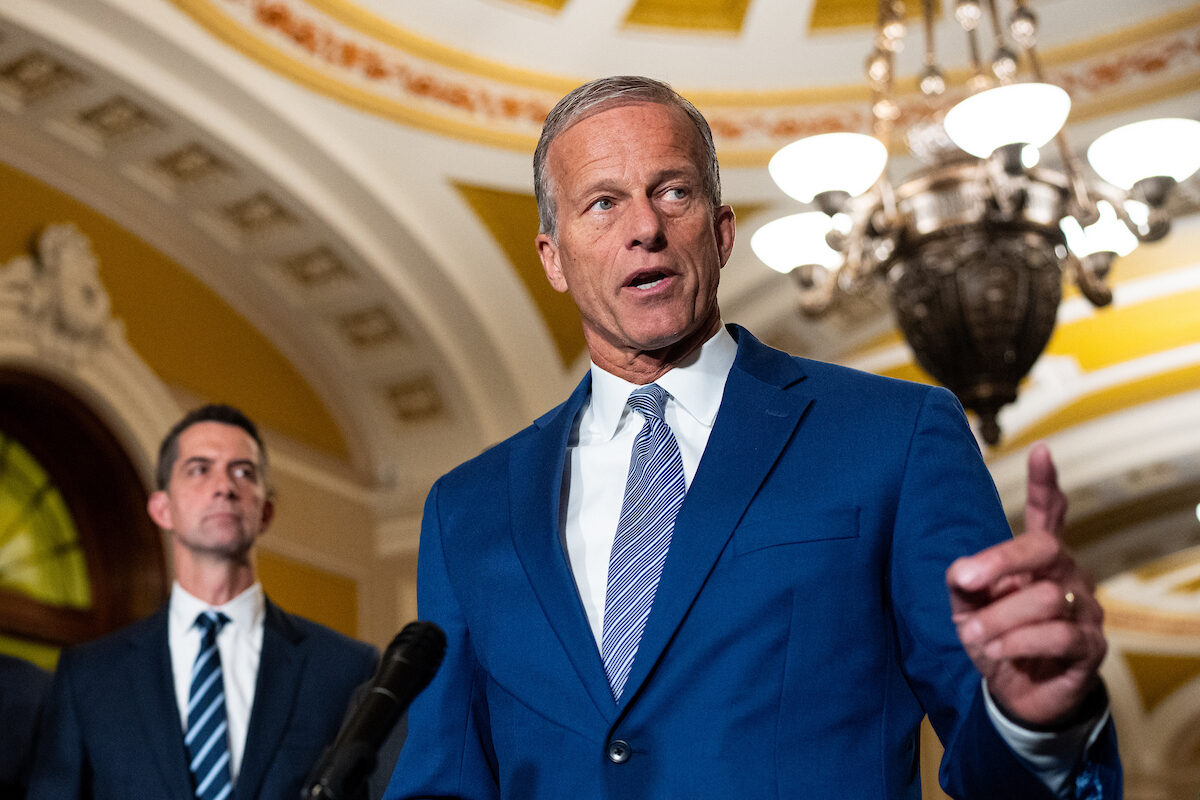
Senate Commerce Committee aides said Monday the full chamber could begin voting on a sweeping college sports bill before starting a monthlong summer break, but Majority Leader John Thune, R-S.D., stopped short of penciling it onto his packed pre-recess calendar.
Commerce Chairman Ted Cruz, R-Texas, and ranking Democrat Maria Cantwell of Washington, along with co-author Sen. Eric Schmitt, R-Mo., have been in talks with the leaders of the powerful Southeastern and Big Ten conferences since advancing a version of the measure on June 18. Those revenue-generating giants, known as college athletics’ “Power Two” leagues, announced late Friday their member schools would support the bill.
The conferences’ about-face comes as Congress has few legislative days left. The House left in late July for its August recess. And Thune intends to use this week to move a bipartisan spending measure to fund the government until Dec. 11, a Russia sanctions bill, over 70 executive branch nominees and possibly a cryptocurrency bill.
At the top of a call with reporters, Commerce Committee aides sounded bullish about at least procedural votes this week on the Protect College Sports Act. But later, they admitted it would rank behind Thune’s previously stated priorities. Speaking to reporters about the same time Monday in the Capitol, Thune did not clear the Cruz-Cantwell-Schmitt bill for takeoff.
“[I] had several NIL conversations over the weekend, and that’s certainly, as you have all seen, probably trending in the right direction. … Can we produce a big vote for it on the floor? Can we get it in the queue somehow? I mean, these are all, these are some unanswered questions,” the South Dakota Republican said. “But the things we do have to do … we’ll start there and start stacking it, and see where it goes.”
Cruz and Cantwell had always aimed for the passage support tally to top 70 votes, to give the measure momentum should it reach the House, the aides said. The committee’s leaders will be working on an unofficial whip count this week after panel members hailing from states with Big Ten schools voted against advancing it during the June markup.
The measure would establish the first federal framework governing college athletics as lawmakers try to rein in the skyrocketing costs and roster chaos plaguing college sports. It would create national standards for name, image and likeness, or NIL, compensation for student-athletes; codify guidelines on direct payments to players; and provide antitrust protections for certain college sports governance entities.
Since the June 18 session, the bill’s authors — who have been frustrated with SEC and Big Ten leaders over their demands — incorporated several changes to win their support.
Among the revisions is a new transparency requirement for name, image and likeness agreements. The legislation now would require student-athletes to report NIL deals both to their institutions and to an intercollegiate athletic association. The “Power Two” conferences had pushed for a national reporting requirement to ensure NIL transactions were legitimate and not the product of schools orchestrating side deals to circumvent spending caps for institutions.
The version the Senate could take votes on this week also includes stronger language requiring companies that already have shoe and apparel deals with schools to certify separate deals with players, the aides said, adding the idea was to allow those companies to conduct grassroots marketing.
Lawmakers also tightened language aimed at preventing schools and affiliated entities from using NIL payments to recruit high school athletes before they enroll at an institution.
‘I hope they get it done’
The committee also incorporated changes to the bill’s revenue-sharing framework, which had troubled SEC and Big Ten officials. Those conferences had argued that schools should be allowed to spend up to $25 million above any revenue-sharing caps via a retention fund, the committee aides said.
The latest version of the legislation instead would create a retention pool exception allowing institutions to exceed the cap by $20 million, a compromise with Cruz and Cantwell, who included in that provision the proposed allowance of an additional $5 million that could be spent on women’s NIL deals, according to the committee. The provision would sunset after nine years to align with an existing college sports antitrust settlement.
Another revision gives schools additional flexibility in managing Olympic and other nonrevenue sports, the aides said, acknowledging critics’ worries that the panel-advanced measure could have been too prescriptive. Rather than mandating scholarship and roster allocations by sport, the revised bill would allow institutions to substitute sponsored sports, or to adjust scholarship and roster limits.
Committee leaders also expanded language addressing concerns raised by the two wealthiest conferences about the creation of breakaway leagues, including so-called “superconferences.” The two powerful leagues had argued the previous incarnation of the measure was written to prevent just them from forming a SEC-Big Ten super-league. The revised bill would extend that prohibition to other major conferences, as well.
President Donald Trump, who had previously backed the Senate measure, earlier Monday told reporters he hopes both chambers will send him the bipartisan bill soon.
“We have it, a bipartisan deal, as of right now. So we’ll see what happens,” said Trump, who has clashed with Thune in recent weeks. “They’ll be voting on it soon. … I hope they get it done.”
The timing of the House’s departure for its August recess and the date of the Senate Commerce Committee markup of the college sports bill have been corrected in this report.