Timeline at risk for next GOP reconciliation package
New package eyes defense funding boost and fraud prevention
While lawmakers had been hoping to work this month on a third budget resolution that would set the framework for another filibuster-proof reconciliation bill, some suggested Wednesday that a budget blueprint might slip into July.
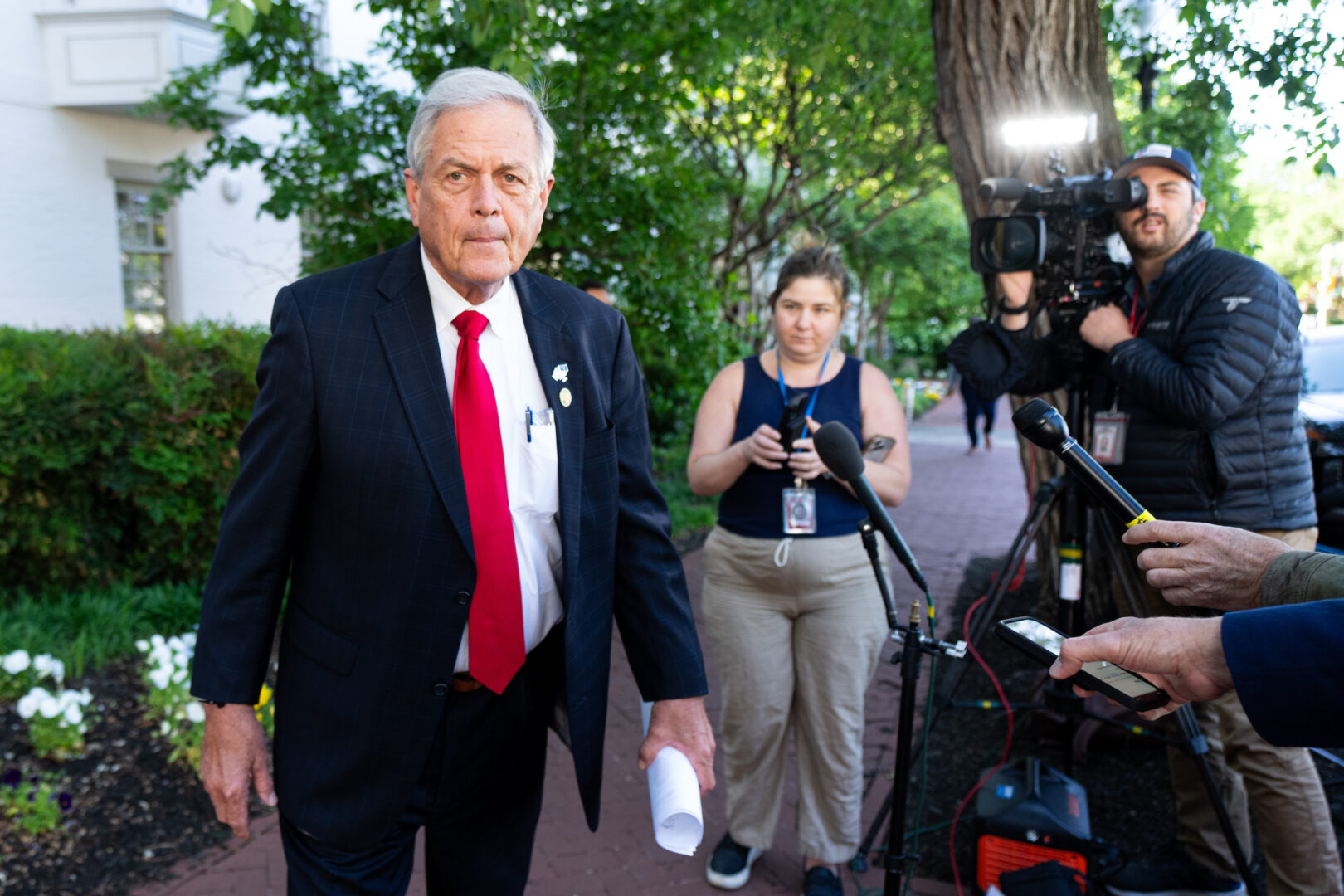
“I don’t think we’ll do a markup before July,” said Rep. Ralph Norman, R-S.C., a member of the Budget Committee. “We don’t have the time now, unless we get called back into session.”
The risk of a time slip underscored the growing doubts about the ability and willpower of Republicans to coalesce around a third budget reconciliation package before the midterm elections, following last year’s “big, beautiful” tax and spending package and the recent immigration enforcement funding measure.
Some top Senate Republicans have already dismissed the idea of a third reconciliation package as impractical, given the limited number of legislative days left before campaign season kicks in.
But House GOP leaders, particularly Speaker Mike Johnson, R-La., have maintained a bullish optimism that a reconciliation bill can still be passed in time.
Republicans have been hopeful of kickstarting the process this month by adopting instructions for authorizing committees to assemble a package that boosts defense funding, while finding offsets for billions of dollars for the Pentagon.
Rep. Lloyd K. Smucker, R-Pa., a member of the Budget Committee, reiterated Wednesday that a defense funding boost sought by President Donald Trump — who pushed for a $350 billion defense reconciliation package — will be a central element.
But he and other members have refrained from sharing many specifics about other goals the party plans to tackle as part of the effort.
Republicans have discussed focusing on “fraud” prevention as part of what could be a wide-ranging package, with potential reductions floated on the healthcare side and guardrails aimed at preventing some migrants from using low income housing tax credits.
“Obviously, it’s been meetings going on for months, but the goal certainly is to do a reconciliation 3.0 that would address some of the needs on the military side, replenishing some of the munitions, and so on,” Smucker said.
“Whether we can get there, I don’t know, but I think that’s sort of the driver behind it,” he said.
Voting restrictions in play
Trump’s push for new restrictions on voting could also complicate the reconciliation bill’s passage.
The so-called SAVE America Act would require proof of citizenship to register to vote, photo ID at the polls and restrictions on mail voting, among other things. Democrats have opposed the bill, saying it could disenfranchise millions of eligible voters who may lack a U.S. passport or birth certificate.
Trump doubled down on that election push Wednesday, canceling a signing ceremony for bipartisan housing legislation and insisting Congress pass the voting measure first. Johnson said again Wednesday that the elections measure should be part of reconciliation.
“You have to put it on a reconciliation bill,” he said, again proposing a grant program that would include conditions for states to be able to receive funds.
“You allow blue states, if they come to their senses and they want to avail themselves of election integrity proposals and ideas and policies, they can draw down from a federal fund and use those funds,” Johnson said.
While Republicans acknowledge that the Senate’s budget rules restrict passing the voter ID bill as part of the reconciliation process, they say such a grant program could require Democratic-led states to purge their voter rolls of migrants residing illegally in the U.S.
But it’s not clear whether Trump would settle for a state grant program as opposed to the “full version” of the SAVE America Act that he has called for in recent social media posts.
GOP leaders are also facing other demands from their conference’s right flank on what must be included in a reconciliation package.
A letter from the House Freedom Caucus board released Wednesday called for “strict dollar-for-dollar and year-for-year spending cuts,” the extension of a “prohibition of federal funding for abortion providers” included in last year’s reconciliation law and the removal of gun taxes, among other things.
Avoiding a shutdown
Some conservatives have additionally floated using reconciliation to provide funding extensions that would prevent another partial government shutdown when the fiscal year ends on Sept. 30.
As Senate Republicans met with Trump on Wednesday, Sen. Rick Scott, R-Fla., called for Republicans to unify to pass the voter ID bill, along with funding the government.
“We’ve got to figure out how to come together to make sure we fund government, because the Democrats want to shut down government on Oct. 1,” he told reporters after the meeting. Senate Republicans have increasingly accused Democrats of fishing for a shutdown, as both sides have struggled to reach a bipartisan funding deal for fiscal 2027, despite the exchange of multiple offers in recent weeks.
Scott noted that Republicans could fund agencies using the reconciliation process “no different than we did ICE and [Border Patrol]” earlier this year. Last spring’s reconciliation package funded those immigration agencies through the remainder of Trump’s term.
In their demands to Johnson, the Freedom Caucus board also called for Republicans to provide “responsible short-term funding for key government personnel and services.”
The board argued the approach would “deny Democrats the ability to weaponize government shutdown threats for political leverage ahead of the midterm elections.”
Aidan Quigley and Jacob Fulton contributed to this report.