Federal AI security center measure advanced by House Science
Lawmakers looks to authorize funding for the Center on AI Standards and Innovation
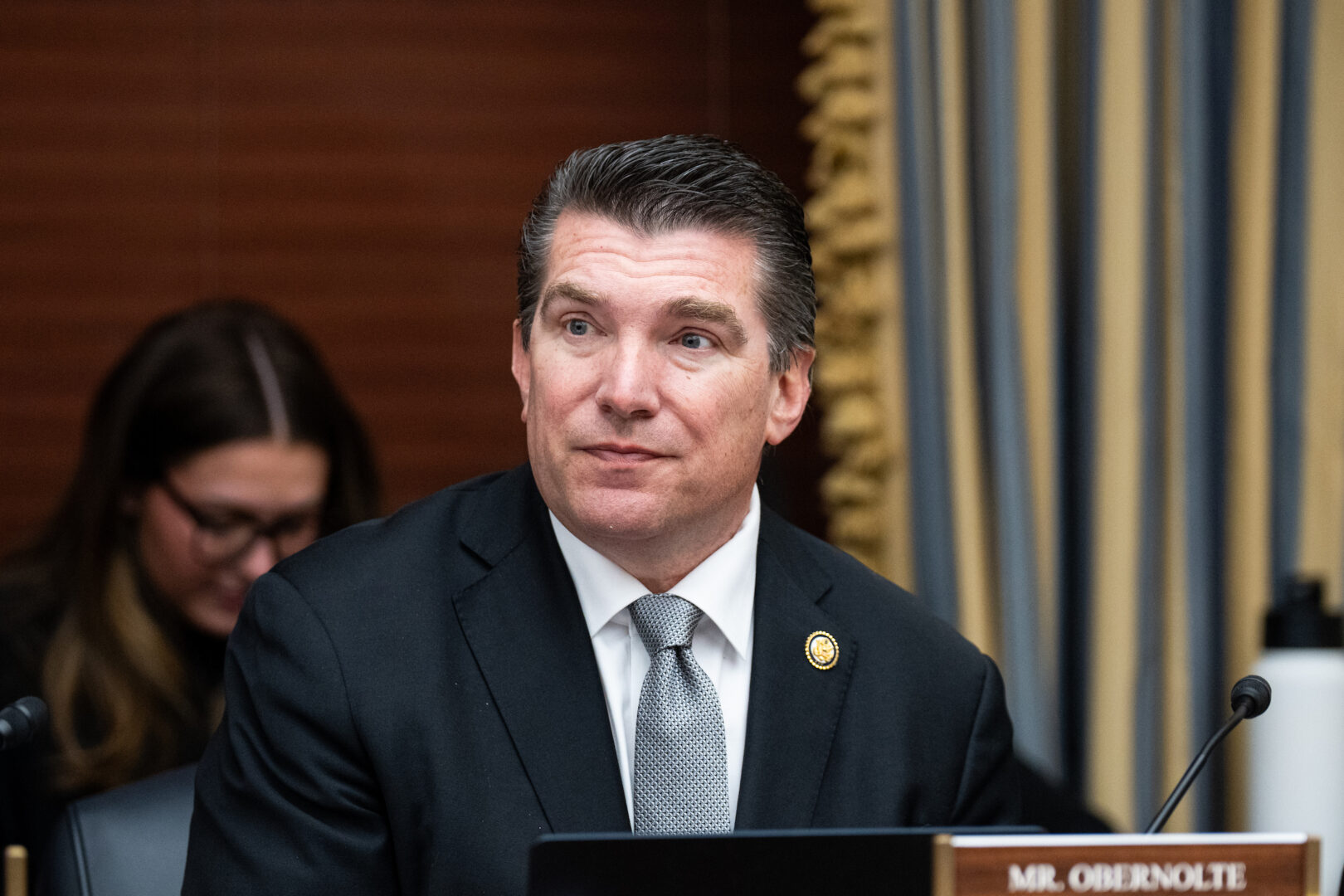
A measure that would put into law a key federal office focused on artificial intelligence advanced Thursday out of the House Science, Space and Technology Committee, as part of a slate of AI-focused and data center bills.
The committee advanced the bills on a bipartisan basis, but put off potential changes regarding funding levels for the Center on AI Standards and Innovation within the Commerce Department’s National Institute of Standards and Technology.
The center was previously known as the AI Safety Institute under the Biden administration. The committee voted unanimously in favor of the bill that would codify the center, which would see its name changed to the Center for AI Security and Innovation, according to the bill text.
In his opening remarks, Chairman Brian Babin, R-Texas, acknowledged the question of funding. The bipartisan-backed bill, by Rep. Jay Obernolte, R-Calif., would authorize $20 million per year for the center for fiscal years 2027 through 2032. Babin said he supported increasing that level.
For fiscal 2026, Congress appropriated up to $10 million for the center.
“We should, however, ensure that we authorize CAISI in a manner that does not undermine future progress on the bill,” Babin said. “And I commit to working with the sponsors to ensure that we get that number right going forward.”
Obernolte offered an amendment to increase the authorization level, which he called “insufficient,” to $100 million per year. He said that the center would have too many responsibilities for the lower funding level, but eventually withdrew the amendment.
“Unfortunately, I acknowledge that it is not possible right now to know exactly how much money is required to allow CAISI to do its job,” Obernolte said. “I think when we finally get this bill ready for some floor action, we’ll have a better idea of what the correct amount is.”
Obernolte also offered an amendment to remove a cap on the number of “critical technical experts” the center could hire. He acknowledged that the appropriate number was not yet clear and then withdrew the amendment.
The committee also voted, 29-0, to advance a bill that would put into statute the National AI Research Resource, which was established as a pilot program in 2024.
Obernolte, the bill’s sponsor, said it would codify the resource as a “shared national research infrastructure to provide AI researchers and students with access to the complex resources, data and toolsets that they need to develop safe and trustworthy AI.”
Obernolte noted the high computing power required to train AI models.
“The concern is that as those resources continue to increase, advanced AI research might only be done behind closed doors by large companies that have access to those resources,” Obernolte said. “We believe it’s very important that advanced AI research continues to also be done in settings like academia in schools across the country as it is right now.”
In addition to the bills considered in Thursday’s markup, Obernolte is also leading a bipartisan draft AI framework with Rep. Lori Trahan, D-Mass., that would combine codification of CAISI and NAIRR with preemption of many state AI laws, provisions for frontier model safety and others for monitoring workforce impacts from AI.
Most of the other bills were approved on unanimous votes.
The exceptions were Rep. Mike Kennedy, R-Utah, opposing a bill to direct the National Science Foundation to support programs for K-12 AI literacy and Rep. Daniel Webster, R-Fla., opposing a bill to direct NIST to improve how data center energy and water use are measured.
Neither lawmaker commented on their votes at the markup.
The data center impacts bill led to a small dust-up.
Rep. Luz Rivas, D-Calif., said she originally planned to offer an amendment that would “allow NIST to better understand the impacts that data centers’ energy and water use are having on surrounding communities and their resource demands.”
“The majority threatened to pull the bill if I even offered this amendment,” she said, adding that she wasn’t sure if the decision came from staff or from Babin. Ultimately she did not offer the amendment.
Babin responded by saying that he encourages “robust debate” but that “it should never be assumed that by offering an amendment this idea will automatically be considered or adopted.”
Other bills approved on Thursday would:
- Require NIST to develop voluntary guidelines to make federal data more accessible for training AI models.
- Expand AI education and workforce training programs at the National Science Foundation.
- Require NIST to establish a pilot program to develop voluntary resources for documenting AI models.
- Direct NIST to support research and standards for determining the origin of digital content.
- Require NIST to establish a voluntary program to track AI vulnerabilities and flaws.
- Require NSF to support training to develop a workforce that can build trustworthy AI systems.