SCOTUS term marked by shifts to the right, some checks on Trump
Cases addressed gun rights, election rules, immigration challenges and more
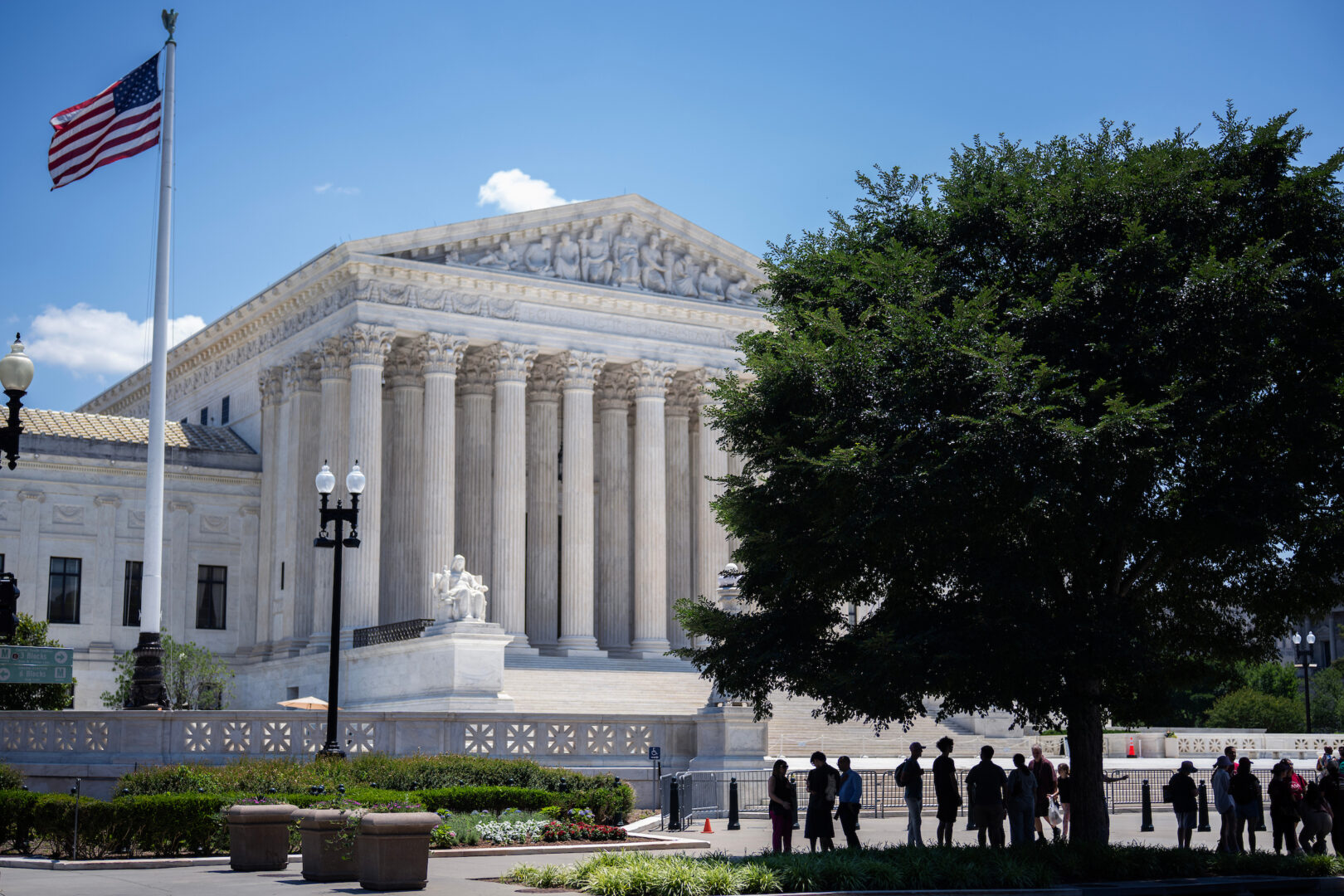
The Supreme Court capped its term Tuesday with one decision overturning a long-standing campaign finance limit and another turning aside President Donald Trump’s attempt to unilaterally change birthright citizenship — a day, experts said, that exemplified this year at the court.
Throughout the term, they said the conservative-controlled court continued to tinker away at long-standing projects to shift American law to the right, while fending off some of Trump’s most expansive claims to executive power.
Across 60 cases, the justices considered gun rights, election rules, immigration challenges, birthright citizenship, executive power, tariffs and more.
David Cole, a professor at Georgetown Law and former legal director of the American Civil Liberties Union, said this term conservatives on the court issued major changes to American law, including reducing the sweep of the Voting Rights Act and giving presidents more power to fire federal officials — decisions that tied into long-term efforts in the conservative legal movement.
“This term suggests that much to Donald Trump’s dismay this is not Donald Trump’s court,” Cole said. “It is, however, an extremely conservative court and one that is willing to overrule or rewrite precedent that it disagrees with.”
In Louisiana v. Callais, the court’s majority found the state’s congressional map, which was drawn with a second minority opportunity district to satisfy the Voting Rights Act, violated the Constitution. The justices also laid out tighter standards for proving racial discrimination in redistricting.
In Trump v. Slaughter, the justices overturned a 91-year-old court case known as Humphrey’s Executor which prevented the arbitrary removal of officials at multimember agencies like the Federal Trade Commission.
But at the same time, Cole pointed to four major cases where the justices turned aside Trump’s major initiatives — blocking his attempt to singularly change birthright citizenship, invalidating much of his worldwide tariff scheme, stopping his deployment of National Guard troops to Chicago over the governor’s objections and preventing him from firing Federal Reserve member Lisa Cook.
Carrie Severino, president of the conservative Judicial Crisis Network, said that while Trump was disappointed with some of the cases, there were many that helped the conservative cause. Severino particularly highlighted the case allowing presidents to remove the heads of agencies like the Federal Trade Commission, which can effectively restructure independent agencies.
“There have been a couple cases that were disappointing to the president or disappointing to conservatives this term, but overall this is one of the most significant terms ever in terms of bringing the court back to an originalist understanding of the Constitution,” Severino said.
Aziz Huq, a law professor at University of Chicago Law School, said those decisions lined up with years of efforts by the six-justice conservative majority on the court.
Huq also noted another trend at the court: limiting the ability for people to sue over issues they face. He pointed to decisions that removed judicial review of decisions revoking the temporary protected status from deportation and the decision limiting the VRA.
Those changes have the effect of “consistently favoring the powerful at the expense of those at the margins” who would normally seek relief from the courts, he said.
Court’s power
Experts said that the court, and particularly Chief Justice John G. Roberts Jr., reached for broad justifications in its decisions that effectively let it have the last word, closing off responses from Congress and the presidency.
The court reached for constitutional justifications in its VRA decisions, birthright citizenship case, campaign finance decision and removal of firing protections for independent agency officials. Experts said that constitutional decisions make it more difficult for Congress or the administration to respond in a way that counters the decision.
Jonathan Adler, a law professor at William & Mary College, pointed to Roberts’ decisions in the Trump v. Barbara birthright citizenship opinion and in Trump v. Cook, which prevented the firing of Federal Reserve member Cook, which made broad statements about the reach of the Constitution in ways that could close off legal responses.
“I do think it’s interesting that the chief chose to do that in both those cases, clearly with an eye towards how the court’s decisions are received politically, and both cases kind of deviating from his general minimalist approach to deciding cases,” Adler said at a Federalist Society event.
Derek Muller, a professor at Notre Dame Law School, said at the same event that through its current majority, Roberts has wielded a large amount of power over the high court.
“I think he’s the deciding vote in some cases, but he also controls the opinion assignment in many of the biggest cases,” Muller said.
In prior iterations of the court, Muller said that the chief justice was more frequently in the minority of the court.
“But here it feels like every big case. It’s constantly Chief Justice Roberts writing,” Muller said.
Roberts wrote the opinions upholding birthright citizenship, allowing the firing of independent agency officials, preventing the firing of Cook and declaring much of Trump’s worldwide tariff regime unconstitutional.
Next term
The justices have already started to set the stage for next term, accepting major cases on gun rights and voting rules. On Tuesday, the justices accepted Cutberto Viramontes, et al., v. Cook County, Illinois, et al. regarding whether Americans have a constitutional right to own AR-15s and other similar weapons.
That case came in response to challenges to statutes in Chicago and elsewhere that sought to limit the availability of those firearms. A decision on that case could impact Congress’ ability to reimpose an assault weapons ban, which lapsed in 2004.
The justices also accepted a challenge to Arizona law that requires proof of citizenship to register to vote, as civil rights groups argued that the rules were used to discriminate against minority voters. That case is Republican National Committee v. Mi Familia Vota, et al.
The justices are set to meet again in September to accept more cases for a term that starts in October.