Trump ethics disclosure throws curveball at Senate crypto talks
Democrats want tougher protections against potential conflicts of interest
The newly disclosed scale of President Donald Trump’s personal cryptocurrency-related profits since taking office last year comes right at a sensitive moment for Senate negotiations on a major digital assets bill that GOP leaders want to bring to the floor this month.
Trump’s potential crypto conflicts have been a sticking point in negotiations over a crypto market structure bill that is pending in the Senate.
Democrats want an ethics provision to curb the ability of public officials to profit from sponsoring or endorsing cryptocurrencies, and the two sides have been squabbling over how to word the language without losing the Trump administration’s otherwise strong support for the bill.
Meanwhile, the news broke that Trump made more than $1.4 billion from his family’s crypto ventures last year, according to his annual financial disclosure filed with the Office of Government Ethics.
That total includes $635 million in royalties related to “Celebration Coins” tied to Trump’s memecoin business; $527 million in proceeds from sales of tokens distributed by World Liberty Financial, the crypto firm owned by the Trump family; and about $263 million related to stakes in holding companies that own WLF and its stablecoin business.
Trump’s crypto haul represented more than half of his total $2.2 billion income in 2025.
The Senate Banking Committee adopted a substitute amendment to the market structure bill, 15-9, in a May 14 vote that included two Democrats in support, Sens. Ruben Gallego of Arizona and Angela Alsobrooks of Maryland.
Both Gallego and Alsobrooks said their markup votes did not guarantee they would support the bill on the Senate floor unless further changes were made, arguing an ethics provision in particular is crucial.
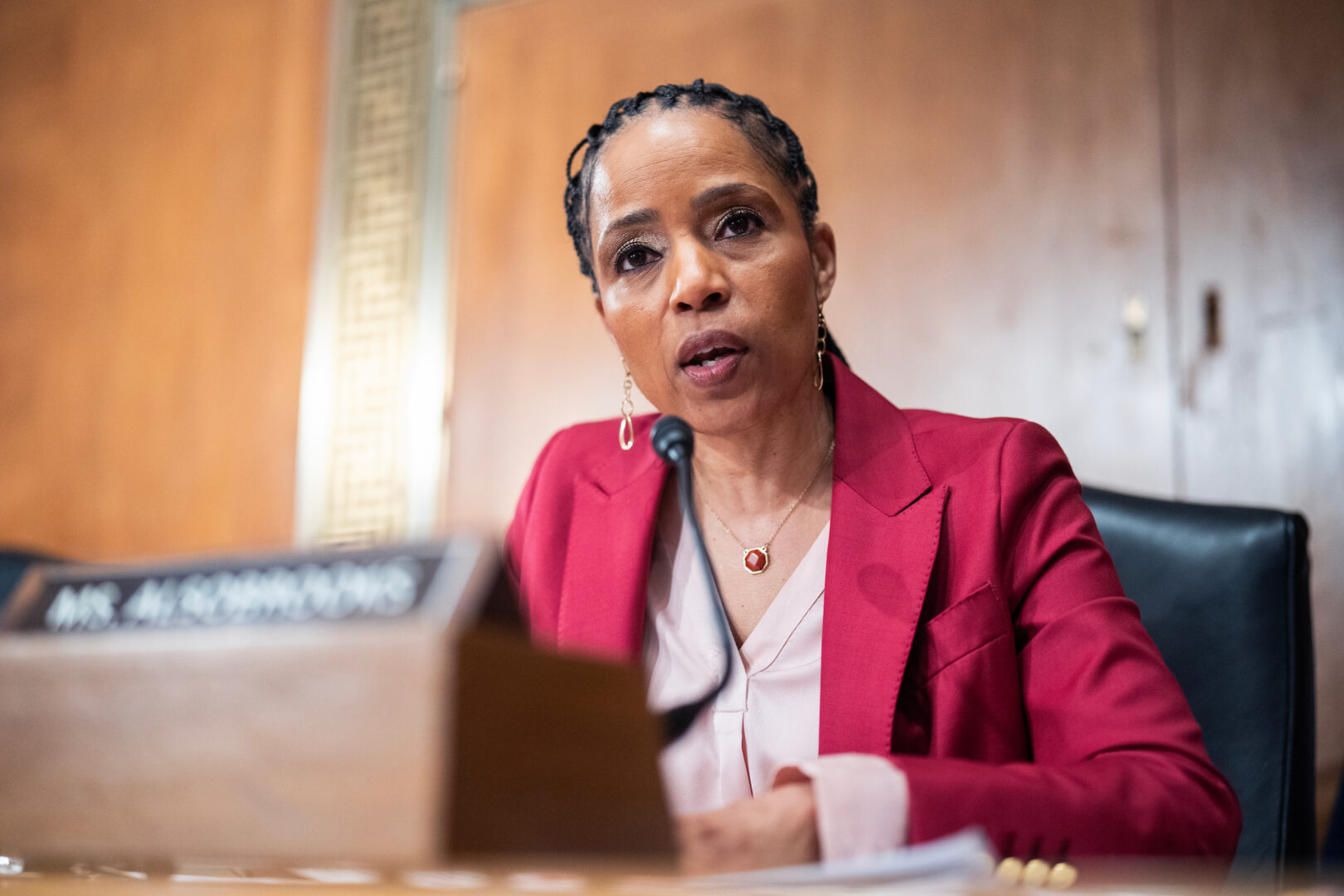
Alsobrooks expressed concern about the Trump financial disclosure in a statement Wednesday. She said Trump and his family “are the most corrupt we’ve ever seen in the White House,” citing “planes, pardons, falsifying business records, and now crypto.”
She indicated ethics is still a negotiating point on the crypto bill.
“We desperately need legislation that includes an agreement on ethics — that would apply to the president, vice president, and all of us,” Alsobrooks said.
Gallego also reacted negatively to Trump’s financial disclosure.
“Trump is using the presidency to profit off the American people,” Gallego wrote Wednesday in a post on X. “I’ll keep doing everything I can to crack down on his corrupt crypto dealings.”
Gallego fumed last month about ethics negotiations, saying the White House backed away from a potential agreement.
Senate Banking Committee ranking member Elizabeth Warren, D-Mass., is one of the leading opponents of the crypto market structure bill. She said the bill could exacerbate Trump’s crypto conflicts.
“The crypto legislation heading to the Senate floor must prevent the president, vice president, senior administration officials, members of Congress, and their families from profiting off the crypto industry,” Warren said.
A White House spokesperson did not immediately respond to a request for comment.
The Banking Committee has been working for almost a year on a crypto market structure bill, which would set rules for the operations and oversight of digital asset markets. The measure is priority for the crypto industry, which says it needs a clear set of “rules of road” to continue to grow.
Banking Chairman Tim Scott, R-S.C., said earlier this week that he’s seeking a vote by the full Senate this month.
House Financial Services Committee Chairman French Hill, R-Ark., later added his encouragement.
“I would hope the Senate can complete their work before the August recess,” Hill told reporters on Tuesday. “I think in an election year that’s very, very important.”
The House passed its market structure bill a year ago this month.
The Senate Banking bill would have to be melded with a similar substitute amendment from the Senate Agriculture Committee, which shares jurisdiction. That Senate would have to pass that combined bill, which would then have to be reconciled with the House measure.
It’s a lot to accomplish with the number of legislative days dwindling and lawmakers still negotiating over ethics and other provisions of the Banking bill, such as anti-money laundering and oversight of decentralized financial networks. But there’s a growing desire to forge ahead and hammer out any disputes during floor debate and amendments.
“We want to give these bipartisan negotiations a chance to play out, but if they’re going to drag on forever, we will try to bring [the market structure bill] to the floor and get it moving,” a Senate Republican aide said.
Ryan Kelly contributed to this report.