One year in, how are Republicans doing selling the BBB to voters?
Too many voters don’t understand the tax impact of the GOP’s signature tax law
Last September, I wrote a column called “Why Republicans still need to close the deal on the BBB.”
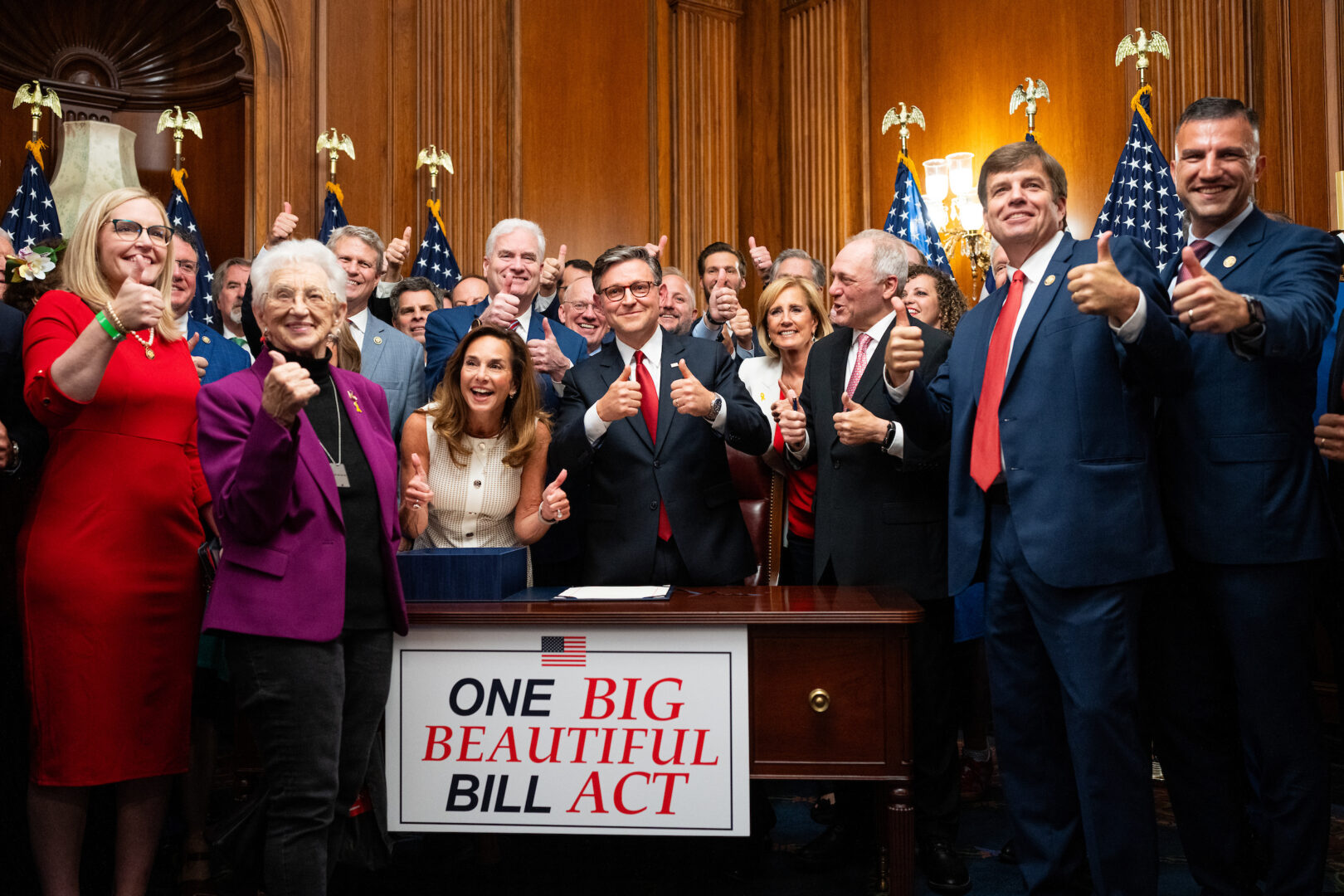
One year after the bill dubbed “The Big Beautiful Bill Act” was signed into law, Republicans still have more work to do to sell their signature accomplishment to voters.
Despite the attacks coming from the usual suspects, the BBB not only extended the 2017 tax cuts, which helped all Americans, but added new deductions for some income made on tips and overtime pay, as well as Social Security tax relief for seniors.
One year later, all three provisions are providing help for people struggling with the cost of living. But the bill Democrats opposed also delivered an increased average tax refund to taxpayers, which also helps with affordability.
What has gotten lost in the partisan back and forth over the BBB is its most important contribution to affordability — preserving those 2017 tax cuts. What should be a plus for Republicans instead remains a significant challenge for the GOP with voters who remain generally unaware of what the bill actually does for themselves and their families.
A little history: The pro-affordability provisions in the 2017 Tax Cuts and Jobs Act were set to expire after 2025. These included lower tax rates for working Americans and even more important, nearly doubled the standard deduction for every working American. In fact, the increase in the standard deduction had the broadest, and in most cases, the biggest impact in lowering taxes for Americans.
How important was the doubling of the standard deduction to the behavior of taxpayers? In 2017, according to the Internal Revenue Service Statistics of Income, 68 percent used the standard deduction. In 2023 (the most recent IRS data), 89 percent used the standard deduction — a 21 percent increase.
Inversely, the use of itemized deductions went from 31 percent in 2017 down to 9 percent in 2023, a drop of 22 percentage points.
Standard deduction
Higher income taxpayers, those making over $100,000, tend to itemize their returns, which 65 percent did. In contrast, 78 percent of those using the standard deduction earn under $100,000 and make up 70 percent of all those filing tax returns. Doubling the standard deduction was clearly a boon for middle- and lower-income taxpayers.
So, what would have happened if Congress had let the 2017 doubling of the standard deduction expire? According to the Congressional Budget Office’s January 2025 Tax Parameters report outlining what would happen if the current law reverted to the 2017 levels, the deduction for married couples would have gone from $30,000 down to $16,600, a decrease of $13,400.
That would have meant that they would pay taxes on an additional $13,400 of income. The deduction for single filers would have gone from $15,000 to $8,300, a cut of $6,700. This meant that all single filers would have to pay taxes on an extra $6,700 of income.
So, contrary to what Democrats and much of the media claimed, millions of ordinary taxpayers were the big winners. Last month, the Treasury Department announced that 29 million tax filers used the new overtime deduction, 7.5 million took the new tips deduction, and more than 35 million seniors benefitted from the new Social Security deduction.
That’s a total of 71.5 million deductions claimed not by the “rich” as Democrats argue, but by working Americans and retirees.
Republicans have focused more of their messaging on no tax on tips and overtime as the main selling points. But it was Treasury’s finding that, thanks to last year’s big beautiful bill, the total standard deduction was protected for more than 127 million tax filers who did not see their standard deductions cut almost in half. This provision alone saved Americans almost triple the amount of the other three cuts combined based on the Treasury numbers.
It’s ironic that we now see proposals by Democrats to significantly increase the standard deduction. When it came to the passing the BBB to save the doubled standard deduction, Democrats couldn’t vote no fast enough.
Voter beliefs
The challenge Republicans face is that the electorate does not believe that the bill prevented a tax increase.
In the most recent Winning the Issues survey, only 27 percent of voters said the bill prevented a tax increase, while 50 percent said it did not. This is the critical factor in whether voters favor the bill. Those who thought it prevented a tax increase favored the bill by a 73-22 (favor-oppose) margin. If they thought it did not prevent a tax increase, they opposed it 22-72.
This is the very same problem Republicans had in 2018. In a Winning The Issues post-election survey, only 36 percent of voters thought the 2017 tax bill would lower taxes for them and 42 percent did not. Those that thought it would favored the bill, and those that did not opposed it.
So, who’s to blame for this misconception? Republicans obviously didn’t get the job done in explaining what the bill would mean to voters in terms of affordability. At the same time, Democrats continue to argue the BBB was just a tax break for the wealthy, ignoring the fact that tax filers making under $100,000 using the standard deduction make up some 70 percent of all tax filers.
Democrats have also claimed for years that the 2017 Republican tax cuts would increase the deficits by trillions and deprive the government of needed funding.
They couldn’t be more wrong.
In fact, from 2017 to 2025, federal revenues increased by 58 percent. Even taking inflation into account, which increased 31 percent over the course of the Biden administration, revenues increased at twice the rate of inflation.
So why are we seeing trillion-dollar deficits despite increased revenues? Perhaps it is the fact that from 2017 to 2025 government spending increased by 76 percent.
There’s a lot of talk about “affordability” these days, especially from Democrats. Yet, when they had the chance to actually vote to make life more affordable for ordinary Americans by voting for the BBB, they whiffed.
People want more money in their pockets. The BBB did exactly that.
On its one-year anniversary, Republicans need to make a better case. Democrats and the media need to do the math.
This report was corrected to accurately reflect that the Treasury Department found over 127 million tax filers, out of all tax filers, were beneficiaries of the preservation of the larger standard deduction under the law.
David Winston is the president of The Winston Group and a longtime adviser to congressional Republicans. He previously served as the director of planning for Speaker Newt Gingrich. He advises Fortune 100 companies, foundations and nonprofit organizations on strategic planning and public policy issues, as well as serving as an election analyst for CBS News.