CDC, public health preparedness nominees advance in Senate
Panel also backs data privacy legislation related to wearable health technology
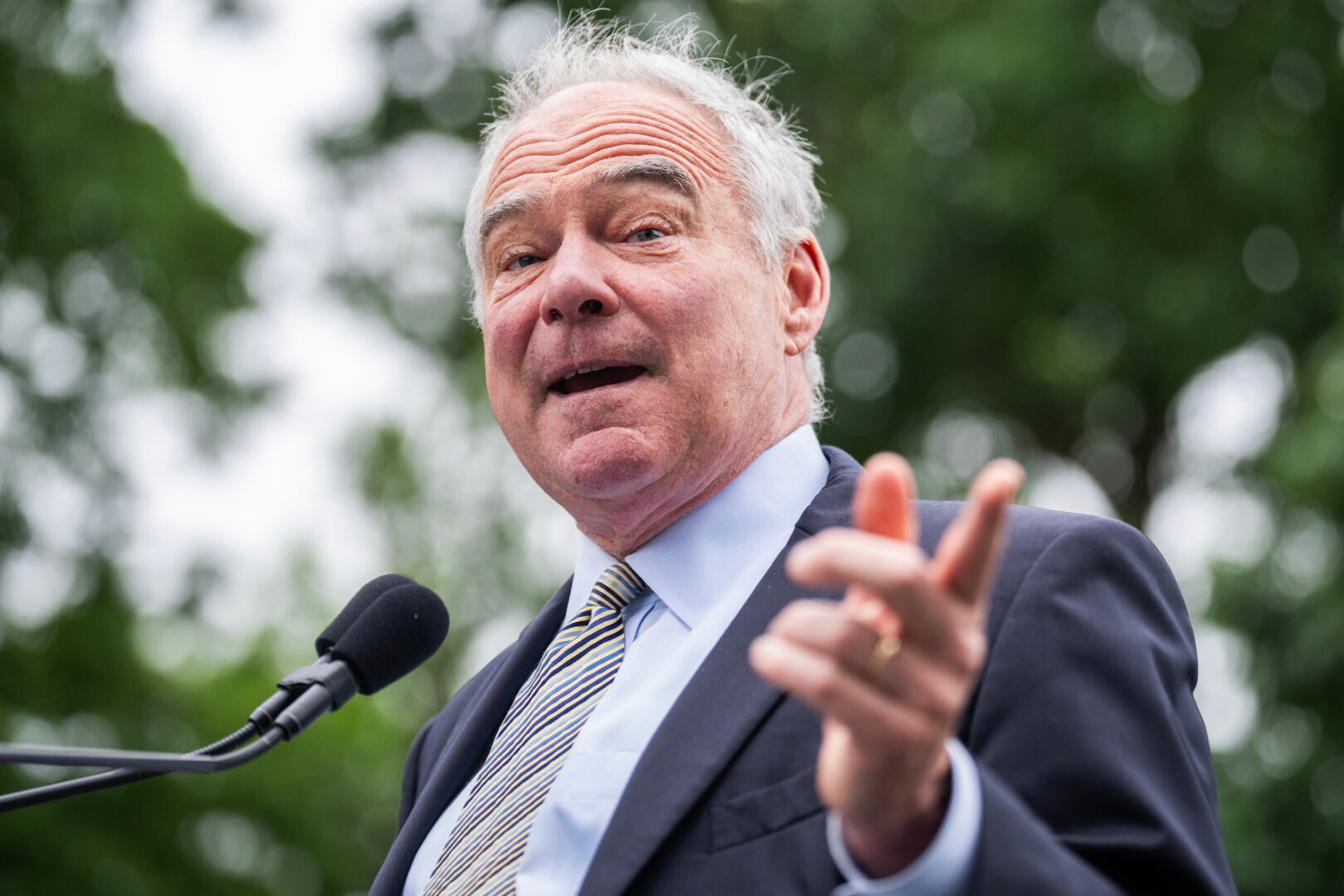
The Senate Health, Education, Labor and Pensions Committee on Thursday approved President Donald Trump’s nominees to lead the Centers for Disease Control and Prevention and to serve as a key assistant secretary, two leadership roles that the administration has struggled to fill.
The committee voted 12-11 along party lines to advance Sean Kaufman to serve as assistant secretary for preparedness and response, which is responsible for handling the U.S. response to public health threats. The position has been vacant since the beginning of Trump’s second term.
Kaufman clinched the support of HELP Chairman Bill Cassidy, R-La., who has had a fraught relationship with the Trump administration’s Department of Health and Human Services over vaccine policies.
During Kaufman’s confirmation hearing, Cassidy voiced concerns about his past statements casting doubt on vaccines and suggesting a link between vaccines and autism. Cassidy raised his voice during the hearing, asking why he would repeat “damn lies” about vaccines.
He also struggled with Kaufman’s comments about the harms of mRNA vaccine technology, despite scientific evidence showing they are safe and effective.
But something changed between then and Thursday’s vote.
Cassidy on Thursday said he was assured by conversations with Kaufman and that he agreed to not be involved in any vaccine policymaking in his post, and would not be the “ultimate decision-maker” on mRNA vaccine research.
“Mr. Kaufman has said some pretty stupid things and irresponsible things regarding immunization,” Cassidy said. “He has owned up to that in his conversations with me.”
The committee also voted 13-10 to advance Erica Schwartz’s nomination for CDC director. Sen. Tim Kaine, D-Va., supported her nomination while all other Democrats on the committee voted “no.”
In comments to reporters following the vote, Kaine said that the CDC “desperately” needs a permanent leader, citing health threats like Ebola and measles.
“The entire committee believes she’s very well-qualified, and so the question was, ‘Will she have the backbone to stand up against any anti-science if she’s pushed?’ And I concluded based upon my review of her record and talking to some folks that she has worked with in the past, that she should,” he said.
The CDC has been without a permanent director for nearly a year after the former director, Susan Monarez, exited less than a month into the job over disagreements with Health and Human Services Secretary Robert F. Kennedy Jr. National Institutes of Health Director Jay Bhattacharya has served as interim CDC director since February.
Cassidy ultimately voted to advance Schwartz’s nomination, despite pressing her during her confirmation hearing over whether she would stand up to superiors who asked her to make decisions that go against science.
“After speaking with Dr. Schwartz … after the hearing, reviewing the transcript, and speaking to those who have served with her … I’m confident that she knows what she is doing and will stand against those who do not,” Cassidy said last week.
Sen. Bernie Sanders, I-Vt., the HELP panel’s ranking member, said Thursday that he was “impressed” by Schwartz’s extensive public health experience, but that he wasn’t confident that she would be able to stand up to Kennedy.
“We have a secretary of Health and Human Services who fosters and propagates conspiracy theories on vaccines and other important issues, and the question I think, the big question before this committee: Are nominees going to be prepared to stand up to those conspiracy theories?” Sanders said.
Both nominees are now ready to go before the full Senate for confirmation. The votes were initially slated to take place last week but were postponed due to attendance issues.
At the same markup, the committee also approved legislation that would create protections for certain health data collected by wearable health technology.
As amended by a Cassidy substitute approved by voice vote, it would direct HHS to work with the Federal Trade Commission to develop the regulations, no later than 18 months after the bill’s enactment. The regulations would be directed at data-collecting wearable technologies not already subject to the law known as HIPAA.
“Americans have few legal protections and control over their health information captured by devices. My bill would create a framework so that health data that is not covered by HIPAA is subject to robust privacy protections,” Cassidy, the bill’s lead sponsor, said.
The underlying bill won approval on a 22-0 vote.
Ariel Cohen contributed to this report.