Senate’s funding patch adds Trump requests but blocks grant rule
Stopgap spending bill expands on House version
Senate appropriators announced a bipartisan deal Sunday to fund the government into early December, while temporarily blocking a contested Trump administration rule that critics say would politicize the awarding of federal grants.
The draft continuing resolution, unveiled Sunday afternoon, would extend current funding through Dec. 11 — a week later than House Republicans proposed in their recent stopgap measure.
Senate leaders plan to hold a procedural vote, to limit debate to take up the legislative vehicle for their funding extension, on Monday evening, with hopes of passing the measure before the Senate adjourns at week’s end for its August recess.
The Senate’s CR amounts to an expanded version of the bill the House passed last month, with many of the additions sought by the Trump administration to address critical needs, particularly on defense. But it also includes a few notable curbs on the administration’s authority.
In a contentious provision that had held up a deal last week, the bill would block a federal rule requiring grants to be approved by senior political appointees — a proposal that triggered an avalanche of public criticism.
Senate Appropriations Chair Susan Collins, R-Maine, said in a statement she has pushed “significant changes to the proposed rule,” while reiterating concerns about “its potential to politicize grants and harm small, rural communities, families, and biomedical research.”
The legislation would keep the rule from taking effect through the duration of the stopgap bill, ensuring another fight in December.
But the temporary freeze on the rule could see pushback from some Republicans. Sen. John Kennedy, R-La., a senior appropriator, sounded an alarm about the prospect of taking “away President Trump’s authority to review government grants” in an interview with NBC’s “Meet The Press.” He warned he would be inclined to oppose the bill and thought other Republicans would as well.
In another restriction on White House authority, Democrats said the bill would close a “loophole” that would have allowed the administration to transfer further funding to the Border Patrol.
House Democrats overwhelmingly rejected the recent funding patch passed mostly by Republicans partly because it lacked an explicit prohibition against new Border Patrol funding as Democrats seek to impose new curbs on immigration agents.
Other additions
The Senate bill includes similar “anomalies,” or deviations from current spending, seen in the House bill for food assistance and disaster relief, as well as other adjustments for programs that extend beyond the House’s stopgap proposal.
Among the add-ons included in the Senate plans are provisions to maintain the caseload of the Commodity Supplemental Food Program, which serves low-income seniors, help for the FBI to prepare for the 2028 Olympic Games and maintaining national security, as well as authority to accelerate funding for the Navy’s shipbuilding programs.
The Senate bill additionally seeks to allow the administration to repurpose unobligated funds within the Housing Choice Voucher Program to cover rental assistance and extend availability of some expiring homeless assistance grants.
But Democrats succeeded in excluding from the bill a White House request for $1 billion to begin building “Trump-class” battleships.
The bill also includes a basic extension of funding for the nation’s surface transportation programs through Dec. 11 as work on a full reauthorization continues.
The extension would prevent a lapse in funding for highway, rail and transit systems ahead of a looming Sept. 30 deadline. A House measure to offer a full reauthorization of the programs has been stalled since May and the Senate has yet to release its own version, though some committees have said they’re working on a deal.
But the CR does not include an extension of advanced appropriations provided by a bipartisan infrastructure law that is set to expire on Oct. 1, which amounted to approximately $36.8 billion per year.
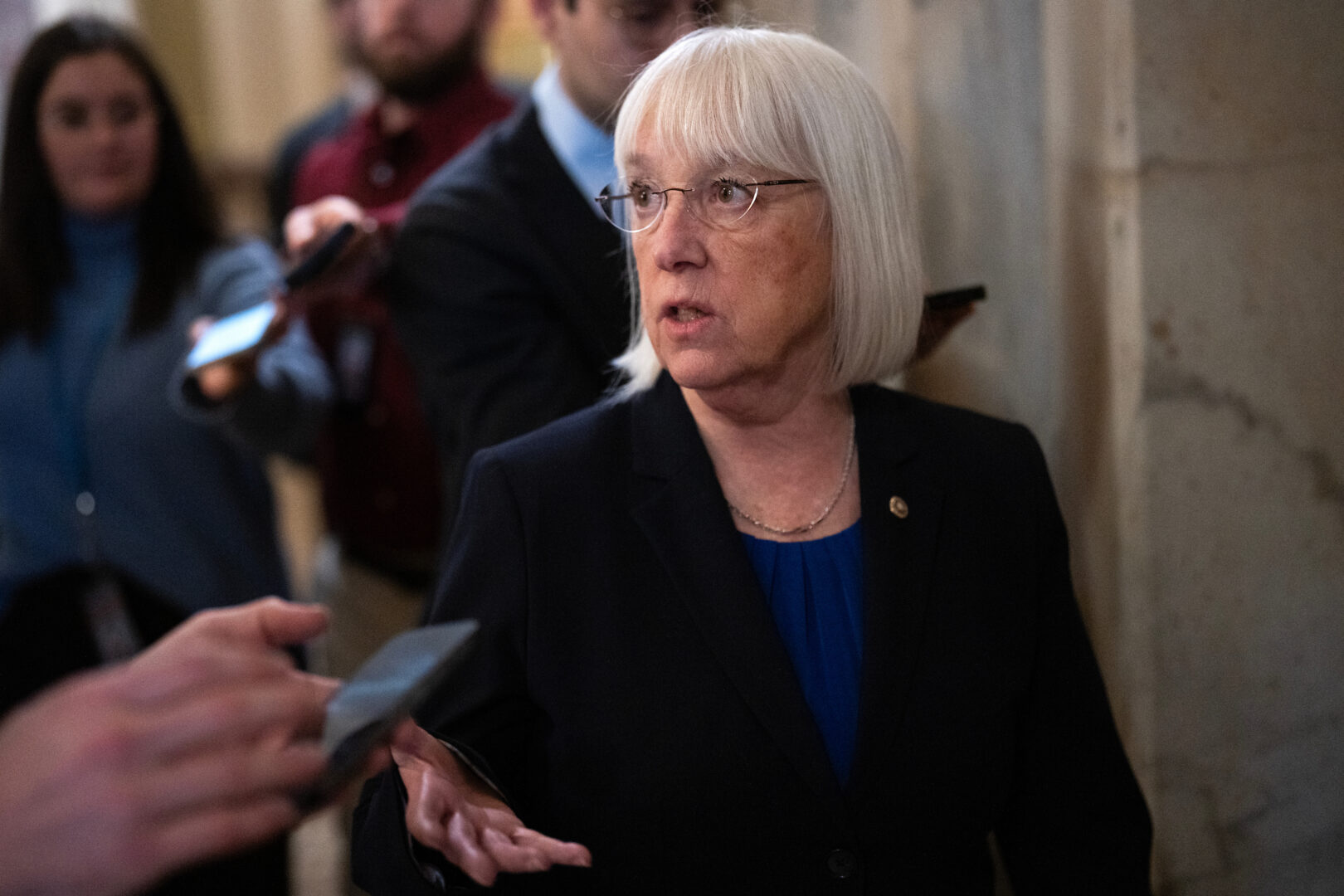
Democrats had been pushing for such an extension. Senate Appropriations ranking member Patty Murray, D-Wash., said in a press release that Republicans had rejected the request. She also lamented the exclusion of language to restrict “pocket rescissions” by the administration that enable the White House to claw back previously appropriated funds near the end of a fiscal year, leaving Congress no time to block the move.
And the Senate bill also would extend for two years economic pacts with sub-Saharan African countries and with Haiti.
Kelly Livingston contributed to this report.