Fauci could face criminal contempt charge following panel vote
Resolution will be sent straight to the Senate president for certification
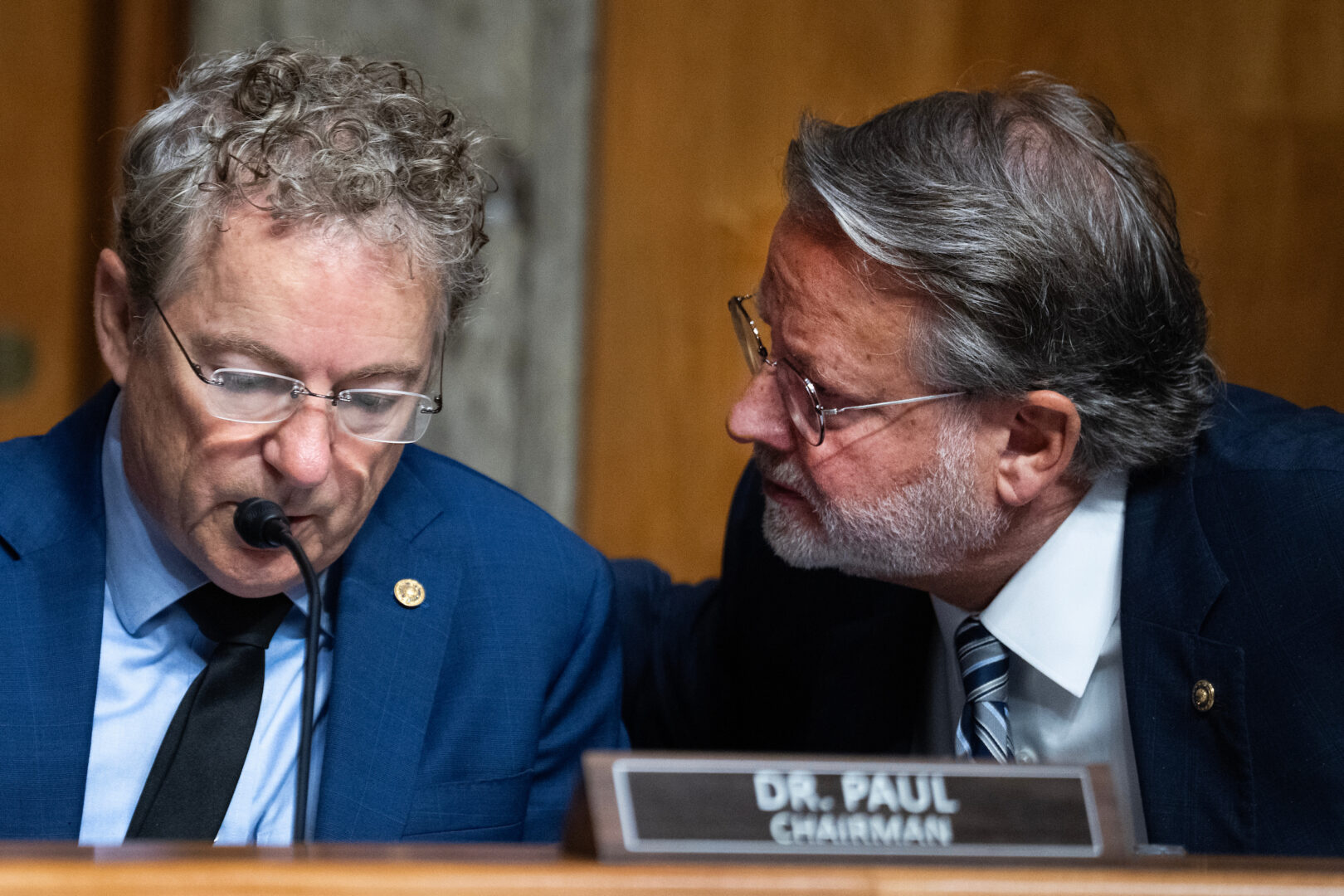
The Senate Homeland Security and Governmental Affairs Committee voted on Thursday to hold former Director of the National Institute of Allergy and Infectious Diseases Anthony Fauci in criminal contempt of Congress for declining to answer questions about the COVID-19 pandemic during a highly charged hearing last week.
The Thursday morning 8-5 vote represents an extreme move in the ongoing fight between Committee Chair Sen. Rand Paul and Fauci, who was a key White House adviser during the pandemic. Paul has repeatedly accused Fauci of knowing more about the origins of COVID-19 than he admits and of lying to the Senate about it. Fauci has accused Paul of being unreasonably obsessed with putting him behind bars.
Typically a contempt resolution goes to a full Senate vote, but Paul indicated his intent to send the resolution straight to the Senate president, Vice President J.D. Vance, for certification and refer Fauci to the Justice Department for potential prosecution.
A witness can be held in criminal contempt of Congress for failing to comply with a committee subpoena for either documents or testimony. Paul, R-Ky., argued that Fauci’s appearance in front of his committee last week, during which the octogenarian invoked his Fifth Amendment rights and refused to answer any questions, obstructed an ongoing Senate investigation. Paul had Fauci’s attorney escorted out of last week’s hearing by armed Capitol Police officers.
Members used the time before the vote to air grievances about the process, with Democrats accusing the GOP of conducting one-sided witch hunts and Republicans accusing Democrats of burying the truth about the pandemic.
“Its been six years since the pandemic began, we have not had a reckoning of what happened,” said Sen. Ron Johnson, R-Wis.
“My investigation has just begun,” Johnson added. He pledged to hold closed door hearings and investigations into Fauci.
Democrats offered five motions to delay the vote to hold Fauci in contempt, arguing that Paul was subverting committee process and traditional Senate norms.
The committee rejected a motion from ranking member Gary Peters, D-Mich., to table the committee’s consideration of the resolution until Paul agreed to report the measure for a full vote in the Senate.
Sen. Richard Blumenthal, D-Conn., a former state attorney general, said that the committee was degrading Fauci’s Fifth Amendment rights, as Fauci had reasonable fear of self-incrimination and prosecution. If the committee violates Fifth Amendment rights in this case, Blumenthal said, it could create a slippery slope. He contrasted the committee’s proceedings with the politically-charged 1954 Army-McCarthy hearings.
“Even during the darkest day of the McCarthy hearings, counsel was allowed to speak. We denied that to Dr. Fauci and we should allow his counsel to speak,” Blumenthal said.
President Joe Biden issued Fauci a preemptive pardon before leaving office, covering any federal offenses he may be accused of committing between Jan. 1, 2014, and Jan. 19, 2025. Biden said the preemptive pardon was meant to protect the longtime National Institutes of Health employee from politically motivated prosecution by Republicans.