Trump keeps 2028 door cracked, while calling law ‘very strong’ prohibiting third term
FDR's ‘hedging’ kept other Dems ‘frozen’ in 1940 campaign, prof says
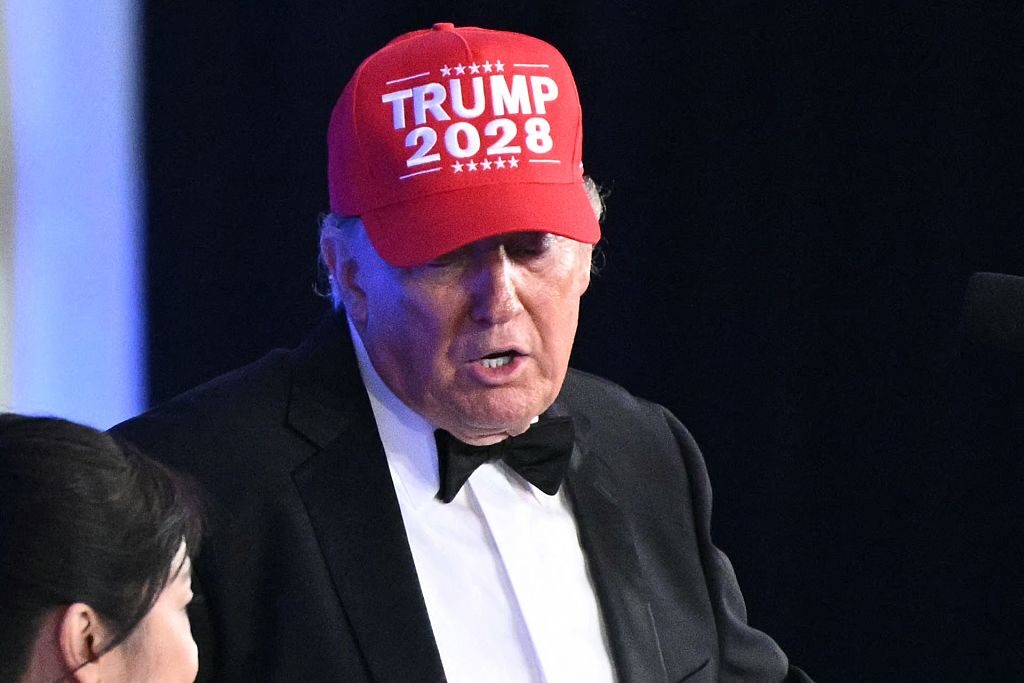
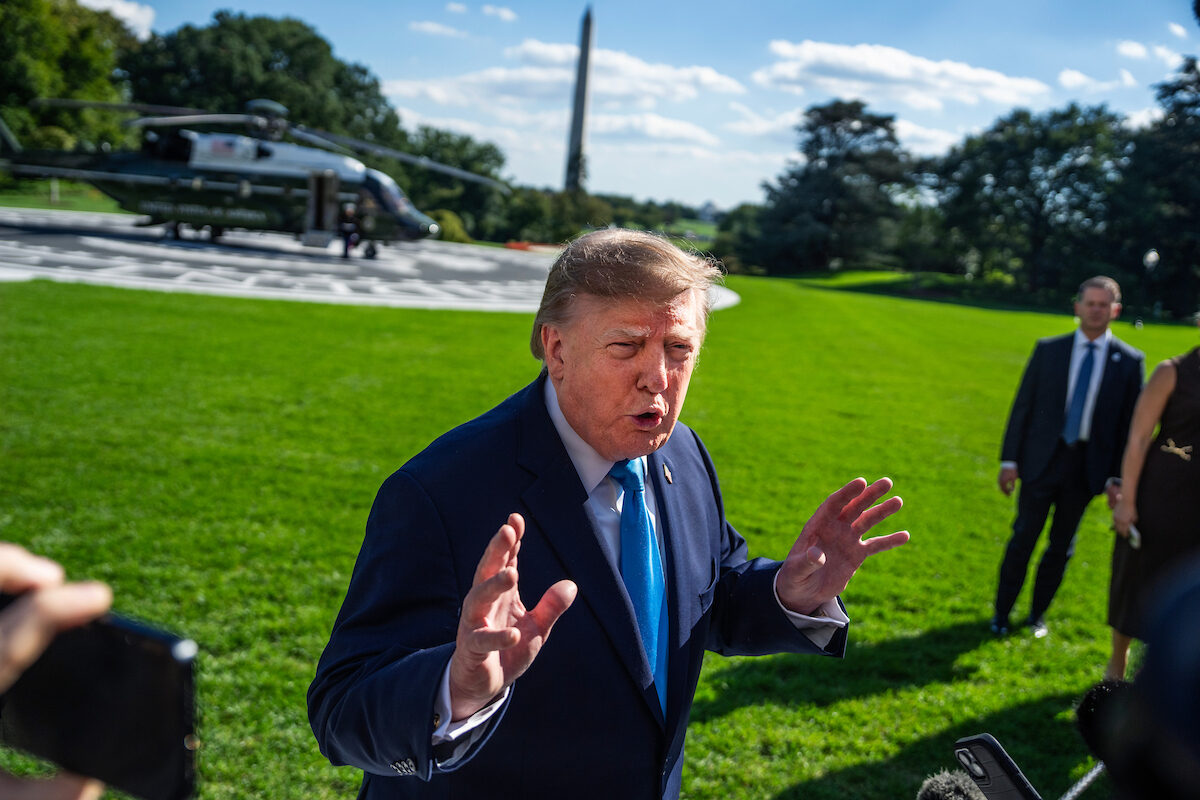
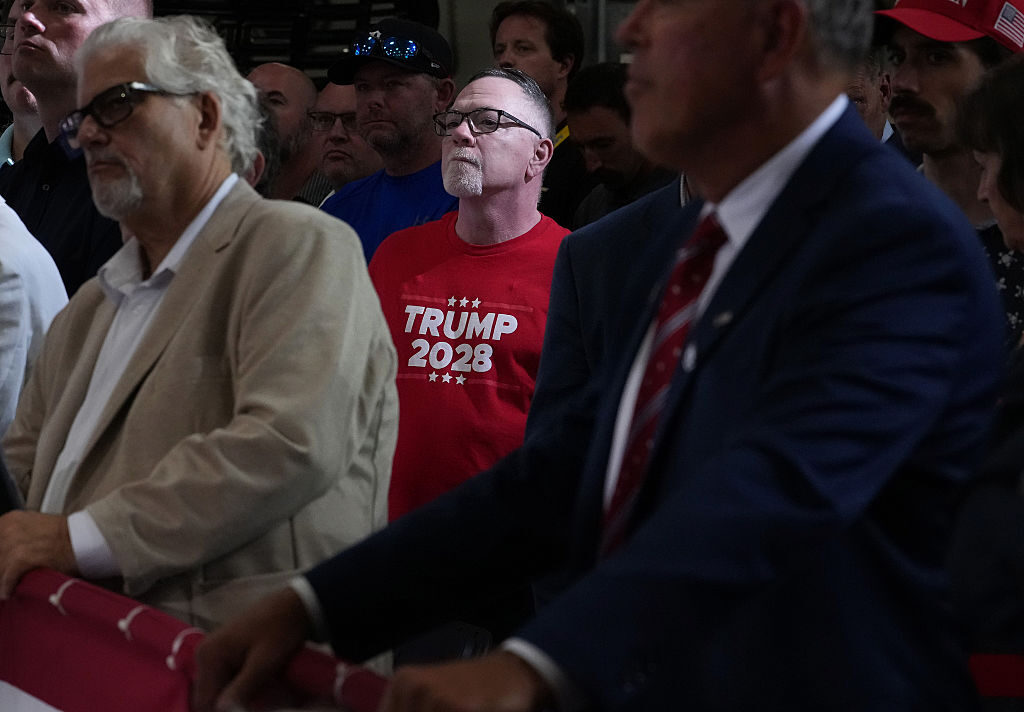
President Donald Trump has returned to floating a bid for a legally forbidden third term, offering supporters and critics hints that he might try to remain in the White House in January 2029 — but he always stops short of explaining how he might do it or declaring what would be a Constitution-disregarding candidacy.
The pattern is familiar: Trump or a surrogate raises the prospect, acknowledges a major constitutional obstacle and leaves open the possibility that his lawyers and strategists could find a path around it. After all, finding loopholes in federal laws and guidelines has been a hallmark of his second term.
Trump does enjoy getting under the skin of his critics, including Democrats in Congress and left-leaning scholars. That’s why it can be tempting for some to shrug off his 2028 talk and social media posts as trolling. Still, Trump never quite closes the door to a fourth White House run.
“Everybody asks me that question. And you know that the law’s very strong on that. I’d love to run, but the law is very strong,” Trump said Aug. 11 when asked by CQ Roll Call whether he was serious about another campaign. “I get asked by every, well, even tonight, they’re screaming at the event, ‘2028!’ No, everybody wants me to do it, but the law is very strong.”
That was an apparent reference to the 22nd Amendment, which clearly states that no person may be elected to the presidency more than twice. Trump was elected in 2016 and again in 2024, the only chief executive other than Grover Cleveland to be elected to non-consecutive terms.
But Trump did not answer when asked if that amounted to a “no” about 2028, appearing to leave himself some wiggle room.
Then there is one of his outside advisers.
“We’re working on it. I think we’ll have a couple of alternatives,” Steve Bannon, a former Trump campaign manager and White House chief strategist, told NewsNation in June. “We’ll see what the definition of ‘term limit’ is.”
At times last year, Trump appeared to set aside his teasing of a third term attempt. During one Cabinet meeting, he said someone else would be the Republican nominee in 2028, suggesting the party’s deliberations would come down to two former GOP senators, Vice President JD Vance and Secretary of State Marco Rubio.
But this summer, the president has brought back “Trump 2028.”
The most recent examples came over the last few days. Trump’s Truth Social account on Saturday posted a black-and-white image of Trump wearing a “Trump 2028” cap with these words at the bottom: “We are going to win.” But on Monday afternoon in the Oval Office, he told reporters he would only get to use the White House ballroom he is attempting to build for a short time because his second term would, by the time it is projected to be completed, only have “four or five months left, three months, who knows?”
But among his first words at the start of remarks in Marietta, Ga., on July 22 were: “Well, thank you very much, everybody. It’s a special place and I am here to announce my candidacy. I’m only kidding.“ Two days later, he donned a bright red “Trump 2028” ball cap during a White House Correspondents’ Association dinner before sounding serious about another run.
“That’s why tonight, to show just how much I care about the press, and I want to save your ratings, I’m pleased to announce my intention to, and this is somewhat of a scoop, my intention to run for a fourth term as president of the United States. I will be doing that. … I won, I won three times. Now I’m gonna do it again,” he said at that July 24 event, falsely insinuating he won his 2020 race against Joe Biden. “I’m gonna do it again. It should be easy. I’m getting very good at running for president.”
Just like when he does not explain a legal underpinning for a third term, Trump created uncertainty by not telling the audience he was joking around, as some aides later contended.
Ambiguity may be the point.
“He never gives you a straight answer. I think he’s just messing with people,” University of North Carolina law professor Michael Gerhardt said in an interview.
Gerhardt said Trump has a longstanding goal of creating “confusion and uncertainty and instability,” which can keep political opponents, members of his own party and the public off balance.
“By keeping it alive, it serves his purpose of distracting the public from, frankly, his corruption, his management of the war, and so on,” Gerhardt said, referring to allegations that Trump and his family have improperly profited off his second term. “He likes to sow chaos and keep folks off balance and divided — it’s his modus operandi.”
‘They’re frozen’
Democrats have warned for some time that team Trump could meddle in coming elections, starting with November’s midterms. But when it comes to 2028, several other legal experts this week dismissed the president’s words as empty threats that would not survive a serious legal examination.
One law professor from a major university, who asked to not be named, wrote in an email he had little to say on the matter because “I view it as a dead-end issue” for Trump and his supporters.
Rick Hasen, a law professor at the University of California, Los Angeles said in an email: “I don’t take his teases seriously.”
“He gave you the real answer and we will know soon after the midterms as folks decide to run,” he added.
But complicating the will-he-or-won’t-he-test-the-Constitution debate: Trump never clearly stated in 2020 and early 2021 that he would, as president, do everything he could to ensure a peaceful transfer of power. Then he pushed elections officials to find him more votes and revved up a mob of supporters on Jan. 6, 2021, who stormed the Capitol and temporarily halted lawmakers’ counting of the Electoral College votes to certify Biden’s win.
After any second-term president’s midterm congressional elections, there typically is a race among candidates from that political party to officially launch White House bids. The frenzy includes becoming an official candidate in order to secure much-needed donations from deep-pocketed donors, as well as endorsements from elected officials, party graybeards, celebrities and other opinion-shapers.
“There is a historical parallel. Franklin Roosevelt was faced with the challenging questions of whether he would run for a third term. Roosevelt kept saying he wouldn’t, but he also kept hedging,” UNC’s Gerhardt said. “It kept anyone else in his party from entering the [1940] race. Others hated him for it.
“That’s the parallel with Trump: he’s going to make it hard for anyone to run because he’s keeping it open, this talk of 2028. As long as he’s keeping it open, others can’t realistically engage in a full campaign effort, in all the things you have to do to seriously run for president,” he added. “They’re frozen, just like with Roosevelt, into doing nothing because they don’t know what he’s going to do — and they really don’t want him angry at them.”
Still, maybe those mulling a run should get ready.
“I don’t think his legal team is going to seriously try to push this through, and I’m skeptical that if the matter ever made it to the Supreme Court, that Trump could convince a majority of Supreme Court justices that he could run again despite the 22nd Amendment,” UCLA’s Hasen said. “Not to mention that he is an unpopular incumbent who is starting to get some pushback from members of his own party.”