Stopgap funding bill’s hemp troubles aren’t over
Senate bill's delay of THC-infused hemp ban faces division among House Republicans
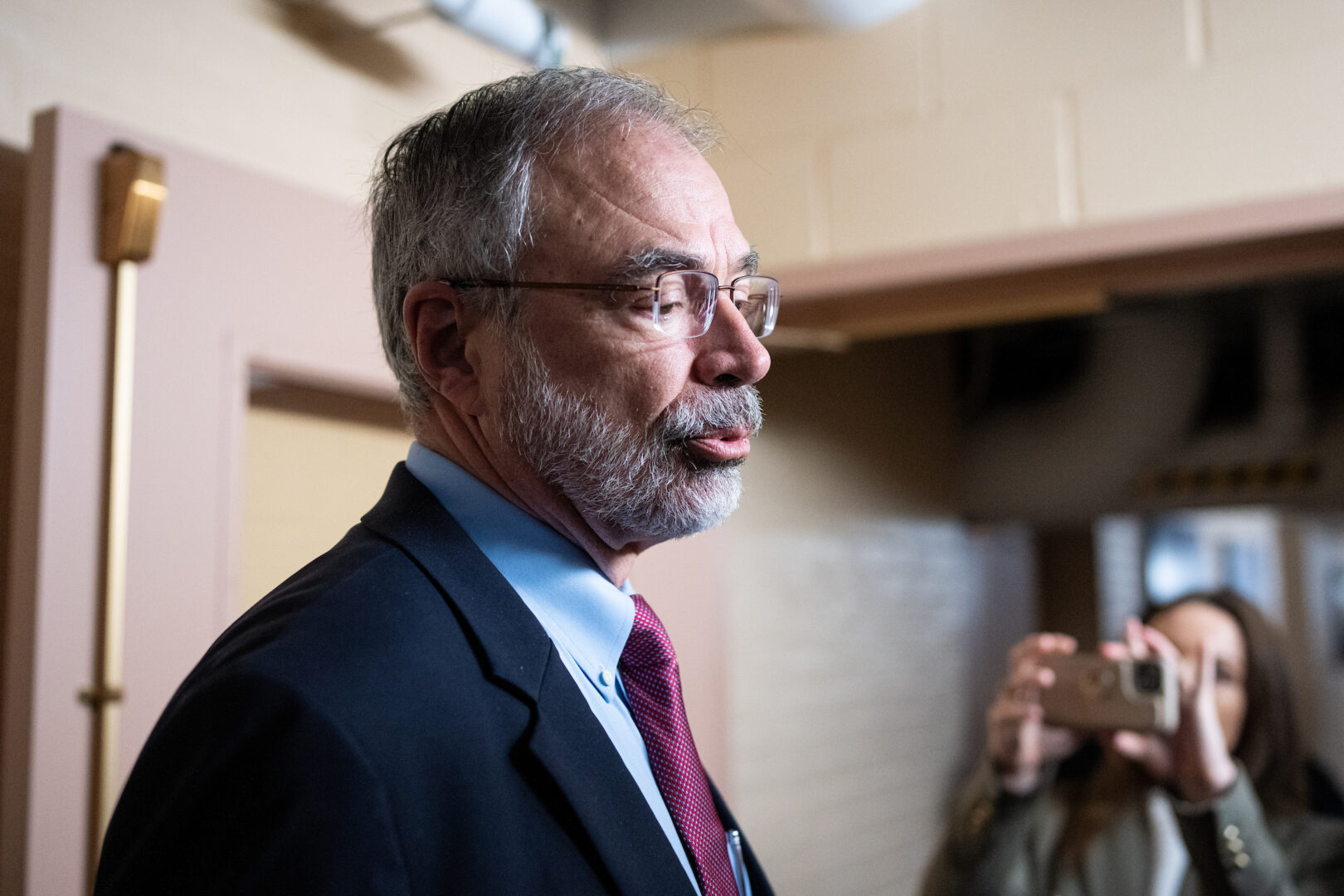
House GOP leadership faces a balancing act next month as they work to avert a partial government shutdown while navigating internal tensions over the Senate-proposed delay of a ban on sales of certain intoxicating hemp-derived products.
House Freedom Caucus Chairman Andy Harris has been sounding the alarm since the Senate on Aug. 8 passed a stopgap spending bill that would extend federal funding authority that’s set to expire Sept. 30, as well as pause a looming THC-infused hemp ban, through Dec. 11.
He hasn’t explicitly said he’ll seek to defeat the continuing resolution if the hemp ban delay isn’t stripped. But Harris has made clear in social media posts and interviews with local media outlets this month that he will fight to undo the provision.
“Let’s be clear: these are not harmless hemp products. They’re intoxicating, unregulated, and widely available resulting in devastating numbers of children being hospitalized,” Harris, R-Md., wrote Tuesday on X. “The federal government has failed to act for far too long. I’m fighting in Congress to change that.”
Harris, the House Agriculture Appropriations Subcommittee chair, alongside Sen. Mitch McConnell, R-Ky., helped write the initial ban into law last year, which otherwise would take effect Nov. 12 while the Senate is on recess.
Even without McConnell present due to his extended medical leave, the one-month delay in the Senate bill tied that chamber in knots for days as opponents tried to strip the provision.
Twenty-one Senate Republicans — about 40 percent of the GOP conference — ultimately voted against tabling an amendment from Ted Budd, R-N.C., to strike the delay from the underlying bill. That’s likely a decent proxy for where House Republican sentiment falls on the issue as well.
‘Gas station weed’
Aides to Rep. Mary Miller, R-Ill., a Freedom Caucus member, couldn’t be reached for comment during recess. But Miller started the effort back in 2024 to close what backers called a loophole in the 2018 farm bill provision that specifically excluded hemp from the definition of marijuana, allowing the hemp industry to legally thrive.
Gaps in the 2018 law ultimately led to the proliferation of THC-infused products marketed as hemp, including beverages, gummies and other snack foods that critics derisively refer to as “gas station weed.” The House’s farm bill reauthorization in 2024 included Miller’s amendment, which was a tougher version of the ban that ultimately became law as part of the fiscal 2026 Agriculture spending measure.
Current law now states that as of Nov. 12, the legal definition of hemp will now be based on total THC concentration rather than the 2018 law’s limit of 0.3 percent delta-9 THC on a dry-weight basis. And hemp-derived products can’t contain more than 0.4 milligrams of total THC or similar compounds per container.
The new restrictions are intended to cover less potent delta-8 THC found in items like snack foods and drinks sold in convenience stores and other retail outlets. The Senate CR provision, led by Sens. Tim Sheehy, R-Mont., and Amy Klobuchar, D-Minn., would delay by a month the ban on sales of such products, while letting the existing ban on synthetic cannabis compounds that can’t be naturally produced take effect as scheduled.
Rep. Morgan Griffith, R-Va., is among those pushing to delay the ban and replace it with a regulatory framework for hemp-derived products.
“There are still some disagreements, and of course, there’s a whole group that just says, ‘No, we want to ban it all,’” Griffith said in an interview.
He said GOP leaders’ calculus may hinge on the level of Democratic support for the underlying stopgap measure. Senate leaders made several changes sought by Democrats and limited defections to less than a handful of caucus members, mainly due to concerns over lack of restrictions on the administration’s use of funds.
If there’s a House GOP roadblock over hemp or other issues, Republican leaders may have trouble adopting a rule for floor debate given such votes are typically along party lines. The Rules Committee could grant holdouts an amendment to strike the delay, but that’s dicey because any successful amendments would kick the bill back to the Senate.
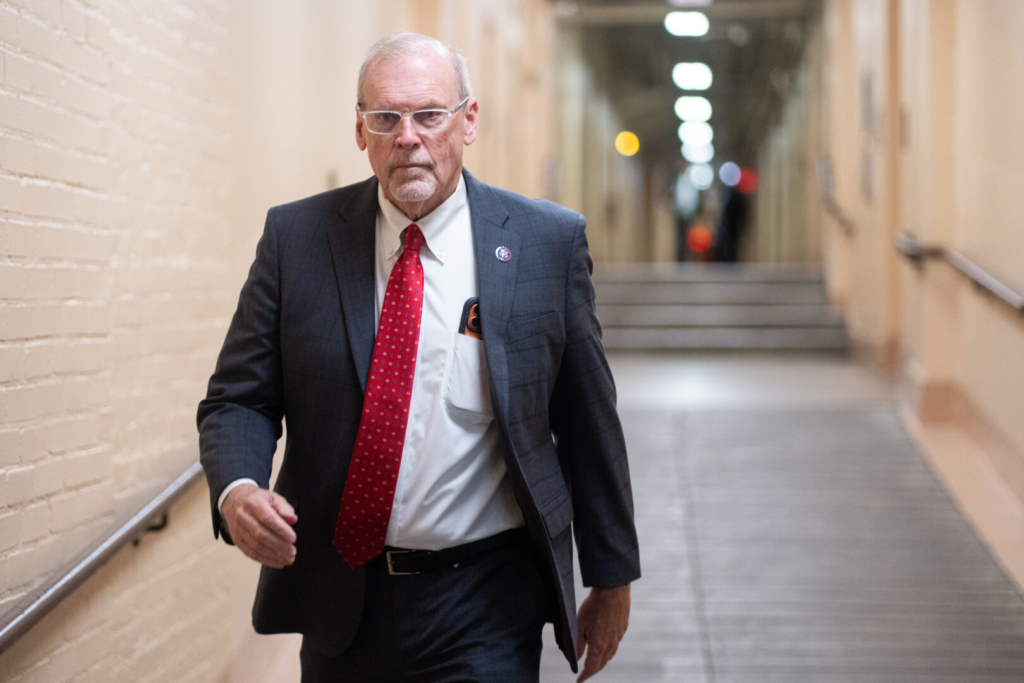
Alternatively, they could bring the CR up under suspension of the rules, which eliminates that hurdle but requires two-thirds of members present and voting to pass — meaning substantial Democratic support would be required. Freedom Caucus and other conservatives have criticized party leaders in the past for going the suspension route on spending measures.
“The question is, if the Democrats decide to oppose the stopgap spending measure across the board, then there are probably enough ‘no’ votes to take that [delay] out,” Griffith said. “I hope they don’t.”
Long-term fix sought
Advocates, including much of the hemp industry, brewers and retailers that sell THC-infused edibles and beverages, have a key ally in the Trump administration, which has made loosening cannabis regulations one of their pitches to younger voters, among others.
The White House sought at minimum a delay in the new restrictions as part of its supplemental request for the Iran war back in June while advocating for a broader, long-term regulatory fix.
The goal now, assuming the House can clear the CR, is to use the one-month reprieve to either strike a deal on a comprehensive hemp bill or delay the ban again in the government funding bill that would need to pass by Dec. 11.
Jonathan Miller, general counsel for the U.S. Hemp Roundtable, said he’s “cautiously optimistic” that lawmakers will enact a “regulatory bridge” buying time for a longer-term framework.
“We’re hearing this is the whole intent of the White House and was the reason why a majority of Republicans voted to extend, and it certainly is the position of the vast majority of Democrats,” Miller said.
The administration has said it supports a bill from Reps. Andy Barr, R-Ky., and Angie Craig, D-Minn., that would boost the legal limit to 1 percent total THC concentration, along with restrictions such as limiting sales to individuals 21 years of age or older and a new federal tax on beverages and edibles.
Separate legislation from Reps. Beth Van Duyne, R-Texas, and Greg Landsman, D-Ohio, would focus on the hemp-derived beverage market and set up a regulatory regime for legal sales of low-dose drinks that mimics the alcoholic beverage industry’s legal setup.
Griffith has a bill with Rep. Marc Veasey, D-Texas, that would charge the Food and Drug Administration with developing a rulemaking within three years to set limits on intoxicating substances in hemp-derived and CBD products.
If FDA can’t complete the process, the bill would set default limits of 5 milligrams per serving and 30 milligrams per package — numbers Griffith acknowledges are somewhat arbitrary. “There is no science to back up” the amounts partly “because the FDA doesn’t have a number for us,” Griffith said.
Regardless of the ultimate legislative approach, delaying the Nov. 12 ban is essential to give businesses and consumers more time to plan and lawmakers more time to establish a logical regulatory structure, he said.
“As a result of so many states passing various laws, the products are everywhere,” Griffith said. “And you create a disrespect for the law when nobody believes that the law actually reflects what’s happening, and that’s where we are right now.”