Flock cameras draw bipartisan concerns at Senate hearing
CEO declines to testify amid public backlash
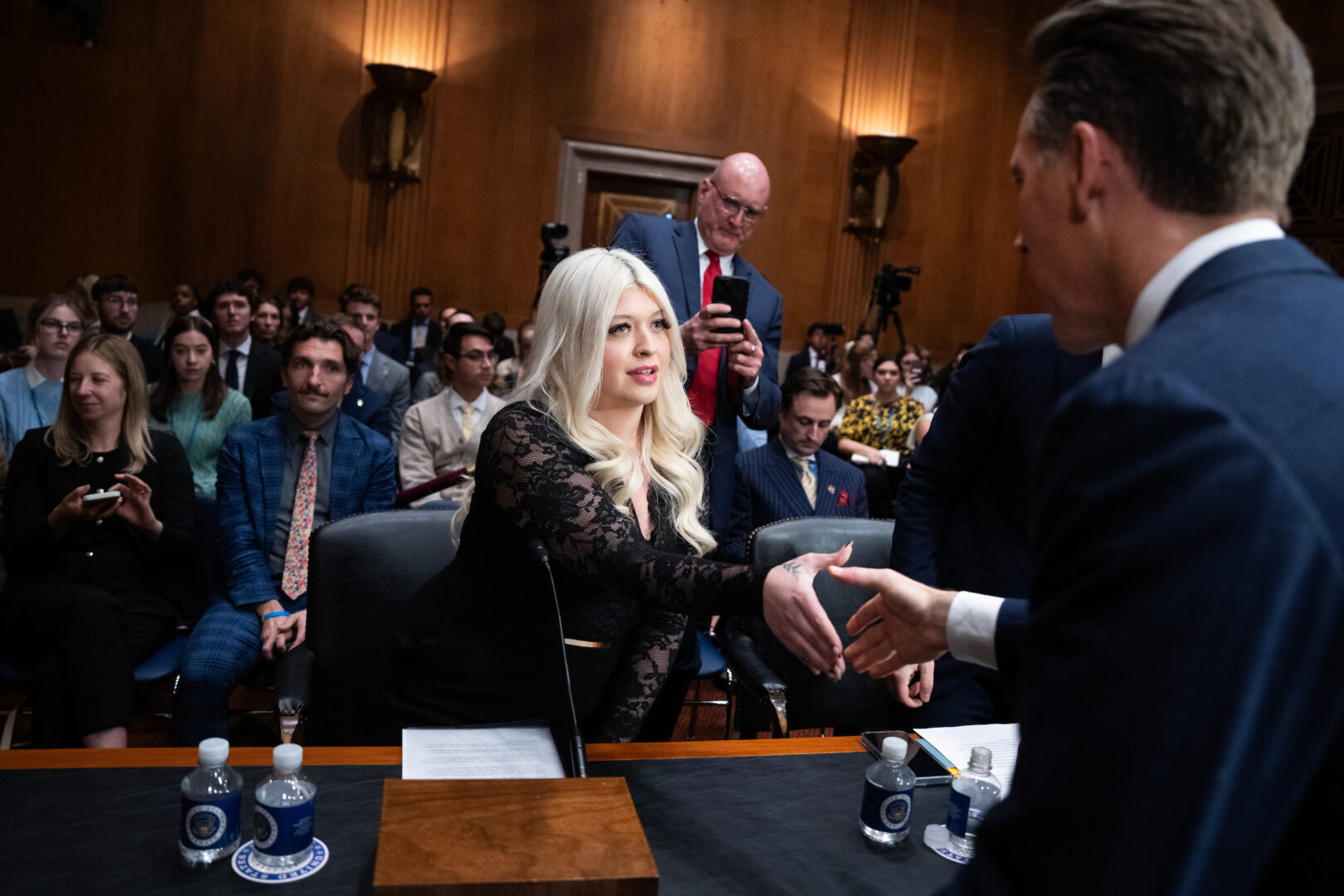
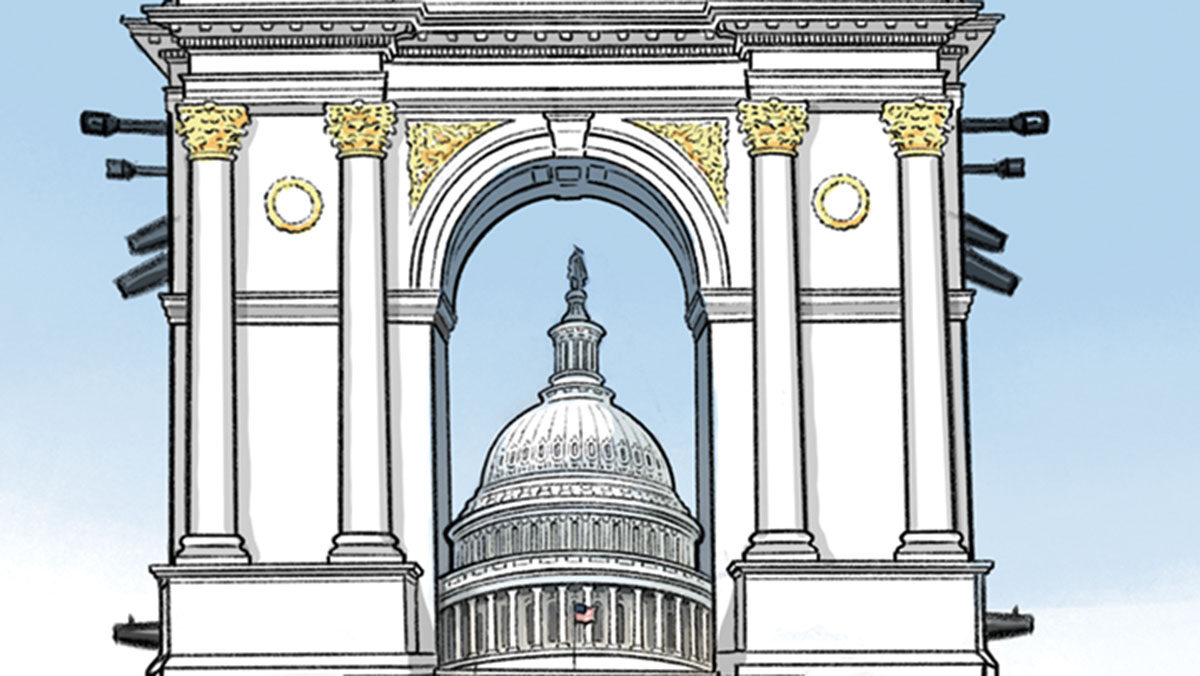
Senators of both parties expressed alarm Wednesday about the use of artificial intelligence-powered surveillance cameras and automated license plate readers.
The bipartisan concerns were aired at a hearing held by the Senate Judiciary Committee’s panel on Crime and Counterterrorism, though Garrett Langley, the CEO of Flock Safety, which has drawn intense criticism around privacy rights, and the heads of other surveillance firms declined to testify.
Subcommittee Chairman Josh Hawley, R-Mo., said that Flock’s network of tens of thousands of cameras across almost every state presents a new challenge because billions of images are searchable, including using AI. Hawley expressed concerns about risks to the presumption of innocence and to privacy.
“We’ve got to find a way to protect and enforce the Bill of Rights and the basic personal liberties of every law-abiding citizen in this country no matter what the technology is,” Hawley said.
The subcommittee’s ranking member, Sen. Richard J. Durbin, D-Ill., said that the volume of cameras and information gathered are a change from previous use of license plate readers for toll enforcement.
He also said that while privacy is not mentioned explicitly in the Constitution, courts have inferred that it should be protected.
“We have got to find a way to balance in America privacy and security. I think there is a balance,” Durbin said. “Congress needs to lead the way.”
Hawley invited the CEOs of Flock, Axon Enterprise, Motorola Solutions and Verkada to testify last week.
A spokesperson for Verkada said the company’s CEO could not attend, but the company is providing information to the subcommittee. The spokesperson also stressed that no national Verkada network exists and that customers “can only access the data in their own systems.”
The other companies did not respond to requests for comment on the invitation.
Testimony
The committee instead heard from expert witnesses and Lindsey Isaacs, a Florida resident who said she was wrongfully accused of causing a fatal car crash based on an image of her car captured far from the scene of the accident.
Alasdair Whitney, who serves as legislative counsel for the Institute for Justice, which describes itself as a public interest law firm, encouraged Congress to protect privacy in public and to take legislative action.
The firm this month released revised model legislation that would govern the use of surveillance data. That model bill would, in most cases, require government officials to have a warrant before they access historical location data. It would also put limits on the use of contemporaneous data and on how location data can be shared. It would also limit retention of data.
Whitney said that the federal government could also condition federal law enforcement funds on states and localities putting similar restrictions in place.
“None of these restrictions would stop law enforcement from finding a missing child or a stolen car,” Whitney said. “We’re not asking for you to turn the cameras off with this model legislation. The warrant requirement is the bare minimum, though.”
House members have introduced at least four bills on AI surveillance cameras. One, from Rep. Tim Burchett, R-Tenn., would ban federal agencies from purchasing or operating surveillance systems that track people through license plate readers, facial recognition or biometric identification.
A measure from Rep. Raja Krishnamoorthi, D-Ill., would condition some surface transportation funds on states banning automated license plate readers except for toll enforcement and identifying stolen vehicles or missing persons.
A bill from Rep. Thomas Massie, R-Ky., would bar use of federal funds for the cameras or their data, with exceptions for tolls and border security. And a proposal by Rep. Keith Self, R-Texas, in addition to a restriction on federal funds, would require a warrant for federal use of data from state or local Flock cameras, except in emergencies.
Benn Jordan, a cybersecurity engineer who has used his YouTube channel to raise awareness about surveillance cameras, said Flock’s storage of data from its network of cameras is not sufficiently secure, though he said the company seems to be taking the issue more seriously recently. He said that lawmakers could put rules in place to help fix that issue.
“What I’ve been asking for, around the country, is for privatized government surveillance vendors to require independent security testing and inspections,” Jordan said. He went on to add that the nation also needs “clear, effective and unified federal privacy laws on par with” the European Union’s General Data Protection Regulation.
The hearing is the latest instance of Senate scrutiny of Flock cameras and other surveillance technologies.
Hawley announced an investigation in August into Flock’s “collection, retention, and dissemination of the data generated by its artificial intelligence surveillance cameras.”
Sens. Katie Britt, R-Ala., and Sen. Raphael Warnock, D-Ga., sent a letter to the Justice Department earlier this week expressing concern about misuse of data from license plate readers and saying that “appropriate safeguards are necessary to protect against unauthorized access and abuse.”
“We also want to ensure that funding of these technologies is paired with appropriate oversight to ensure that the funding is not used to facilitate such abuse,” the senators wrote.
At the hearing, Britt also said that in her state, she has seen both cases where surveillance cameras helped to save people in danger and cases of abuse.