Diesel dilemma squeezes Republicans in America’s heartland
‘Farming does not do well in chaos,’ one Nebraska farmer says
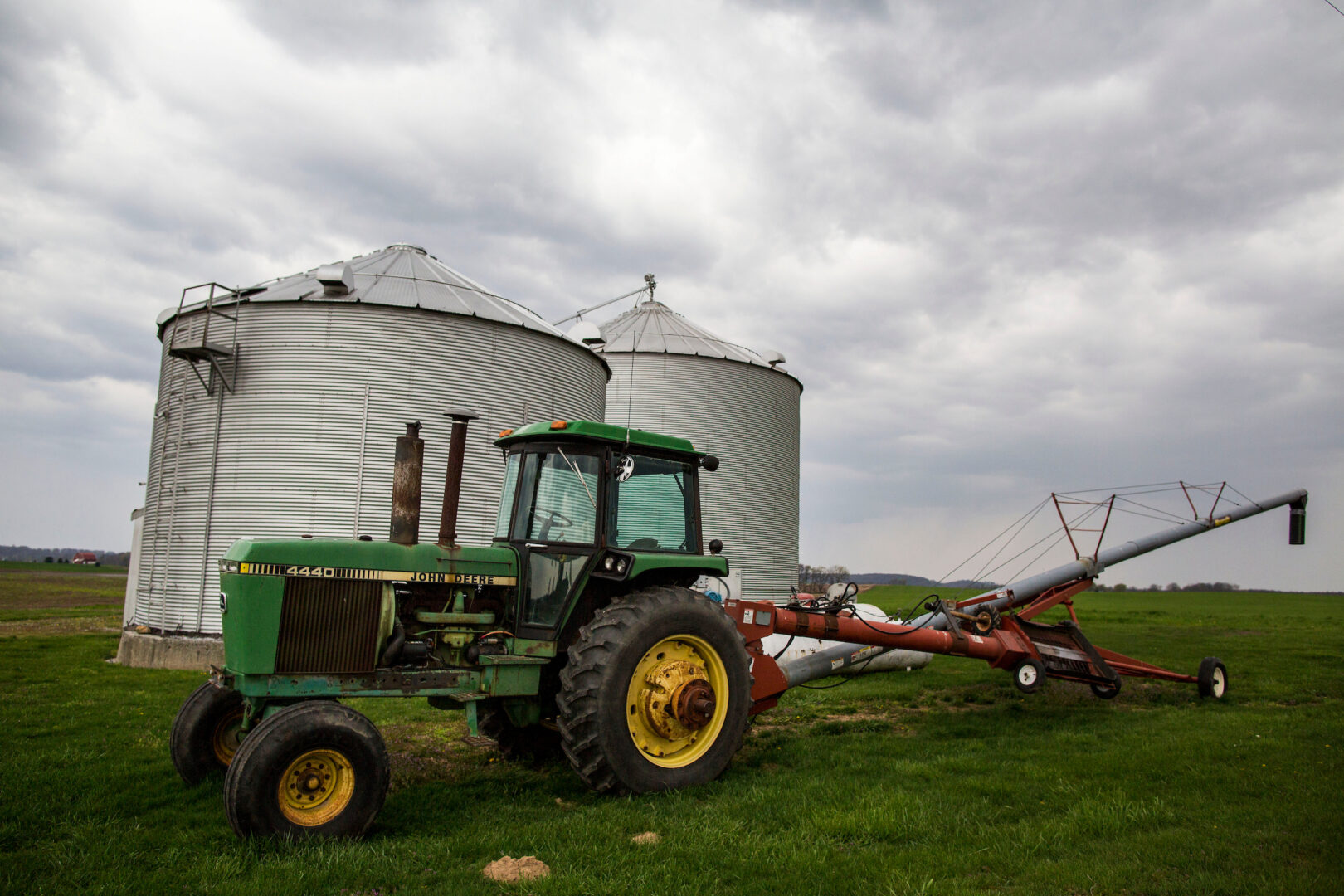
Vance and Louise Ehmke have been growing rye seed, wheat and triticale for over 50 years on a farm in western Kansas that their ancestors first homesteaded in 1885.
They say decisions being made thousands of miles away in Washington are costing them. “Compared to last year, our fuel bill is $50,000 higher,” Vance Ehmke said, while for “fertilizer, that’s going to be at least another $20,000 or $40,000 increase.”
“That’s all due to Trump and his war in Iran,” he said in a phone interview. “We are madder than hell about it. I want to tell you that I am a Republican, and I’m pissed.”
They’re not alone. Just a few weeks ahead of the midterm elections, the price of diesel is top of mind across America’s heartland, fueling woes for Republican candidates in places like Kansas, Nebraska and Iowa. As Senate races run tighter than expected, President Donald Trump has faced growing pressure to act.
Diesel per gallon peaked on Sept. 22 at an average of $6.53, according to AAA, and as of Friday stood at $6.33.
Last week, Trump announced a diesel deal with Russia that would waive U.S. energy sanctions, drawing backlash from lawmakers in both parties who have argued against reliance on Russian fuel.
And some farmers say they aren’t convinced by another of Trump’s moves this month, an executive order allowing the sale of red-dyed diesel for use in on-road vehicles through the end of the year. They worry about logistics in the short term — not to mention what farming will look like over the long haul.
“We adapt,” said Bill Armbrust of Nebraska, whose family had been farming west of Omaha for 170 years. “But we cannot adapt when we have chaos in our past, in our present, and in our future.”
“Farming does not do well in chaos,” he added.
For Armbrust, the pain has been building for a while, and he’d already decided to rent out his farmland and sell off his equipment. “I decided that I’m not going to lose money anymore,” he said in a phone call.
Seeing red
Armbrust will be supporting independent Dan Osborn this November over GOP Sen. Pete Ricketts and describes a feeling of momentum, even in a state that backed Trump by 20 points in 2024. Inside Elections with Nathan L. Gonzales changed its rating of the race earlier this month from Likely Republican to Lean Republican, and the Democratic nominee dropped out this summer after endorsing Osborn.
“Putting $160 of diesel fuel in your pickup truck, you sit there and go, ‘I’ve had enough of this shit,’” said Armbrust, a Democrat who ran for the state legislature a decade ago.
Trump’s executive order won’t fix things, he said.
Farmers run their tractors, combines and irrigation pumps on dyed diesel, which is exempt from highway fuel taxes and colored red so inspectors can tell the difference. But the idea of putting it in their on-road trucks to temporarily save some money, as the order would allow, has some scratching their heads. Armbrust sees it as a risk for farmers.
“The cleanout of that dyed diesel after this 90-day period is over is enormously expensive, and no farmer is going to do that,” he said, warning dye could linger in the tank for weeks and lead to future fines.
While the IRS has moved to pause federal enforcement of penalties, any deferred taxes would likely need to be paid back eventually, unless Congress acts to offer permanent forgiveness.
And dyed diesel is itself more expensive than it was. That fuel has nearly doubled in price since the president took office. On average, the cost of dyed diesel rose from about $2.94 a gallon on Jan. 19, 2025, to $5.77 at the start of this month. Meanwhile, the price of diesel at the pump, per data tracked by GasBuddy, rose 77 percent.
That translates into billions of dollars in new costs for American farmers, according to a CQ Roll Call analysis. If prices stay at early October levels, U.S. farms would together spend roughly $8 billion more a year on diesel than at Inauguration Day prices. For farms selling $1 million or more, it’s an average of about $43,500 in added annual costs. For those with at least $100,000 in annual sales, the increase averages about $17,300 a year.
Seth Watkins, who raises livestock on a southwest Iowa farm that’s been in his family since the 1840s, is planning to vote for Democrat Josh Turek this fall over GOP Rep. Ashley Hinson in the race to succeed retiring Sen. Joni Ernst.
The price of diesel “increases the cost of everything we do,” Watkins said in a phone interview. “Whether it’s how much it costs me to make a bale of hay, whether it’s how much it costs you to buy food.”
Watkins said he believes his Republican friends “heard things that they believed in, and they thought Trump was going to do things for markets. They heard him say, ‘no more never-ending wars.’”
“They really wanted those things to happen,” Watkins said.
‘Band-aid on a shotgun wound’
Candidates across the country are trying to leverage that kind of disillusionment.
Hallie Shoffner, an Arkansas Democrat who is mounting a long-shot challenge to Sen. Tom Cotton, described Trump’s dyed diesel order as “a Band-aid on a shotgun wound.”
“This is a massive wound that has been dealt to the agricultural industry,” she said of rising diesel prices. “I am glad that the farm crisis is getting attention. I am glad that the plight of our truckers and our trucking industry is getting attention, but this doesn’t help. They’re being crushed by the diesel cost because of the war in Iran.”
Shoffner had a family farm herself but shut it down last spring, citing the impact of tariffs. More farm closures are coming in the state, she fears. “We were hoping that things would get better in 2026, but the war in Iran started … just as farmers were starting to plant corn and rice.”
But experts say the slowdown in the Strait of Hormuz is not the only factor.
Alan Krupnick, a senior fellow at Resources for the Future, pointed to reduced refining capacity in Russia and the Middle East because of the conflicts there. He also cited interruptions tied to Hurricane Isaias in the Gulf of Mexico, along with “turnarounds,” in which some refineries in the U.S. go offline to undergo scheduled maintenance.
“Even if you could move [the oil], there’s just less capacity around, and that’s pushing up prices,” Krupnick said. Any “real changes” in the market are unlikely to happen fast enough to affect diesel prices before Election Day, he said. This week the International Energy Agency projected diesel supplies would remain low into the second half of 2027.
All that makes for a more nuanced picture than many candidates are painting on the campaign trail. And both parties are hard pressed to propose anything that could help anytime soon.
“The House should return to DC immediately to work to pause diesel exports, suspend the gas tax, fully unleash E15 and biodiesel, and work on a diesel relief program for truckers and farmers,” Hinson posted in September as diesel prices reached record highs. “Americans need relief and I’ll work with anyone to deliver.”
While Trump initially threw his weight behind the idea of an export ban, he quickly backed off as Energy Secretary Chris Wright and others said it wouldn’t work. And even if Congress were to have taken a break from campaigning and come back into session this fall, finding consensus on any one solution would be an uphill climb.
Change in the air?
What the diesel dilemma will mean for the midterms remains to be seen. In Kansas, a state Trump won by 16 points in 2024, cattle rancher and candidate Don Coover said he senses a shift.
“I think that the national political parties are recognizing now what some of us recognized quite a while ago” in rural America, said Coover, a Democrat running for a deep-red House seat. “That change is in the air. People are dissatisfied.”
“Everything moves on diesel fuel: hay, food, cattle, the whole works,” he added.
Coover remains a heavy underdog in his challenge to GOP Rep. Derek Schmidt in Kansas’ 2nd District. Further up the ballot, though, Democrat Adam Hamilton appears to have a better shot at unseating incumbent GOP Sen. Roger Marshall in a race that Inside Elections now rates Tilts Republican.
“I sat down with a group of young farmers, guys in their 30s, and they were despondent about the future of farming in Kansas as bankruptcies loom,” Hamilton said in an emailed statement. “Yet Roger Marshall continues to support the war in Iran and the chaotic tariffs coming out of Washington.”
Marshall’s campaign did not respond to a request for comment. On the campaign trail this week, the senator reportedly told supporters, “When this war is over with, those diesel prices will come down. But if Democrats are in control, the diesel prices will never come down.”
The Ehmkes, for their part, are going for Hamilton, who serves as pastor of the nation’s largest United Methodist congregation.
“This could be, honest to God, the first Democrat senator [from Kansas] since I guess back in the 1930s,” Vance Ehmke said. While his wife, Louise, is a Democrat who has pressed Marshall on his policies at town hall meetings in the past, Vance still thinks of himself as a Republican — and above all, a farmer.
“We’re the low man on the totem pole. Without a doubt, the buck stops here,” he said of farmers dealing with diesel prices. “We can’t pass those costs on to anybody else. We just eat it, and it comes right out of profitability.”
“We’re getting the shit kicked out of us, if you want to know the truth.”