Replacing Alito on the court? It’s if, not when
Democrats could choose to hold any Supreme Court vacancy open if they regain Senate control
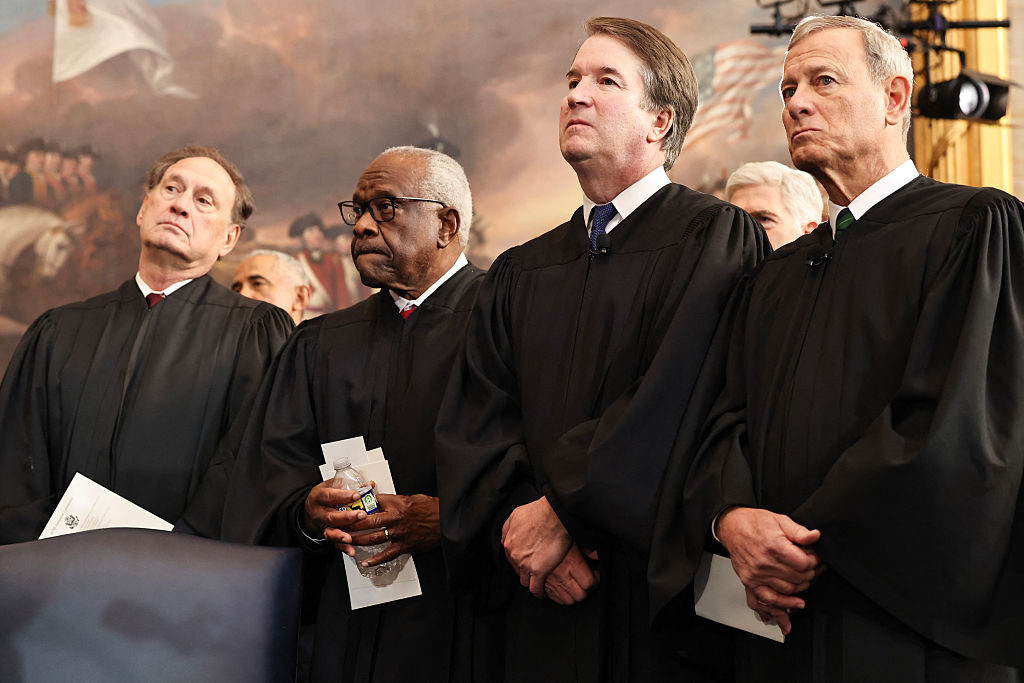
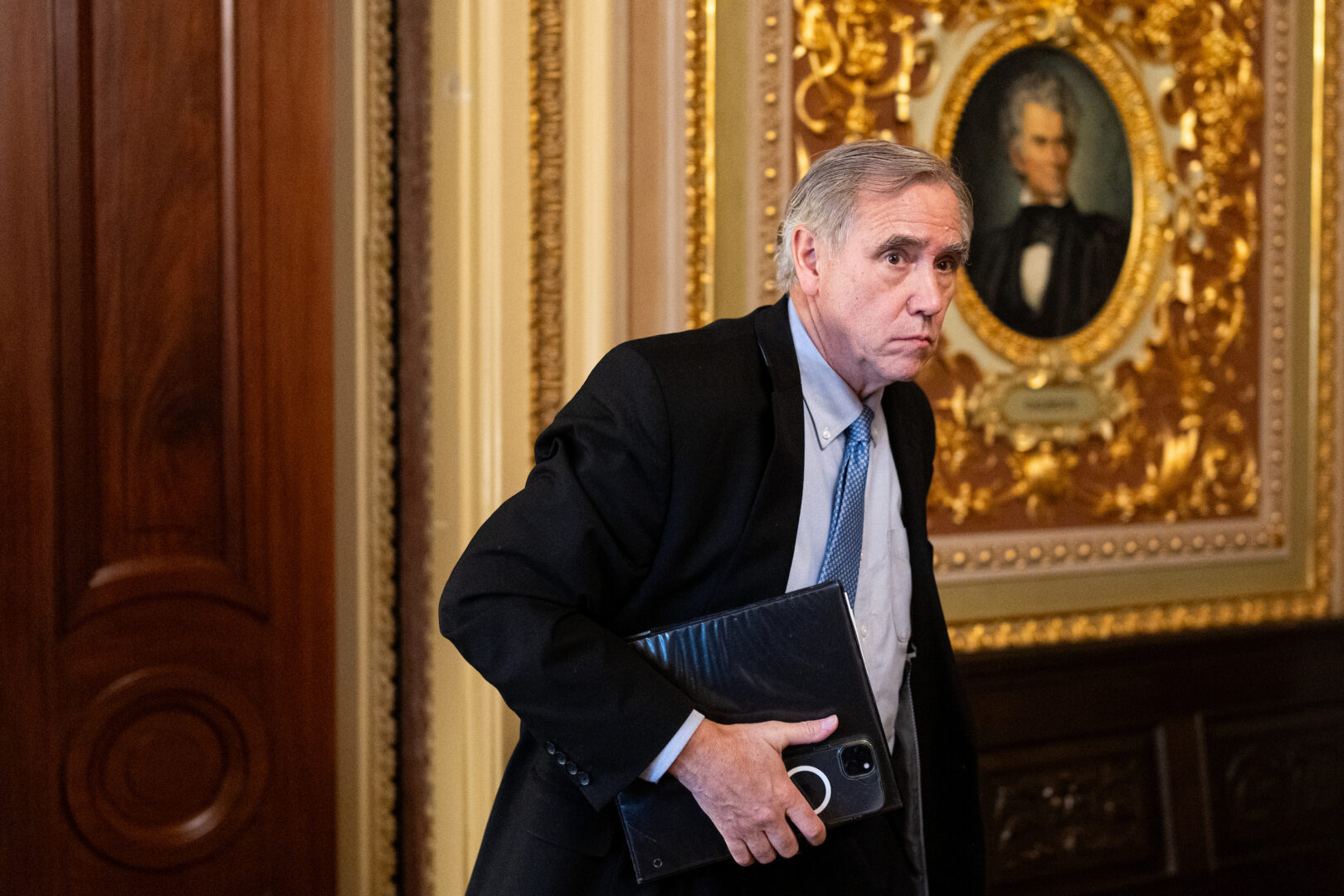
As Justice Samuel A. Alito Jr. hints he could retire next year, senators are watching closely. It would mean a tough confirmation process on Capitol Hill for any replacement picked by President Donald Trump, experts say.
Alito, 76, has contemplated retirement but decided to stay through the end of the Supreme Court term that started this week, he told CBS and Bloomberg in recent interviews. Replacing Alito during the Trump administration could mean cementing the court’s current controlling 6-3 conservative bloc for years to come and would give Trump his fourth pick on the court.
“I intend to stick around through this term,” Alito said in the Bloomberg interview released Tuesday.
The statements come weeks before the midterms as Senate control hangs in the balance, and do not commit Alito to actually retiring. Casey Burgat, legislative affairs program director at George Washington University, called them an “October surprise to say the least,” coming so close to the election. But the impact may be limited.
“The reality is if you’re plugged in enough to know that there’s a Supreme Court justice on the table for the next Senate, then you probably know who you’re voting for anyway,” Burgat said.
Multiple experts think it’s unlikely Democrats would move forward with any candidate Trump nominated, following the decision by then-Majority Leader Mitch McConnell, R-Ky., in 2016 to refuse to act on President Barack Obama’s choice to replace the late Justice Antonin Scalia.
Phil Brest, president of the progressive American Constitution Society, suggested that should Democrats control the Senate, they could try to hold the seat open for two years for a chance to shift the court. Brest, who formerly served as a White House counsel on judicial nominations and a top lawyer on the Senate Judiciary Committee under Democrats, stressed he had not spoken with leaders about their plans.
“If there is any potential of trying to shift the court back to one that is more responsive to the present circumstances, that is more true to the Constitution, then of course Democrats are going to use that opportunity to hold a seat open, to follow the McConnell precedent, and then to see how things go in 2028,” Brest said.
It’s not just the McConnell issue, according to Burgat. There’s a political movement among Democratic voters who would want to see results from their party regaining the Senate.
“A big section of the liberal base wants to see their party stand up to Trump, and this is one of the biggest ways they can do that, by denying him a seat on the Supreme Court,” Burgat said.
Michael Fragoso, former chief counsel for McConnell and now a partner at Torridon Law, said a Democratic Judiciary Committee chair would face serious political headwinds either way.
“It was challenging to do for six months or whatever we did it for. Doing it for a year and a half is much harder. But he could try that,” Fragoso said of keeping a vacancy open.
Holding a Supreme Court seat open for that long could further erode the Senate, Burgat cautioned.
“That is creating the downstream effect that you only get a lifetime appointment, you only get a Supreme Court justice, if and when you control both the the White House and the Senate — and I don’t know how tenable that is given the the razor-thin majorities we have in the Senate and the back and forth we’ve seen in the White House,” Burgat said.
At the same time, even if Republicans hold the Senate, it would be tough to get an Alito-like nominee confirmed. Fragoso said any GOP majority could be as slim as one seat, making it “rough sledding” to get that kind of pick through the chamber.
There may not be a grand political effort behind Alito’s interview, Fragoso added.
“He clearly doesn’t take the politics all that seriously, because if he did, he would have left this past year when the Senate was in the strongest position it’s probably ever been in to confirm a conservative replacement,” Fragoso said. “Instead he’s running the risk of either having a Democratic Senate where they won’t replace him at all, or a Republican Senate with a slimmer majority.”
A changing committee
Come January, no matter who controls the chamber, a significant amount of the Judiciary Committee will change.
Current Chair Charles E. Grassley, R-Iowa, is set to run out of time to lead the committee under his party’s rules, and Sen. Mike Lee, R-Utah, is next up to run the Republican side of the panel.
When asked about confirming a replacement, Lee praised Alito in a statement.
“Justice Alito is quite possibly the most gifted jurist and defender of the Constitution ever to sit on the Supreme Court. I hope he never retires, but if and when that should happen, finding someone to replace him will be no small task,” Lee said in a statement.
On the other side of the dais, the retirement of Sen. Richard J. Durbin, D-Ill., opens the top spot for Sen. Sheldon Whitehouse, D-R.I. Asked about the prospect of a Supreme Court vacancy, Whitehouse’s office referred to a social media post from his campaign account.
“Vote in November! Your Supreme Court depends on it,” the post said.
Beyond the chair and ranking member, a quarter of the committee may leave come January. Sen. Thom Tillis, R-N.C., is retiring. Sen. John Cornyn, R-Texas, lost his primary, and Sens. Amy Klobuchar, D-Minn., and Marsha Blackburn, R-Tenn., are both running for governor in their states. Sen. Darline Graham, R-S.C., is running a tighter-than-expected race to retain her seat in the chamber.
That could mean new faces for the panel, or shrinking its size overall — at 22 members, one in five senators sits on the committee. Over successive congresses, agreements between leadership about the size of the committee have kept adding members to keep the ratios constant.
Fragoso called it “anomalously too big,” and Lee Holmes, a former Senate Judiciary Committee chief counsel under Republicans and now a shareholder at Maynard Nexsen, called it “unwieldy.”
A smaller panel would mean fewer offices to coordinate with, fewer senators to corral for quorum and fewer members of the panel to get to yes, Holmes said.
At the same time, the panel’s prominence will likely make it hard to shrink by much, Brest said.
“I think there was a time where it was difficult to get people to want to join the Judiciary Committee. But that is not true any longer, and that’s for both parties,” Brest said.