Why Republicans are ‘nervous’ over South Carolina
Some observers see a ‘perfect storm’ building against Darline Graham, though Democrats have been disappointed before
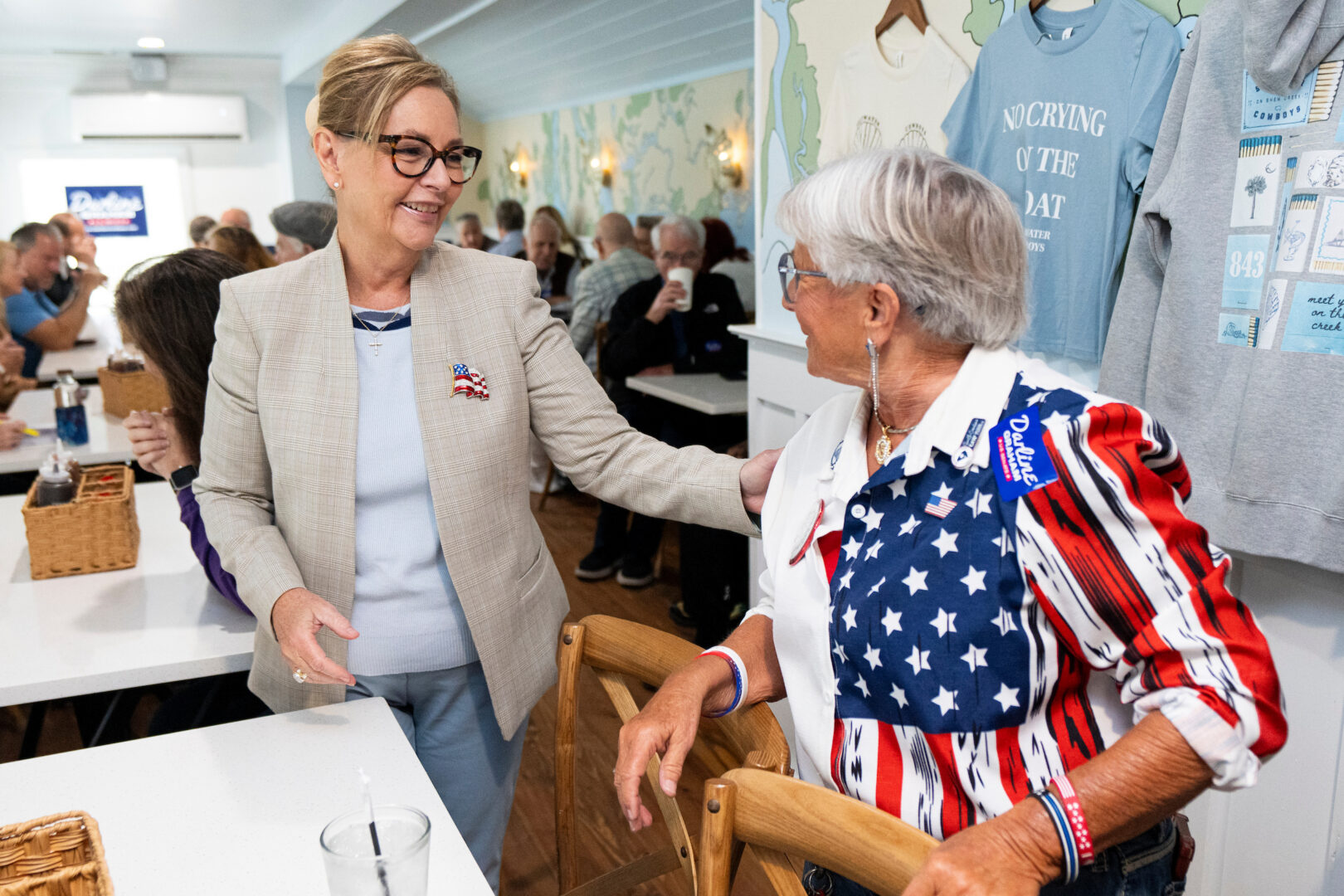
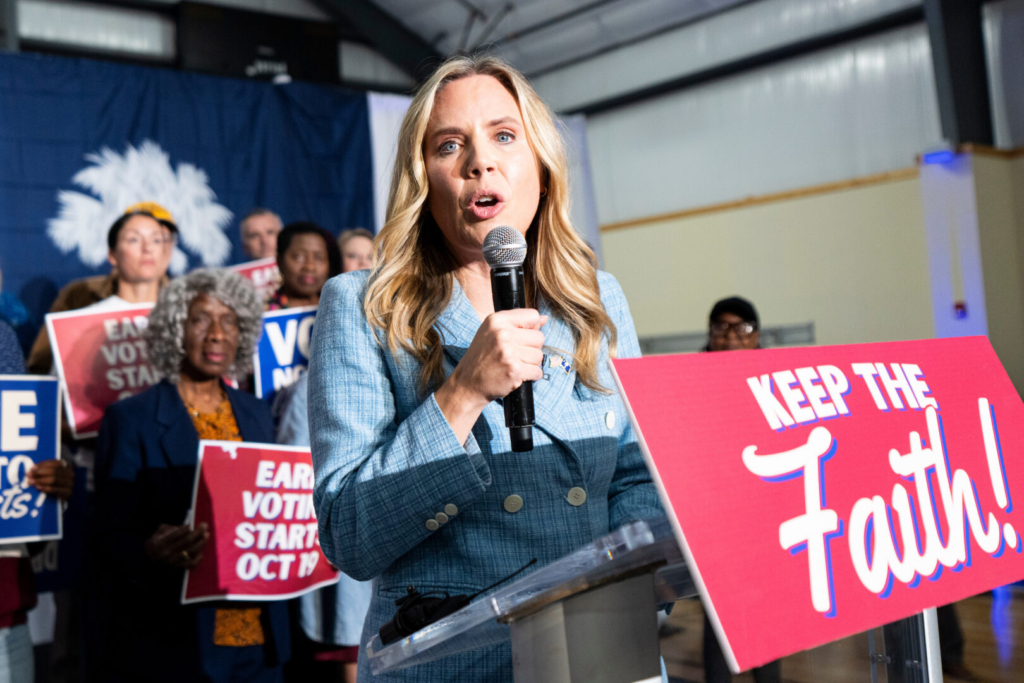
This should have been the easy part for Darline Graham in the race for a full term representing South Carolina in the Senate. After making it through a tough primary runoff this summer to replace her late brother on the Republican ballot, she was expected to dominate the final days of the midterms as the candidate handpicked by President Donald Trump.
Instead, the appointed senator is locked in an unexpectedly close race with her Democratic opponent, pediatrician Annie Andrews.
“In this election, I’m asking you to pretend I’m on the ballot,” Trump said at a rally Wednesday night, turning to a familiar refrain in the closing weeks of the campaign. “Darline, I saw some good numbers for you, and as you’ll see, you’re going to see some very good numbers for me too.”
It was his second visit in as many months to South Carolina — a state he won by nearly 18 points in 2024 — seeking to boost support for Graham, who was appointed to temporarily fill the seat in July after her older brother, Sen. Lindsey Graham, died suddenly.
Scott Huffmon, a political science professor at Winthrop University and director of the Winthrop Poll, said the president’s swing through the state is “indicative of the worry that’s going on inside of the White House.”
“South Carolina should be solid red,” he said, but noted there’s a “whole lot of things happening all at once that have kind of come together in a perfect storm against South Carolina Republicans at the moment.”
Those include the economy, Trump’s sinking approval numbers, and a GOP candidate whose last name may be familiar but who is still relatively unknown to voters and “has been a bit problematic” for the party, according to Huffmon.
Inside Elections recently shifted its rating of the Palmetto State race from Likely Republican to Lean Republican.
While Democrats are hoping they can flip the seat, they haven’t won a Senate race in the state since 1998 — and they’ve been burned before. Six years ago, they watched their dreams for Jaime Harrison and his record-setting cash hauls go up in flames with a 10-point defeat to Lindsey Graham.
Part of the uncertainty this time around stems from the fact that “we’ve got a person we don’t really know running against another person we don’t really know,” said David White, a political science professor at Francis Marion University.
“If Lindsey Graham was running against Annie Andrews, this would be a sure thing. I think if [Rep.] Ralph Norman was running against Annie Andrews, this would be a sure thing,” White said.
Christopher Cooper, director of the Haire Institute for Public Policy at Western Carolina University, sees Andrews running a strong campaign, while Graham “certainly isn’t running a bad campaign but has not really developed her own identity.”
“You could almost play a drinking game in the debates of how many times she mentioned Lindsey Graham,” he said. “She just has not been able to differentiate herself at all from her brother or how she got into office in the first place.”
And the late senator was top of mind for the president Wednesday night as well. “I loved her brother. That guy was a great guy. He was a seriously good politician,” Trump said.
‘Existential fear’
While the late Graham was a foreign policy heavyweight, his sister raised eyebrows at an August primary debate by saying she was “not that informed on national security.”
A decision by Trump last week put her in another tough spot, as the president waived Ukraine war sanctions set to be imposed under a law shepherded by and named after her brother. She tried pushing back, carefully.
“Personally, I would choose to keep the pressure on Russia,” Graham told The Associated Press. “Because I don’t trust [Vladimir] Putin, and I don’t trust Russia.”
Huffmon said Graham’s response may have helped her “show that, oh, she might actually have an independent streak, because her words previously have indicated that she would be in lockstep with the president no matter what.”
Still, it made for an awkward backdrop at Wednesday’s rally, where Trump avoided the topic but touted the release of a retired American teacher imprisoned in Russia during the war in Ukraine, calling it a “favor” from Putin.
Beyond criticism of her foreign policy chops, Graham also faces resentment over how the primary race shook out, with Trump endorsing her over several other Republicans, including Norman, the ultraconservative Freedom Caucus member who gained wider attention from an earlier unsuccessful bid for governor this cycle.
That frustration fueled calls for voters to write in Norman’s name on the ballot this November, a move the congressman has kept at arm’s length. The region that hosted Wednesday night’s rally, around Anderson and Pickens counties in the northwest part of the state, handily supported Norman over Graham in the primary runoff.
Asked about the write-in movement last week, Graham told a local Fox Carolina reporter, “I might not be their first choice or even their second choice, but I am the conservative Republican running in this race. So if you don’t get out and vote or you do a write-in, that’s essentially a vote for Annie Andrews.”
The way Huffmon sees it, Trump’s trip to Upstate South Carolina had one goal.
“I don’t think this event is about winning over independents. I think it’s about exciting the base, perhaps with existential fear that if you don’t show up, South Carolina could go for a Democrat,” he said.
Norman was notably missing from Wednesday’s lineup, though it did include another also-ran from the GOP primary, Rep. Russell Fry.
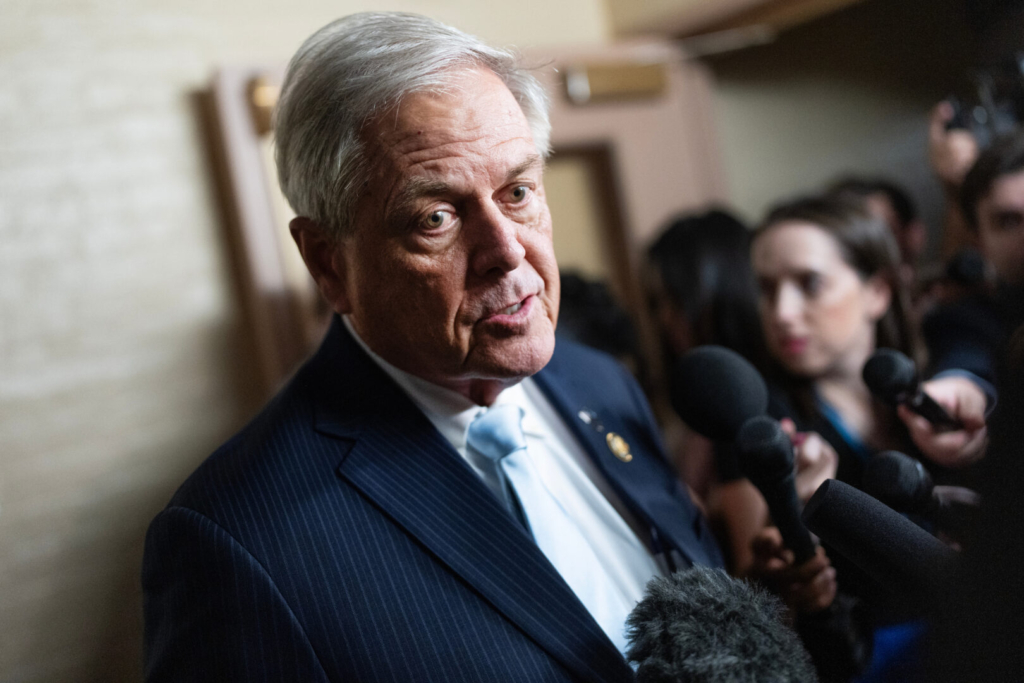
“My family is not going to vote for Darline Graham. They’re just not,” Norman told podcast host Kelly Nash this week, adding that while he would keep his own pledge to personally support her, “I would not do an event with her, and I made that pretty clear.”
“When I conceded the race, I called her and congratulated her, but that’s the only time I’ve spoken with her,” Norman said as he urged listeners to “vote your conscience.”
Conservative disillusionment with a senator named Graham is not new. Lindsey Graham long drew ire from base voters, who accused him of not leaning far enough to the right. While he was known for his bipartisan maneuvers, including backing a sweeping immigration overhaul in 2013 as part of the “gang of eight,” the state GOP establishment liked him because he “brought federal funding back to South Carolina,” White said. With his sister, “there’s no track record there, and some people are skeptical.”
Speaking to the crowd Wednesday, Darline Graham flexed her résumé from her short time in the Senate so far, calling herself the “decisive vote to confirm President Trump’s Attorney General Todd Blanche,” though she wasn’t as vocal as other senators in that high-drama confirmation process.
She also touted being “a little bit tougher” than her brother on immigration: “If you’re here illegally, you’ve got to go.”
Echoes of 2020
For Democrats, South Carolina is just one of several red-state Senate seats they’re eyeing as voters sour on Republicans amid the war in Iran and rising costs.
In September, Andrews met with Democratic senators at the Democratic Senatorial Campaign Committee headquarters in Washington, where they were already projecting optimism. Vermont Sen. Peter Welch said South Carolina had not been “obviously on the top of the list, but on the other hand, so much has happened.”
“She’s an extremely qualified candidate who has a very compelling record, so there’s a real choice for South Carolina,” he said of Andrews at the time.
Now Republicans are having to spend in the state as polls show a tight matchup. Earlier this month, the Senate Leadership Fund, the super PAC aligned with Senate Majority Leader John Thune, moved to inject $5 million into the race.
Ahead of his rally this week, Andrews adopted a diplomatic tone toward a president who has taken to calling her by an anti-trans slur that rhymes with her first name. He used the slur again Wednesday in front of the crowd, though Andrews is not transgender.
“President Trump is always welcome in South Carolina, and I hope he hears directly from the families, farmers, and workers who are paying more every month for groceries, gas, diesel, and health care, with the war in Iran driving prices even higher,” Andrews said in a statement.
She had harsher words for her opponent, saying Graham is “asking President Trump to help her win an election, but she needs to ask him to end this war and lower costs for the families she represents.”
Andrews pointed to the Russia sanctions bill as a test: “If Senator Graham doesn’t have the backbone to stand up for the one law she’s championed, then she will never stand up for South Carolina.”
Even if the anticipated blue wave materializes next month, South Carolina could be an upstream swim for Democrats, many of whom are wary of their over-optimism in 2020. While Harrison posted seismic fundraising figures back then and inspired breathless headlines portending an upset, Lindsey Graham ended up trouncing him. Harrison went on to lead the Democratic National Committee.
“There are parallels to the election six years ago, and I think it’s going to be really close, but I still think Darline Graham’s going to win,” White said.
Huffmon said while it’s been “almost a quarter century” since Democrats last won a statewide race in South Carolina, “the nature of hope is a little different” than it was during the Senate race six years ago.
“The main difference is in 2020, the Republicans really weren’t nervous. In 2026, they are,” he said.