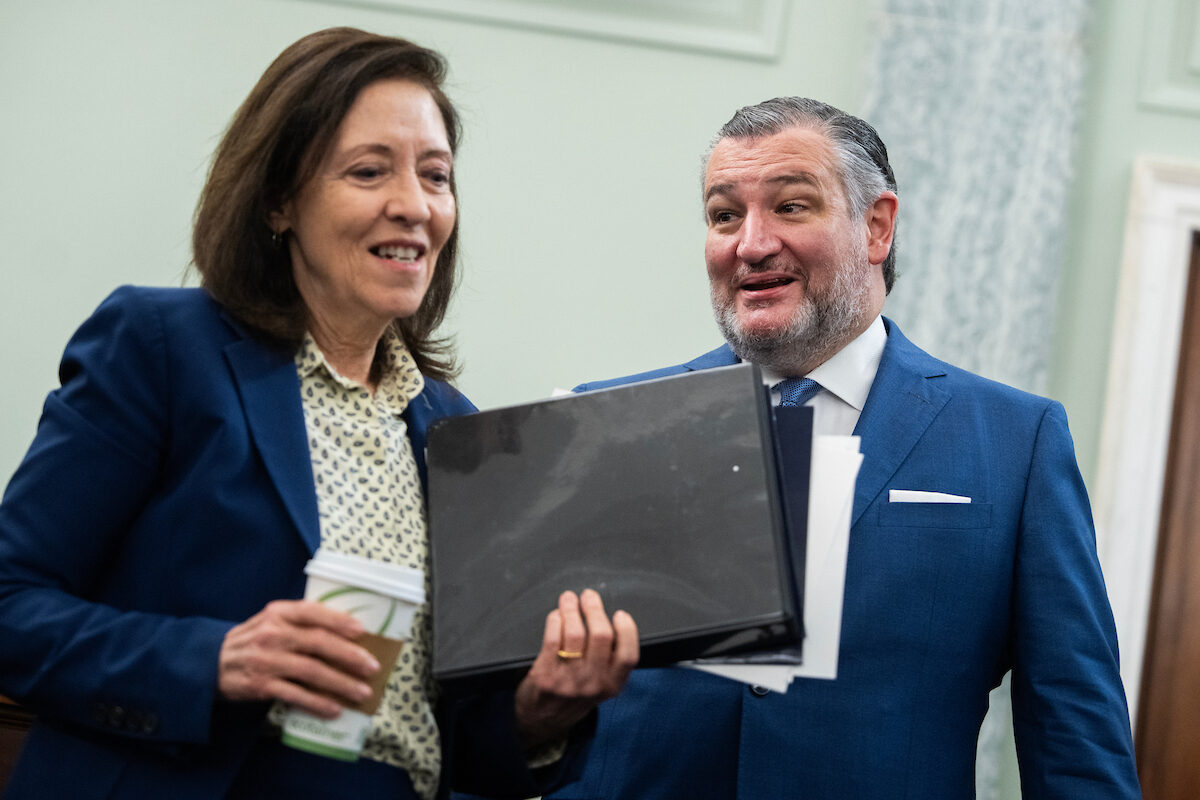
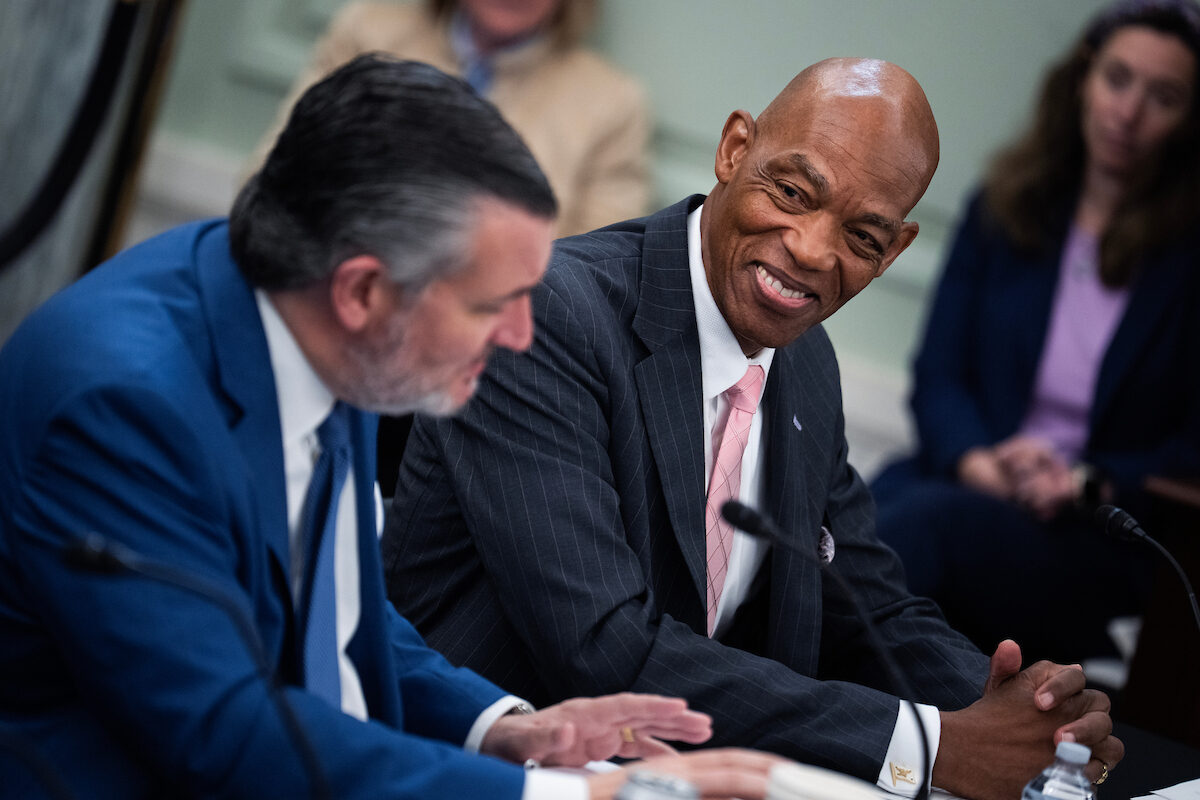
The Senate Commerce Committee has scheduled the markup of a bipartisan measure that proposes sweeping changes to collegiate athletics and has the backing of President Donald Trump. The panel is expected to take up several amendments at the markup on June 18, including one aimed at protecting non-revenue sports. Some athletics departments in recent years have been forced to terminate some Olympic sports due to what some college officials call an “arms race” to pay football and basketball stars and coaches. Ranking member Maria Cantwell, D-Wash., who wrote the measure with sponsor Chair Ted Cruz, R-Texas, said after a roundtable discussion Wednesday she expects amendments next week geared at those non-revenue sports. “I do think with women and Olympic sports, people are like … ‘How can we really guarantee that they're not going to get left behind?’” she told reporters. “I do think there's a lot of attention already to that.” Cantwell also said there could be amendments about coaches, referring to the large salaries of some football and basketball coaches, and some moving among major institutions for even more money during an ongoing athletics season. The most-cited example is football coach Lane Kiffin, who left the University of Mississippi last year for Louisiana State University while the Rebels were still alive in the College Football Playoff. “I definitely hear a lot of volume about, like, well, what about those coaches?” Cantwell said. During a June 3 Commerce Committee hearing on the legislation, Sen. Ben Ray Luján, D-N.M., said he would like to work on language that would restrict the movement of coaches from program to program, because “the market for coaches is a bit of a mess as well.” Several senators signaled they might seek other changes. Sen. Lisa Blunt Rochester, D-Del., said some student-athletes, labor unions and civil rights organizations have expressed concerns about the measure to her. She did not elaborate on those worries. Blunt Rochester also expressed concerns that the bill could force players and their families to pay any legal fees needed to resolve disputes with institutions and conferences. Sen. Bernie Moreno, R-Ohio, suggested that he would aim for more-targeted antitrust language for the NCAA, as well as a prohibition on men playing in women’s sports.Revenue sharing The legislation would create nationwide rules for student-athletes to earn money from their name, image and likeness, known as NIL. It would hand the NCAA — or a to-be-established national governing entity — some limited antitrust power to enforce its rules and create a potential revenue-sharing system if enough schools sign on, while remaining neutral on the question of whether student-athletes could be considered university employees. The Cruz-Cantwell measure also would prohibit the creation of a so-called superconference, such as a breakaway league composed of the existing members of the Southeastern and Big 10 conferences. Both major conferences oppose the initial version of the bill, saying in a June 2 joint statement they intended to work with Cruz and Cantwell to make changes. Among the gripes from the SEC-Big 10 side is the revenue-sharing proposal. The SEC and Big 10 statement also pointed to how the Senate measure would establish a revenue-sharing pool if 102 of the 138 Football Bowl Subdivision institutions agree to participate, which would “result in fewer student-athletes receiving direct revenue share payments.” “It does not meaningfully preempt the patchwork of state laws or provide the protections needed to make and enforce consistent rules, both essential to long-term stability in college athletics,” the SEC and Big 10 said. “It also shifts ongoing rulemaking to Congress, limiting the ability to adapt quickly as the landscape evolves. Rather than reducing litigation, the bill likely expands it without offering clear alternatives for dispute resolution.” Other Football Bowl Subdivision conferences have backed the bipartisan measure, including the Atlantic Coast, American Athletic, Big 12, Pac-12 conferences, as well as Conference USA. Cruz said Wednesday he wants both chambers to take up the bill before the start of the fall semester and athletics season. Trump on June 4 urged both chambers to get the bill, dubbed the “Protect College Sports Act,” to his desk “this summer.” The legislation’s backers, including the fan in chief in the Oval Office, describe it as likely the last best chance to fix what has become a majorly flawed college athletics landscape. Cruz said during the June 3 hearing that he and Cantwell spent “spent hundreds, if not thousands of hours, negotiating this bill,” adding with a chuckle: “It has been excruciating.” Missouri GOP Sen. Eric Schmitt, who played baseball and football in college and was an original co-sponsor of the legislation, said during the hearing that Congress should send it to Trump for his signature because “college sports, college football in particular, I think, is such a uniquely American institution and it really is worth fighting for. “It's worth preserving,” he added. “But that is not going to happen by itself anymore.”