College sports bill authors making pitch to Black caucus
Lack of congressional action this year could harm HBCUs and student-athletes, they say
The authors of a Senate bill that would overhaul college athletics warned this week that a lack of congressional action this year could financially wreck historically Black colleges and universities and could reduce chances for college educations for minority students.
Senate Commerce Committee Chair Ted Cruz, R-Texas, and ranking member Maria Cantwell, D-Wash., said they have been reaching out to members of the Congressional Black Caucus and want the group’s input as they seek the necessary votes in both chambers.
The CBC, however, has shown no signs of backing the bill. The caucus, which led the way in shelving a competing House measure in protest over a recent round of redistricting related to the voting power of Black voters, urged Cruz and Cantwell in a June 3 letter to “pause” action on their college athletics bill.
A spokesperson for the CBC said Thursday that the June 3 letter remains the collective stance of the caucus. The group includes 58 House members and four senators.
Cruz and Cantwell have refined an argument, aimed at securing some CBC support, that their “Protect College Sports Act” is the lone measure on the Hill capable of becoming law — and doing nothing legislatively would simply be a choice historically Black colleges and universities could not, literally, afford.
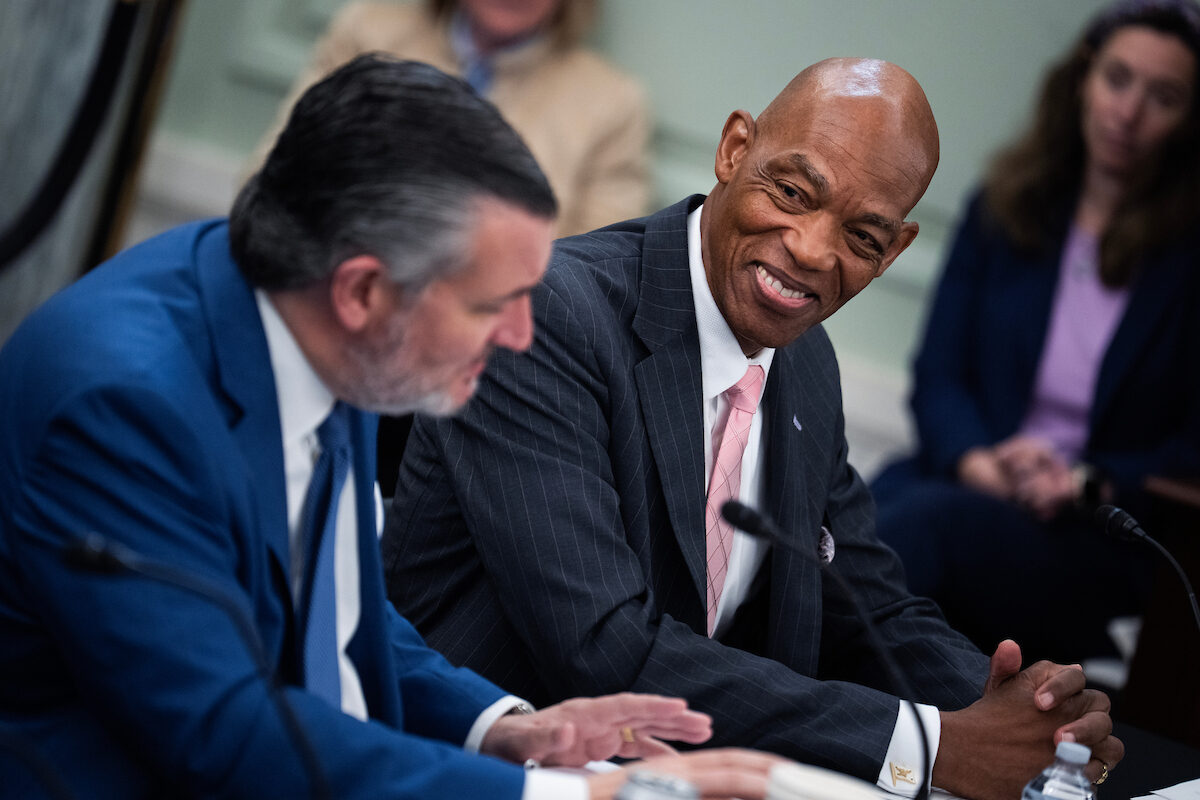
Cruz, after a roundtable on the measure Wednesday, pointed to comments made during the event by James W. Crawford III, president of Texas Southern University, a Houston-based HBCU.
“If Congress doesn’t act, the consequences will be devastating. They will be devastating when the president of TSU says that they would be devastating for HBCUs,” Cruz said. “They would be devastating for hundreds of thousands, and over time, millions of athletes — many of whom are African American, many of whom are Hispanic, many of whom are from economically disadvantaged environments.”
College sports give those athletes an avenue to get an education, Cruz said.
“And if we don’t act, the most tragic thing that would result from Congress failing to act would be seeing opportunity destroyed for millions of young men and women, many of whom would not otherwise have a chance to get a college degree,” Cruz said. “That is pressing and urgent, and I think failure is not an option.”
Crawford, at the roundtable, said HBCU budgets are already straining in the so-called “NIL era,” in which student-athletes can legally profit from their name, image and likeness. He referred to the large NIL payments to star players and the ability to transfer to another school each season.
“It’s about competing. … If you get at the ability where you have some controls on costs [and] you don’t have this continual bidding, you’re not in a constant recruiting mode because now you’re constantly trying to recruit that great player that just beat your team,” Crawford said.
For historically Black colleges and universities, Crawford said some “controls” would help institutions like Texas Southern save nonrevenue sports.
“Obviously, we manage our resources very carefully. We invest very hardily for our students to succeed,” Crawford said. “But controlling that ‘Hunger Games’ aspect, economically, would be very beneficial to historically black colleges and universities, as well as other institutions that are mid-size regional institutions.”
The Congressional Black Caucus and NAACP last month spearheaded an effort that forced House GOP leaders to yank a House version of a college sports bill from Rules Committee consideration.
CBC members and the influential civil rights group’s leaders linked the House bill to recent moves in some red states to draw new congressional maps that nixed majority-Black districts. They also contended the House bill would have been a financial boon for universities and conferences, and an economic dagger for student-athletes.
The Black Caucus urged Cruz and Cantwell in a June 3 letter to “pause” action on their college athletics bill and another measure that would “confer additional protections, authorities, benefits, or legal certainty upon college athletic institutions while their leadership remains silent in the face of ongoing attacks on Black political representation.”
“Moreover, the concerns raised by the Congressional Black Caucus extend beyond the silence of college athletics leadership,” the group wrote. “The CBC continues to have serious substantive concerns regarding pending college athletics legislation, including questions of accountability, athlete protections, institutional authority, and the broader impact such proposals may have on student athletes and the communities they represent.”
Cantwell wrote in a Washington Post op-ed Thursday that college athletics “is at a breaking point,” warning that “since late 2023, more than 100 programs have been cut. … A shared national pastime has become a free-for-all: money flowing with few guardrails, players and coaches constantly moving, and schools struggling to keep pace.”
She did not mention HBCUs specifically but described them at Wednesday’s roundtable as a key part of the college “ecosystem.”
Cruz said Wednesday he would like both chambers to vote on the bipartisan measure before the fall college semester — and athletics season — begins. President Donald Trump has backed the Cruz-Cantwell bill.