Supreme Court allows Alabama to use new congressional map
A lower court had blocked map as 'intentionally discriminatory' against Black voters
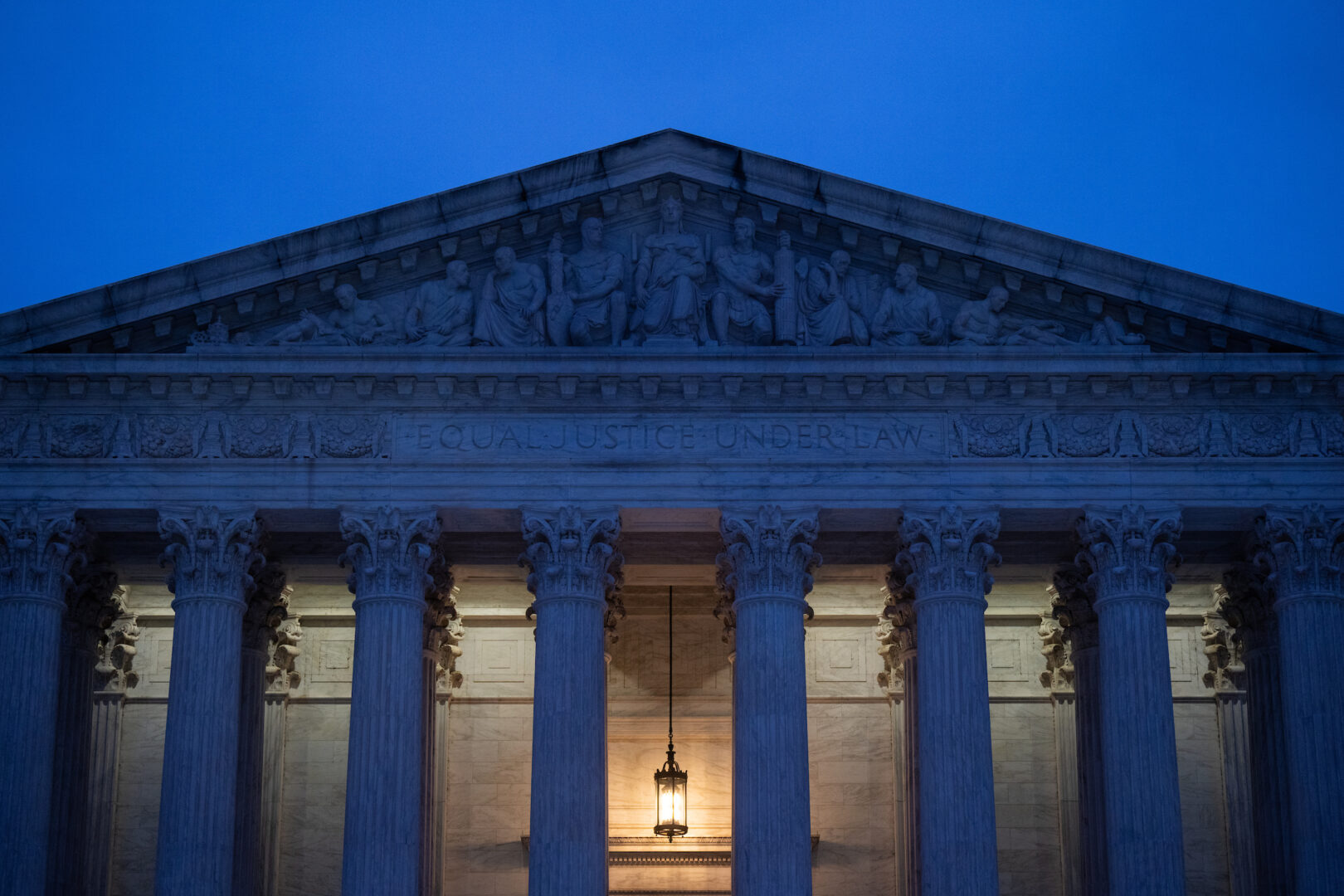
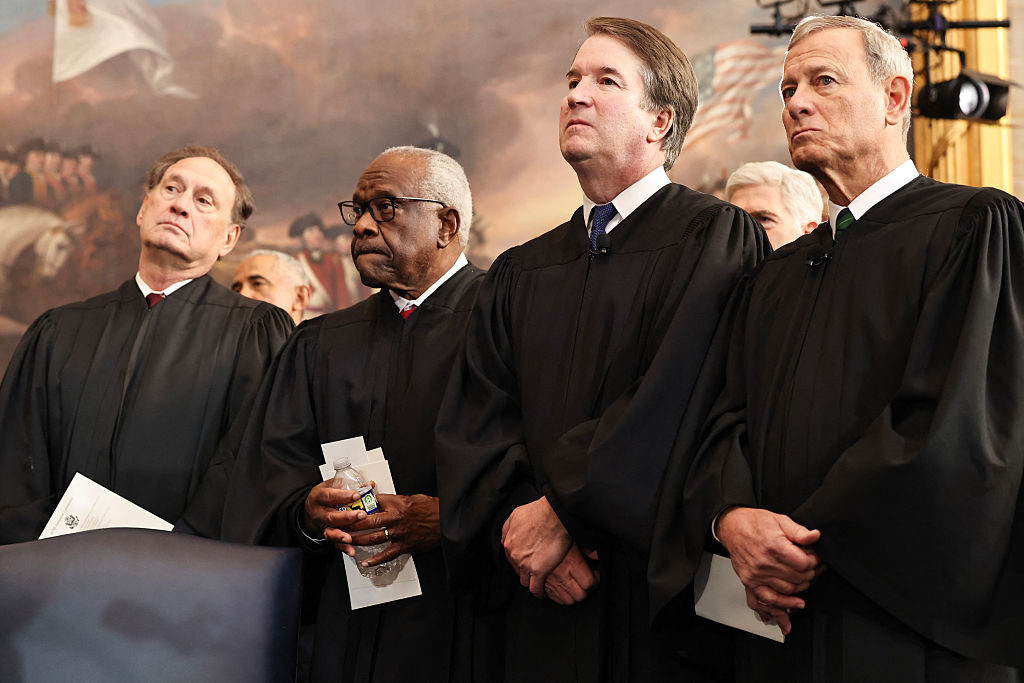
The Supreme Court allowed Alabama to move forward with its new congressional map in a decision issued Tuesday evening, pausing a lower-court ruling that the map was likely unconstitutional.
The unsigned order from the court’s conservative majority allowed the state to use its preferred map, one first adopted in 2023 and twice blocked by a lower court as discriminatory against Black voters.
That map has one district where Black voters are a majority and overall favors Republicans in six of the state’s seven congressional seats. The state held a primary May 19 in the districts that would not be affected by the redistricting, and Republican Gov. Kay Ivey announced an August primary for where the lines would change under the 2023 plan.
The Supreme Court ruling blocks a lower-court order from last week that would have required the state to use the same lines it did in the 2024 election, which included two districts where Black voters had an opportunity to elect candidates of their choice.
The high-court order described why the state was likely to prevail in the case and chided the three-judge lower court for interfering in the ongoing primary election in the state.
“Here, the District Court interposed itself into Alabama’s ongoing efforts to conduct its imminent 2026 congressional elections under maps that its elected representatives selected,” the order said.
The order is the latest in a series of fast-moving redistricting court fights after the Supreme Court overturned a Louisiana congressional map days before voting started in the state’s primary election last month. In the Louisiana case, the justices wrote that the Voting Rights Act did not require the state to draw a map with two minority opportunity districts.
The order Tuesday said the lower court in the Alabama case misinterpreted the Louisiana decision, and “the mere fact that voters of different races vote for different parties is not relevant to proving racially polarized voting patterns.”
Justice Sonia Sotomayor, in a dissent joined by Justices Elena Kagan and Ketanji Brown Jackson, criticized the majority for creating a “chaotic election” under congressional lines that discriminate against Black voters.
Sotomayor wrote that the majority was rewarding Alabama’s “defiance” of previous court orders that would require the state to draw district lines that did not discriminate.
“It debases the democratic process by upending Alabama’s entire election in the name of permitting Alabama to discriminate against Black Alabamians. It also corrodes the rule of law by rewarding Alabama’s gamesmanship and outright defiance of court orders,” Sotomayor wrote.
Alabama officials had asked the justices to intervene after the lower court found that the state’s preferred congressional map, known as the 2023 plan, discriminated against Black voters.
The state had adopted the congressional map weeks after the Supreme Court’s decision in the Louisiana case and sought emergency relief from the justices to lift an original 2025 decision that found the map discriminated against Black voters.
In both that 2025 decision and the decision last month, the lower court found the state’s preferred map violated the VRA and the 14th Amendment to the Constitution.
The cases are Wes Allen in his official capacity as the Alabama secretary of state et al. v. Bobby Singleton et al.; Wes Allen in his official capacity as the Alabama secretary of state et al. v. Evan Milligan et al.; and Wes Allen in his official capacity as the Alabama secretary of state et al. v. Marcus Caster et al.