Facing America’s truths may be inconvenient, but it can be liberating
Real stories are still being told, and those in power should be brave enough to hear them
“An Inconvenient Truth,” the title of Al Gore’s book and the 2006 documentary on his warnings about global warming and climate change, has taken on a whole new meaning.
We are a nation awash in truths swept aside as inconvenient, particularly the truths about ourselves and our country.
The former vice president was ahead of his time with his occasionally flawed but real enough findings, with too many dismissing as hyperbole the conclusion that ignoring the problem could only lead to devastation for the planet and its people.
Many Americans, eager to rush into a 250th birthday with balloons, confetti and celebration, can’t or won’t see that covering up the country’s truthful history — progress followed by violent pushback, then renewal by brave patriots — papers over deepening divisions that threaten to break us.
That buried history will inevitably repeat itself, as inconvenient as it may be for some Americans to admit.
Closed eyes and minds seem to be a requirement for positions of leadership, as though merely acknowledging facts makes you un-American.
That’s the opposite of the truth.
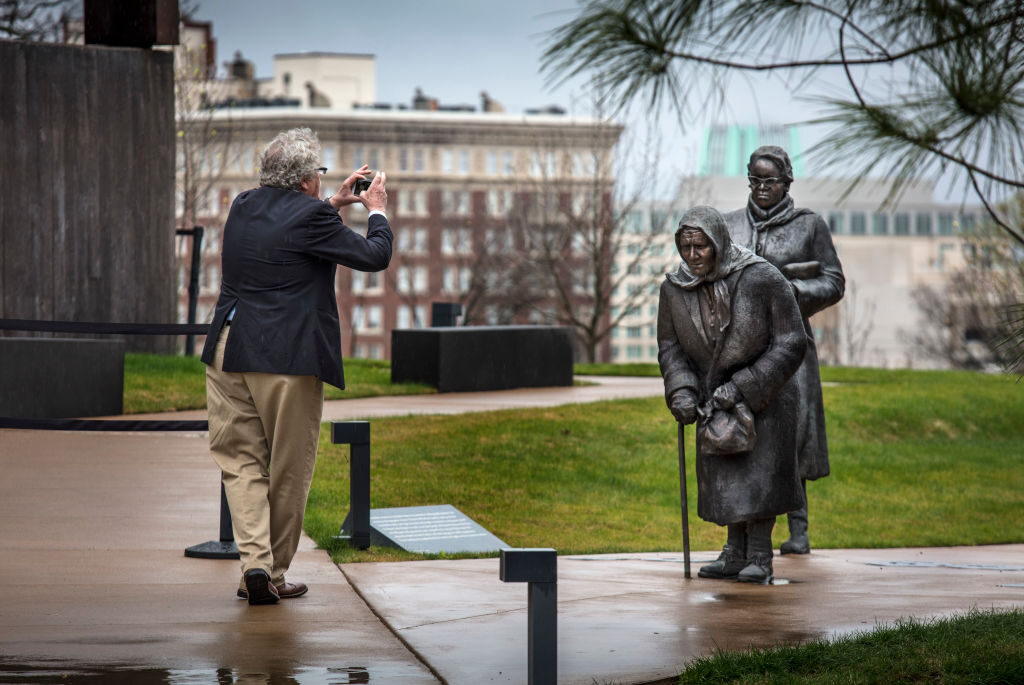
During a recent visit to Montgomery, Ala., I experienced the whiplash of competing histories. A state that still insists on pairing Dr. Martin Luther King Jr. with Confederate Gen. Robert E. Lee for its official holiday and that honors secessionists on capital grounds is also home to Civil Rights history presented in precise and moving detail.
I wondered as I experienced the collections in the Equal Justice Initiative’s Legacy Sites, why are some people so afraid of the truths revealed and shared in the Legacy Museum, the National Memorial for Peace and Justice and Freedom Monument Sculpture Park?
Moving personal stories, narratives written and shared by men, women and children who suffered violence and every indignity, yet dared to live and love, are part of the soil and the soul of our nation. Not all survived the journey, but they, too, are honored in what can only be described as sacred spaces.
Exploring the recently opened Montgomery Square, it’s thrilling to learn more about 1955-65 — from the Montgomery Bus Boycott to the marches that led to the passage of the Voting Rights Act — “the decade that changed the world.” Names and faces that might be unfamiliar to most are honored for their bravery and resilience.
All of these Americans made the country better. They deserve to be seen and heard; their perseverance could be key to solutions in a country that appears deadlocked and divided.
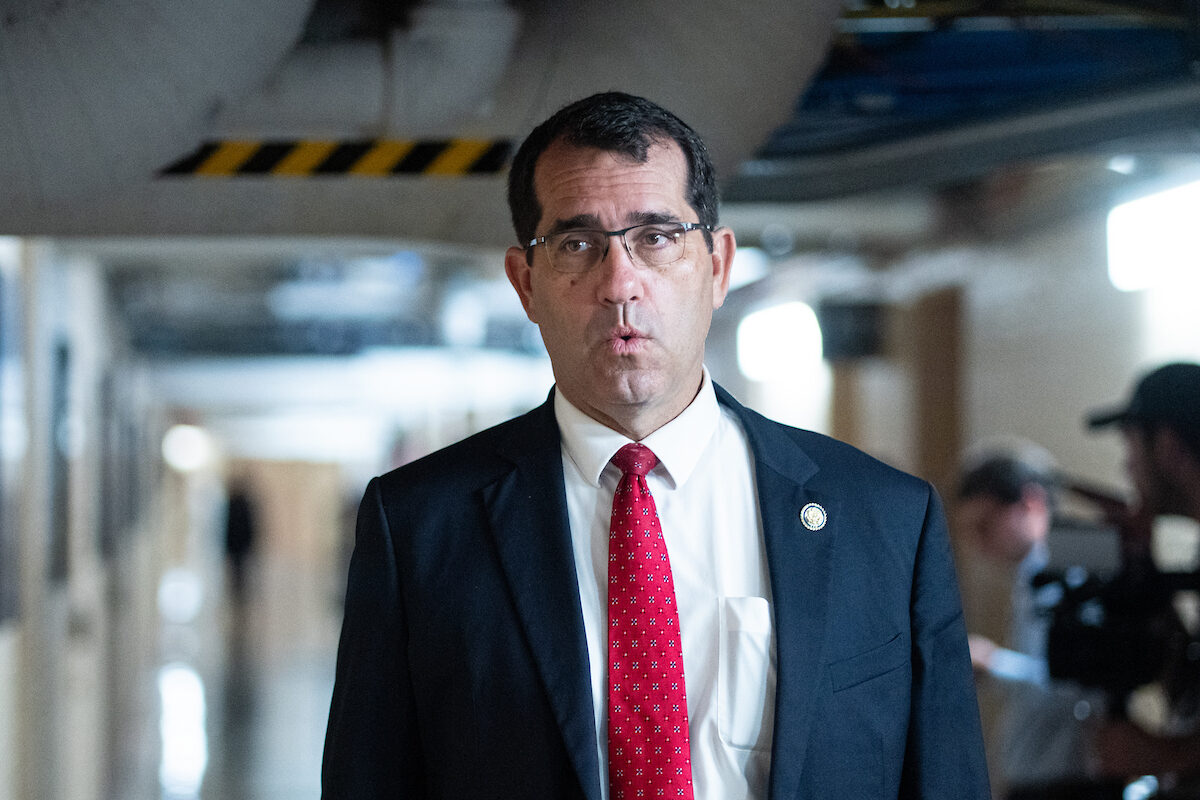
I wished that Sen. Tommy Tuberville, the Republican hoping to be the next governor of Alabama, were at my side. If the schoolchildren of every race who surrounded me could take — and take in — the exhibits, certainly Tuberville is man enough to do the same.
After all, it’s his state, his people and his capital city.
Bryan Stevenson, founder and executive director of the Equal Justice Initiative, a human rights organization based in Montgomery, led the creation of the sites. He put the lessons the museums hold in perspective as he spoke to my conference group.
Stevenson might be best known for his work reforming America’s criminal justice system, winning legal challenges and, as his bio says, “eliminating excessive and unfair sentencing, exonerating innocent death row prisoners, confronting abuse of the incarcerated and the mentally ill, and aiding children prosecuted as adults.”
Stevenson said it was necessary to create a false narrative of white supremacy to justify the evil of generations of slavery so the perpetrators and enablers could conveniently consider themselves Christian and moral and decent.
That’s one legacy that has continued — or as Stevenson said, “The South won the narrative war.”
Tuberville himself has equated the descendants of enslaved people to “criminals.”
Secretary of Defense Pete Hegseth has brought his pastor, Doug Wilson, into the Pentagon to deliver what amount to religious sermons that obliterate the separation of church and state. Wilson co-authored “Southern Slavery, As It Was,” which described slavery in the South as “a relationship based on mutual affection and confidence.”
We are a country that passes laws to charge children as adults, as deserving of being locked up in a prison of grown men. Some of these children are Stevenson’s clients, their stories heartbreaking if you see them as human beings rather than “predators.”
Robert F. Kennedy Jr. can be confirmed and supported as Health and Human Services secretary after saying in the past that “every Black kid is now just standard put on Adderall, on SSRIs, benzos, which are known to induce violence, and those kids are going to have a chance to go somewhere and get re-parented.” So, stripping children away from their parents is still an option?
Of course, Kennedy denied his own inconvenient truth in an exchange with Democratic Rep. Terri A. Sewell of Alabama during a recent congressional hearing.
And when asked by Democratic Rep. Summer Lee of Pennsylvania about the administration ending research that could lower the maternal mortality rates for Black women, who disproportionately suffer and die in this greatest country in the world, Kennedy could barely say the word “Black,” but he did bark “DEI” at every attempt Lee made to get him to at least acknowledge that a disparity shaped by history exists.
These are the kinds of sentiments — believed by those in charge of budgets and rules and who should get the benefit of the doubt — that make Stevenson’s work necessary.
“Narrative work has become a priority.” We are all impacted by “the burden of our history of racial inequality.” He considers the Legacy Sites as “places of truth-telling,” and storytelling as something that “gets people closer.”
“I have no interest in punishing America; my interest is liberation.”
The truth was never inconvenient for Americans who want to seek justice — and move forward.
Mary C. Curtis has worked at The New York Times, The Baltimore Sun, The Charlotte Observer, as national correspondent for Politics Daily, and is a senior facilitator with The OpEd Project. She is host of the CQ Roll Call “Equal Time with Mary C. Curtis” podcast. Follow her on X @mcurtisnc3.