Wrap-up: All-nighter caps Senate work and a short House week
Republicans move immigration bill without curbs on ‘anti-weaponization’ fund
Congress left town this week after the Senate passed Republicans’ high-priority budget reconciliation package for immigration enforcement, while Democrats saw a war powers messaging win in the House.
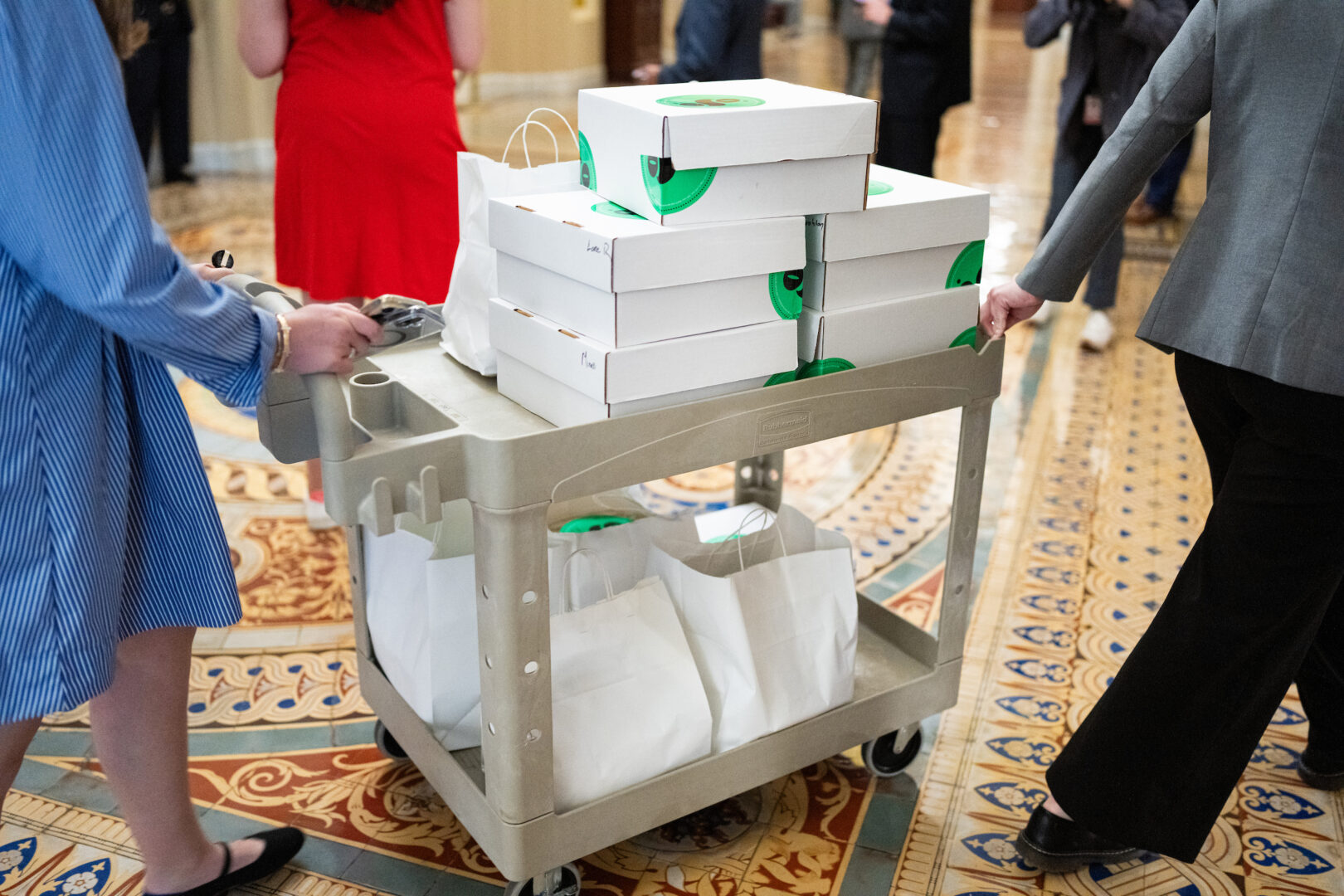
The Senate adjourned in the wee hours of Friday morning following an all-night “vote-a-rama” to pass a nearly $70 billion reconciliation bill for immigration enforcement. The package notably does not include a provision to block a Justice Department “anti-weaponization” fund despite multiple attempts from both parties to insert it.
Earlier Thursday, when it wasn’t clear whether the Senate would vote into the night or wrap it up at a more reasonable hour, the House was on standby with plans to take up the Senate bill as soon as it advanced and send it the White House on Friday.
But House leadership abruptly abandoned that plan and left town Thursday night after holding its first vote of the week just a day prior.
During the House’s short week in session, Democrats had a couple foreign policy wins on the floor, including the passage of a Russia sanctions and Ukraine aid bill that garnered support from 18 Republicans.
Democrats also successfully pushed through a resolution aimed at ending U.S. military action in Iran. The House adopted it Wednesday with support from a few Republicans — the fourth vote on such a measure, after three other failed attempts since the war began in February.
But the party ran into some trouble Thursday when House Democrats split over a similar resolution from Rep. Rashida Tlaib, D-Mich., seeking to block U.S. military presence in Lebanon. House Minority Leader Hakeem Jeffries, D-N.Y., opposed the resolution, instead throwing his support behind other language that aimed to ease worries that Tlaib’s measure would hurt U.S. efforts to counter the militant group Hezbollah.
Tlaib brought her initial resolution to the floor anyway, where it was defeated by a vote of 92-324. More than a hundred Democrats voted against it, with a couple voting “present.”
Speaker Mike Johnson, R-La., this week said farewell to his chief of staff, Hayden Haynes, who will join K&L Gates as a government affairs counselor. In a sendoff on the House floor, Johnson said Haynes was his “right hand” while “launching a 747 with no wings or an engine” during his 2023 rise to speaker.
On the Senate floor, Sen. Susan Collins, R-Maine, cast her 10,000th consecutive vote, extending a streak she began almost 30 years ago, according to her office. Her first vote was in 1997, when she voted to confirm Madeleine Albright as secretary of State.
Committee work
Trump administration officials made high-profile appearances at various committees this week and faced lingering questions about the Justice Department’s $1.8 billion “anti-weaponization” fund, which critics call a slush fund to reward Trump allies.
Pressed by House appropriators, acting Attorney General Todd Blanche told lawmakers Tuesday that the DOJ is scrapping the plan after backlash from Capitol Hill.
“We are not moving forward with the fund, period,” Blanche told Rep. Grace Meng, D-N.Y., during a House Appropriations subcommittee oversight hearing on the Justice Department.
On Wednesday, Treasury Secretary Scott Bessent repeatedly declined to comment on the IRS’s involvement in the settlement, citing ongoing litigation. Still, the appearances in part fueled concerns about the Trump administration’s goals for the fund, empowering senators to seek language in the reconciliation package to block it.
And the House Armed Services Committee approved its sweeping fiscal 2027 defense authorization bill late Thursday after a 14-hour markup, where debate over the war in Iran took a big focus. The chairman’s mark of the House bill endorsed about $1.15 trillion for defense programs, mostly at the Pentagon, although the funds must still be appropriated in separate legislation.
Jacob Fulton, John M. Donnelly, Ryan Tarinelli and Savannah Behrmann contributed to this report.